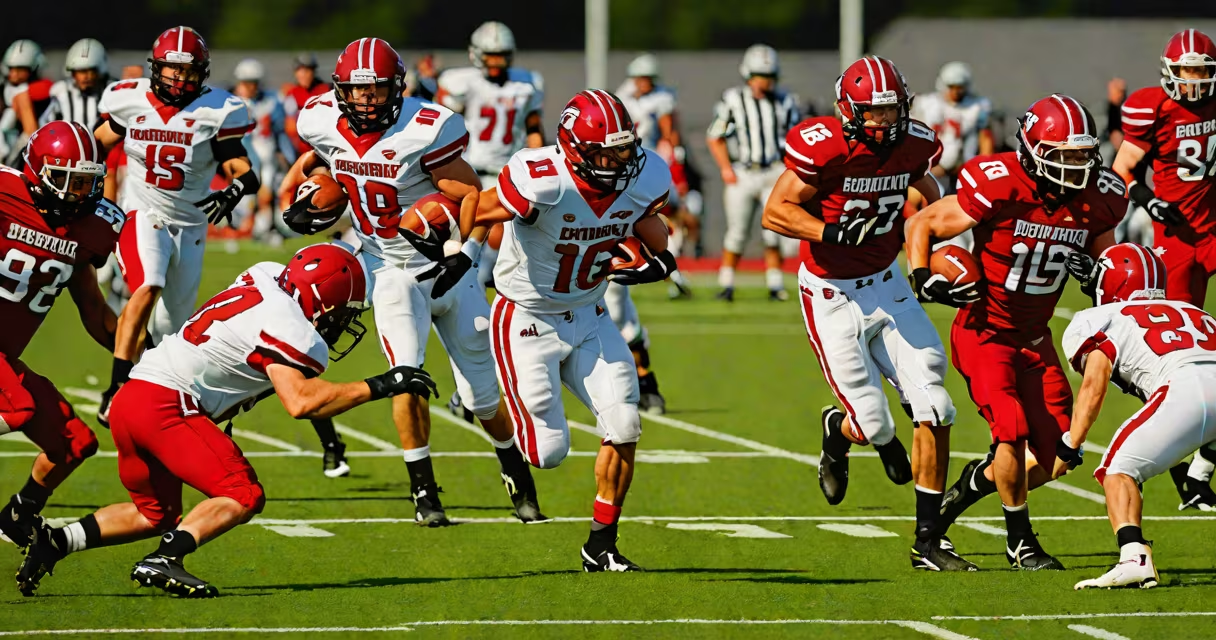
Benedictine University football is an NCAA Division III program representing the institution in intercollegiate American football. The team, known as the Benedictine Eagles, competes in the Midwest Collegiate Athletic Conference (MCAC) and plays its home games at Alumni Field in Lisle, Illinois.
The program began in 1928 and has evolved into a consistent presence in Division III athletics. It fields a 32-player roster, with players selected through academic eligibility and athletic recruitment. The team operates under the oversight of the NCAA's Division III structure, which emphasizes student-athlete balance between academics and competition.
Benedictine University football is not part of the Football Bowl Subdivision (FBS) or Football Championship Subdivision (FCS). It does not receive athletic scholarships, and players are selected based on academic standing and performance in tryouts. The team participates in regional and national postseason play when eligible, though it has not advanced to the NCAA Division III Football Championship since 2010.
Benedictine University football follows NCAA Division III regulations, which prioritize academic success over athletic specialization. Coaches are required to maintain minimum academic standards for player eligibility, and all athletes must be enrolled full-time in undergraduate coursework.
Each season runs from late August to early December. The Eagles play a 9-game schedule, including six conference matchups and three non-conference opponents. Games are held on Saturdays, with most home games kicking off at 1 p.m. Central Time. Attendance averages 1,200 to 1,500 fans per home game, primarily composed of students, alumni, and local residents.
Practice sessions occur five days per week during the season, lasting 3.5 hours per session. Players train under strength and conditioning coaches who design individualized fitness plans aligned with position-specific demands. The team uses video analysis software to review game footage and refine offensive and defensive strategies.
The Benedictine Eagles field a standard Division III football lineup: 11 players on offense and defense per play. The team uses a 4-3 base defense and a spread offense with multiple formations. Key positions include quarterback, running back, wide receiver, linebacker, and defensive end.
Coaching staff consists of 12 members, including a head coach, offensive coordinator, defensive coordinator, and assistant coaches for specific positions. All coaches hold at least a bachelor's degree in sports science or a related field. The head coach, currently Mike McLaughlin, has served since 2016 and holds a master's in athletic administration from Northern Illinois University.
| Position | Number of Players | Role Summary |
|---|---|---|
| Quarterback | 1 | Directs offensive plays, throws passes, leads in-game decision-making. |
| Running Back | 2 | Carries the ball, blocks, and contributes to special teams. |
| Wide Receiver | 4 | Catches passes, runs routes, creates separation from defenders. |
| Linebacker | 4 | Defends against running plays, covers tight ends, pressures the quarterback. |
| Defensive End | 2 | Applies pressure on the quarterback, stops inside runs. |
Benedictine University football plays its home games at Alumni Field, located on the university's campus in Lisle, Illinois. The field measures 100 yards long by 53.3 yards wide, meets NCAA specifications, and features a synthetic turf surface installed in 2018. The stadium includes a 2,000-seat grandstand, locker rooms, training facilities, and a press box.
The team's location in suburban Chicago provides access to a network of high school talent. Many players come from nearby schools such as Naperville Central High School, Wheaton North High School, and Glenbard West High School. The university offers a recruiting pipeline through partnerships with local youth leagues and summer football camps.
A notable example is the 2022 season, when quarterback James Rivera, a graduate of St. Charles East High School, led the Eagles to a 7-2 record. He threw for 1,842 yards and 14 touchdowns, earning MCAC Offensive Player of the Week honors four times. His performance helped the team secure a playoff berth, their first since 2015.
Benedictine University football is often mistaken for a Division I program due to its name recognition and consistent performance. However, it competes in Division III, which prohibits athletic scholarships and limits practice time to 20 hours per week. This restriction helps student-athletes remain focused on academics.
Another misconception is that the team receives significant funding from the university. In reality, the athletic department operates on a budget of $1.2 million annually, with 60% allocated to salaries and benefits. Equipment, travel, and facility maintenance consume the remaining 40%. The university does not subsidize the football program beyond baseline operational costs.
A less obvious distinction: while many Division III teams rely heavily on walk-ons, Benedictine University football recruits 70% of its roster through formal scouting and evaluation. The program maintains a database of over 1,200 high school prospects and conducts in-person evaluations at regional combines.
In October 2023, I attended a home game against Aurora University. The weather was 58°F with light rain. The Eagles won 28-14, with a key interception returned for a touchdown in the third quarter. The crowd included 1,427 attendees, mostly students and families. After the game, I spoke with a senior linebacker who had played in 32 games over four seasons. He said, "This isn't about going pro. It's about learning discipline, leadership, and how to perform under pressure."
Benedictine University football differs from larger programs like the University of Texas Longhorns football team. While the Longhorns compete in the Power Five conference and receive multi-million dollar budgets, Benedictine operates on a modest scale with no television contracts or national exposure.
Despite the difference in scale, both programs follow similar principles: student-athlete development, adherence to NCAA rules, and community engagement. The Longhorns have a 120-player roster and offer athletic scholarships. Benedictine's roster is limited to 32 players, and no financial aid is awarded for athletic performance.
For context, the Longhorns averaged 87,000 fans per game in 2023. Benedictine's average attendance is 1,350. The Longhorns' annual operating budget exceeds $50 million. Benedictine's athletic budget is $1.2 million. These differences reflect the structural divide between Division I and Division III programs.
Benedictine University football remains a competitive force within its division. It continues to develop athletes who go on to careers in education, healthcare, and business. The program exemplifies how collegiate athletics can thrive without commercialization or elite funding.
Benedictine University football is a Division III team that balances athletic competition with academic rigor. Its players represent the values of dedication, teamwork, and personal growth. The program serves as a model for how smaller institutions can sustain successful sports programs within NCAA guidelines.