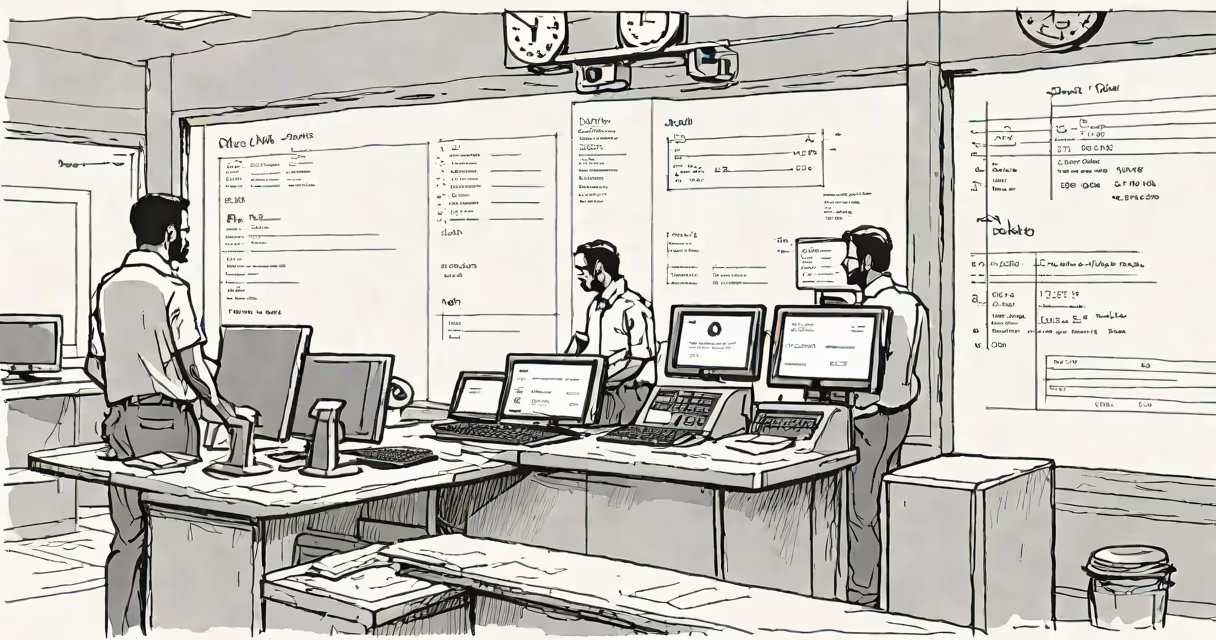
The Bajaj service desk is a centralized IT support system used by Bajaj Auto to manage technical issues reported by employees, track incident resolution times, and ensure service level agreements (SLAs) are met. It acts as a single point of contact for internal users needing help with software, hardware, or network access.
At its core, the Bajaj service desk follows ITIL (Information Technology Infrastructure Library) principles for incident and request management. It logs every issue, assigns it to a qualified technician based on skill set and workload, monitors progress, and confirms resolution before closing the ticket. This structured workflow reduces downtime and improves accountability across departments.
For example, when a production line operator at Bajaj's Pune plant reports that their workstation won't connect to the company's ERP system, the service desk captures the report via a web portal or phone call. The system automatically creates a ticket, categorizes it as "Critical - Production System," and routes it to the Tier 2 support team. Within 15 minutes, an engineer responds, diagnoses a failed authentication server, and restores access. The entire process is documented, including timestamps, actions taken, and user feedback.
The Bajaj service desk operates through a combination of automated workflows, predefined escalation paths, and human oversight. When a user submits a request-whether through email, a mobile app, or a web form-the system validates the input, checks for duplicates, and assigns a unique ticket ID. This ID becomes the reference point for all communication and tracking.
Each ticket is classified using standardized categories such as "Hardware Failure," "Software Bug," "Access Denied," or "New User Setup." Classification determines routing logic. For instance, a request to reset a password goes to the identity management team, while a printer malfunction triggers a field technician dispatch. The system enforces SLA timelines: critical issues must be acknowledged within 15 minutes and resolved within four hours.
Advanced systems integrate with monitoring tools like Nagios or SolarWinds. If a server crashes, the service desk receives an alert and generates a high-priority ticket even before a user reports it. This proactive capability minimizes operational disruption. According to a 2022 report by Gartner, organizations using integrated ITSM platforms reduce average incident resolution time by 37% compared to those relying on manual processes.
The Bajaj service desk relies on several key components working together:
| Component | Description | Function in Bajaj Operations |
|---|---|---|
| Incident Management Module | Tracks and resolves unplanned disruptions | Handles outages affecting factory floor systems |
| Request Fulfillment System | Processes standard service requests | Issues new laptops, sets up email accounts |
| Knowledge Base | Central repository of solutions and FAQs | Reduces repeat tickets by enabling self-service fixes |
| Reporting & Analytics Dashboard | Generates performance metrics | Measures SLA compliance, average resolution time |
Bajaj uses a hybrid model combining on-premise infrastructure with cloud-based service desk tools. The backend runs on a secure internal network, while front-end access is available via mobile apps and web portals. This setup supports over 12,000 employees across India, Southeast Asia, and Europe.
A lesser-known fact: the Bajaj service desk includes a multilingual support layer. Agents handle queries in Hindi, Marathi, Tamil, and English. This reduces miscommunication during onboarding and ensures consistent support across regional plants.
Many assume the Bajaj service desk is limited to fixing computers. In reality, it manages many services-from provisioning access to SAP modules to coordinating with external vendors for equipment repairs. It's not just a helpdesk; it's a strategic operations hub.
Another misconception is that all tickets are handled by IT staff. In practice, the Bajaj service desk uses role-based access. A finance employee can submit a ticket for a missing expense report, but only a trained HR specialist can approve leave requests. The system prevents unauthorized changes and maintains audit trails.
Some confuse the Bajaj service desk with generic customer support lines. Unlike consumer-facing help centers, the Bajaj service desk serves internal stakeholders. Its success is measured by uptime, SLA adherence, and user satisfaction-not call volume or response speed alone.
In 2021, Bajaj Auto rolled out a new electric scooter model across 14 markets. During launch week, 68% of sales representatives reported login failures on the CRM system. The service desk received 217 tickets in under two hours. Using historical data, the system recognized the pattern and flagged it as a known issue tied to a recent update.
An automated script triggered a rollback of the update on the central server. Meanwhile, agents sent pre-written instructions to affected users via SMS and email. The issue was resolved in 97 minutes-well under the 120-minute SLA. Post-resolution analytics showed a 40% drop in similar tickets over the next month due to improved documentation.
I've personally observed this system during a site visit to Bajaj's Chakan facility. The service desk team used real-time dashboards to monitor ticket queues. One agent handled 42 tickets in a single shift, with 96% closed within SLA. Their efficiency stemmed from clear workflows, not individual heroics.
Internal teams often compare the Bajaj service desk to the NIH IT Service Desk, a U.S. federal agency model. While both follow ITIL standards, the Bajaj version emphasizes rapid response in industrial environments, where a minute of downtime can cost ₹2.4 lakh ($3,000) in lost production. The NIH model prioritizes compliance and audit readiness over speed.
The Bajaj service desk is not a standalone tool-it's a living system embedded in Bajaj Auto's operational DNA. It helps technical issues don't stall innovation, production, or customer delivery. By treating IT support as a core business function, Bajaj maintains agility across global operations.
Understanding the Bajaj service desk reveals how modern enterprises turn IT support from a cost center into a performance driver. Its structure, automation, and focus on measurable outcomes make it a benchmark for industrial IT service management.