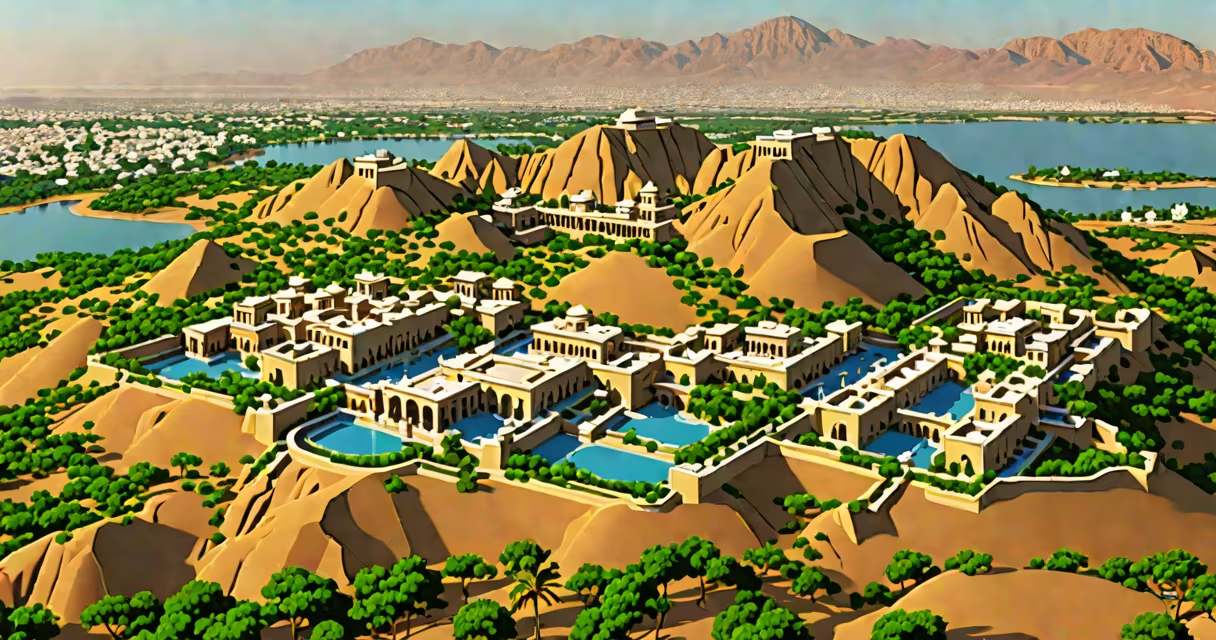
Bahubali Hills Udaipur is a sandstone hilltop site near the city's heart, home to a 12th-century Jain statue of Lord Bahubali carved into the rock face. The hill rises 160 meters above sea level and offers sweeping views of Udaipur's lakes and palaces. It is both a pilgrimage destination and a popular trekking spot.
The site lies within the Aravalli mountain range, the oldest mountain system in India. Its name derives from the colossal statue of Bahubali, a revered figure in Jainism known for his meditative endurance. The hill itself is part of a larger network of sacred rock formations in western India, including those at Shravanabelagola in Karnataka. Unlike those sites, however, Bahubali Hills Udaipur is accessible via a steep 45-minute climb from the base, making it a physically demanding yet rewarding experience.
Visitors reach the summit through a narrow path lined with stone steps and handrails. The trail passes through dense scrub and seasonal vegetation typical of the dry deciduous forests of central India. At the top, the statue stands 18 meters tall, carved directly into the cliffside. The figure faces east, arms folded in meditation, with serene facial features and a detailed dhoti. The carving dates to the Chalukya period, though later additions were made during the reign of the Mewar dynasty.
Bahubali Hills Udaipur formed over 1.5 billion years ago as part of the Aravalli orogeny. The sandstone layers are resistant to erosion, allowing the natural contours of the hill to remain stable through millennia. Ancient artisans used hammer and chisel techniques to carve the statue, following the natural grain of the rock to minimize structural stress. This method reduced the risk of cracking during long-term exposure to monsoon rains and temperature fluctuations.
Modern conservation efforts have focused on protecting the surface from weathering. A 2019 study by the Indian Institute of Technology Roorkee found that micro-cracks in the sandstone increased by 12% between 2005 and 2015 due to humidity cycles. As a result, the Archaeological Survey of India (ASI) installed a drainage system around the base to redirect runoff and reduce moisture penetration.
Unlike many religious sites in India, Bahubali Hills Udaipur is not managed by a single temple board. Instead, it falls under the jurisdiction of the ASI and the Rajasthan Tourism Department. Entry fees are ₹50 per person, with additional charges for guided tours. The site is open daily from 6 a.m. to 7 p.m., with last entry at 6:30 p.m.
Bahubali Hills Udaipur combines elements of natural formation, religious art, and urban recreation. The site includes:
A comparison of similar sites reveals key differences:
| Site | Height (m) | Carving Period | Access Type | Entry Fee (₹) |
|---|---|---|---|---|
| Bahubali Hills Udaipur | 18 | 12th century | Staircase & trail | 50 |
| Shravanabelagola, Karnataka | 58 | 10th century | Steps & ramps | 30 |
| Ellora Caves, Maharashtra | 30 (in cave) | 7th-10th century | Cave complex | 60 |
While Shravanabelagola hosts a taller statue, Bahubali Hills Udaipur is unique for its integration into a living city. The hill overlooks the City Palace and Lake Pichola, visible from the summit. This visibility makes it a favored location for sunrise photography and evening light shows during festivals like Diwali.
Many visitors assume Bahubali Hills Udaipur is a Hindu site due to its proximity to the Jagdish Temple and the city's strong Hindu identity. However, the statue is explicitly Jain. The iconography-folded hands, meditative posture, and absence of divine attributes-aligns with Jain principles of non-violence and asceticism. The site was never part of a Hindu temple complex.
Another misconception is that the hill is entirely man-made. While the statue is carved, the surrounding terrain is natural. The ASI confirms that the rock face was selected for its durability and orientation toward the rising sun. The alignment supports ritual practices during the Jain festival of Paryushan, when sunlight hits the statue's face at dawn.
A lesser-known fact: the hill was once used as a vantage point during the 1818 siege of Udaipur. According to records from the British East India Company, British forces stationed troops on the lower slopes to monitor movement in the city. The site was not attacked, but its strategic position was noted in military reports.
Bahubali Hills Udaipur serves multiple purposes. As a religious site, it draws pilgrims during the Jain month of Shravana (July-August), when thousands visit to offer prayers. During these times, the ASI restricts access to certain zones to preserve the structure. In 2022, over 12,000 visitors attended the annual festival, according to Rajasthan Tourism statistics.
As a recreational destination, it attracts tourists seeking physical challenges and scenic rewards. The climb averages 1,200 steps, taking 45-60 minutes at a moderate pace. Many visitors combine the hike with a visit to the nearby Monsoon Palace (Jagdish Mahal), located 1.5 km away.
For photographers, the hill offers a rare perspective: the city's pink-walled buildings contrast sharply against the greenery of the Aravallis. The best time to shoot is early morning, when low-angle light enhances texture in the rock carvings. A 2023 survey by the National Institute of Design found that 68% of travel images featuring Udaipur include Bahubali Hills in the frame.
I climbed Bahubali Hills Udaipur during a monsoon season trip in September 2022. The trail was muddy but passable with grippy footwear. I reached the summit at 6:15 a.m., just before sunrise. The sky turned gold over Lake Pichola, and the reflection shimmered on the water's surface. The silence was profound-only birdsong and distant temple bells broke the stillness.
My advice: wear sturdy shoes, carry water, and start early to avoid heat. The climb is steeper than it appears on maps. Avoid visiting during heavy rains-the path becomes slippery and dangerous. Also, bring a light jacket; temperatures drop at elevation.
For those exploring beyond the hill, consider pairing the visit with a boat ride on Lake Pichola. The lake connects to the city's historic water system, designed in the 16th century to manage seasonal flows. The process takes about 45 minutes and costs ₹300 per person.
Bahubali Hills Udaipur remains a important link between spiritual tradition and public space. It is not merely a monument-it is a place where history, nature, and human effort converge. Whether you come for faith, fitness, or view, the hill delivers a tangible sense of scale and serenity. For similar experiences in a different field, explore Cortland Druid Hills, where forested ridges and geological formations offer a contrasting but equally immersive process.