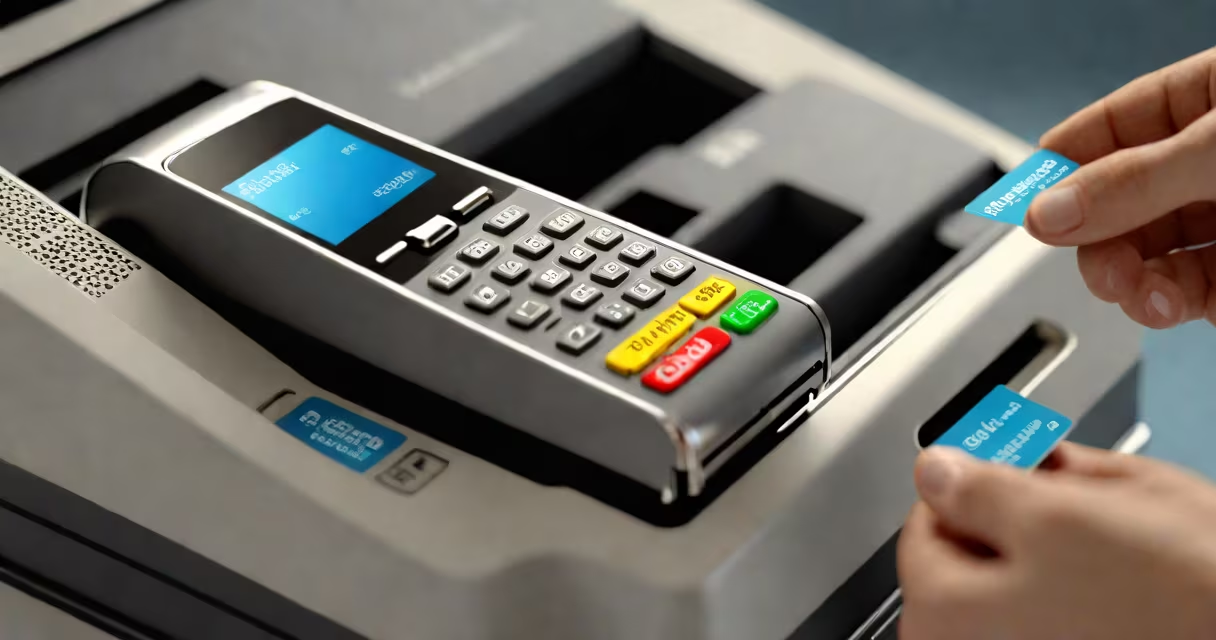
Credit card scanner scams involve malicious devices installed on ATMs, point-of-sale terminals, or gas pumps that capture card data during transactions. These devices copy the magnetic stripe or chip information, enabling criminals to clone cards and withdraw funds or make unauthorized purchases.
Scammers often install skimmers-tiny, discreet devices-over existing card readers. When a card is swiped, the skimmer records the data stored on the magnetic stripe. Some advanced models also include a hidden camera or keypad overlay to capture the PIN. The stolen data is then transmitted via Bluetooth or stored for later retrieval.
According to the Federal Trade Commission (FTC), over 1.3 million reports of identity theft were filed in 2023, with payment card fraud accounting for nearly 30% of those cases. Many of these incidents involved skimming devices placed on public terminals.
Skimming devices are typically small enough to fit inside a card slot or be taped over a terminal's existing reader. They mimic the look and function of legitimate hardware. Once inserted, they record every swipe and store the data until retrieved by the criminal.
For example, a skimmer installed on a gas pump's card reader can capture the card number, expiration date, and CVV during a transaction. A separate device-a pinhole camera-may be placed above the keypad to photograph the PIN as it's entered. The combination allows full access to the account.
Some newer skimmers use wireless transmission. Data is sent in real time to a nearby receiver, often within 50 feet. This enables criminals to monitor transactions remotely and act quickly before victims notice.
Not all skimming tools are the same. The most common types include:
| Type | How It Works | Common Locations |
|---|---|---|
| Over-the-top skimmer | Placed over the original card reader; captures data during swiping | ATMs, gas pumps, retail checkout counters |
| Internal skimmer | Installed inside the terminal; harder to detect visually | Hotel front desks, airport kiosks, restaurant POS systems |
| Pinhole camera | Small lens mounted near the keypad to record PIN entry | Public ATMs, ticket machines, self-checkout stations |
| Bluetooth-enabled skimmer | Sends stolen data wirelessly to a nearby receiver | High-traffic areas like malls, airports, event venues |
A 2022 report by the Identity Theft Resource Center found that 68% of skimming incidents occurred at automated kiosks or self-service terminals, where users assume the machine is secure.
Scammers target locations with high foot traffic and frequent card usage. Gas stations, hotels, and public transit kiosks are common sites. Criminals often install devices during off-hours-late at night or early morning-when surveillance is minimal and staff are absent.
Why do they do it? Because stolen card data sells quickly on the dark web. According to a 2023 study by cybersecurity firm Kaspersky, a single set of card details (number, expiry, CVV) can fetch between $10 and $50, depending on the card's credit limit and country of origin.
One notable incident occurred in 2021 at a major U.S. hotel chain. Over 12,000 guests had their card data compromised through skimmers installed on check-in kiosks. The devices were discovered after multiple customers reported unauthorized charges. The FBI later traced the scam to a group operating out of Eastern Europe.
Many people believe that chip cards (EMV) are immune to skimming. That's false. While EMV chips provide better protection against cloning than magnetic stripes, skimmers can still capture the card number and expiration date. If the card is used in a system that doesn't require a PIN or signature, the thief can make online purchases or create a cloned card with the same data.
Another misconception is that contactless payments (NFC) are completely safe. While they use changing encryption and tokenization, some older or poorly configured terminals may still leak data. A 2023 test by the National Institute of Standards and Technology (NIST) showed that certain low-end card readers could be tricked into broadcasting card details through side-channel attacks.
Not all suspicious devices are physical. Some scams use malware disguised as legitimate software on point-of-sale systems. A 2022 breach at a regional grocery chain revealed that hackers had installed malware on checkout terminals, which captured card data before it was encrypted. The malware went undetected for 11 months.
Always inspect the card reader before inserting your card. Look for signs of tampering: loose parts, misaligned slots, or mismatched colors. If the reader feels loose or wobbles, don't use it.
When using a terminal, cover the keypad with your hand while entering your PIN. Avoid using ATMs in isolated areas or at night. Use bank apps with real-time alerts to monitor transactions.
I once used a gas pump at a remote station during a road trip. The card reader felt slightly loose. I noticed a thin gap between the housing and the slot. I declined the transaction and used a different pump. Later, I learned that the station had been targeted by a skimming ring. The device was removed during a routine inspection.
Cardholders should also monitor their statements regularly. Most banks offer free transaction alerts. If you see a charge you didn't make, report it immediately. Under Regulation Z, you're liable for only $50 in unauthorized transactions if reported within two days.
If you believe your card was skimmed, contact your bank or credit card issuer right away. Request a new card and ask for a fraud investigation. Report the incident to the FTC at IdentityTheft.gov.
Credit card scanner scams exploit trust in everyday technology. Awareness and vigilance are the strongest defenses. Always verify the integrity of payment devices before use.