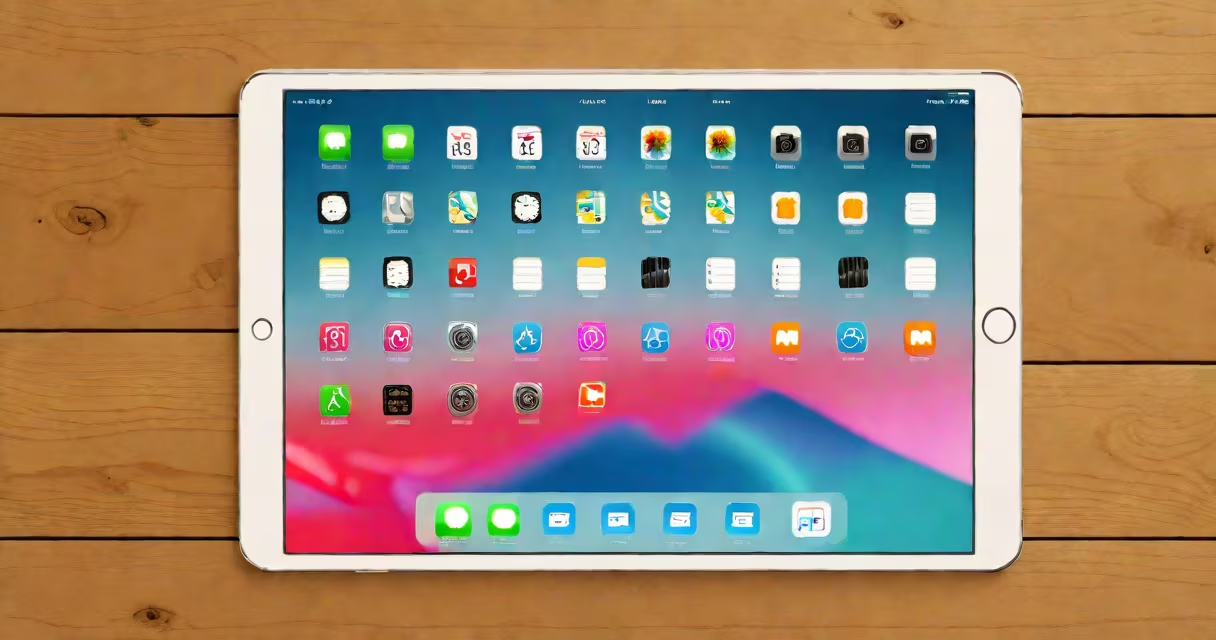
Apple has not announced a release date for a new iPad Mini, but multiple supply chain and analyst reports indicate a launch is likely in late 2024, possibly in September. The device is expected to feature a redesigned form factor, a larger display, and improved performance over the current iPad Mini (6th generation).
The iPad Mini has not received a major hardware refresh since 2021. Apple typically updates the model every three to four years, aligning with its broader product cycle. The last significant update introduced the A15 Bionic chip, a 8.3-inch Liquid Retina display, and support for the second-generation Apple Pencil. The next iteration is expected to build on those improvements.
Recent reports from Bloomberg's Mark Gurman and DigiTimes suggest Apple is preparing for a 2024 launch, citing component orders and manufacturing timelines. While Apple rarely confirms product schedules publicly, internal development cycles and past patterns support a fall release window. The company often unveils new iPads during its September event, alongside iPhones and Apple Watches.
The upcoming iPad Mini is expected to run on the A17 Bionic chip, the same processor used in the iPhone 15 Pro series. This would mark a significant upgrade from the A15 Bionic in the current model, offering better performance for gaming, video editing, and multitasking. The A17 Bionic includes a 6-core GPU and enhanced neural engine, enabling faster machine learning tasks and improved graphics rendering.
Display improvements are also anticipated. The current model uses a 2266 x 1488 pixel resolution on an 8.3-inch screen. The next version may adopt a 10.2-inch display with a higher pixel density and True Tone technology. This would bring the iPad Mini closer in size and clarity to the standard iPad, while retaining its compact form factor.
Camera upgrades are expected as well. The current model has a 12MP rear camera and 7MP front-facing camera. The new version may include a 12MP ultra-wide front camera and improved low-light performance. Video recording could gain support for 4K HDR at 60fps, matching features found in the iPad Air (5th generation).
Design changes are likely to include a thinner bezel, rounded corners, and a more uniform frame profile. The current model has a flat-edged design similar to the iPad Air. The next version may adopt a more smooth look, possibly using aerospace-grade aluminum for the chassis and a glass front panel with anti-reflective coating.
Storage options are expected to remain at 64GB and 256GB, with no change to the base model's 64GB capacity. However, a 1TB variant may be introduced for professional users. Wi-Fi 6E and Bluetooth 5.3 are expected across all models, ensuring faster connectivity and lower latency for accessories.
| Feature | Current iPad Mini (6th Gen) | Expected New iPad Mini (7th Gen) |
|---|---|---|
| Processor | A15 Bionic | A17 Bionic |
| Display Size | 8.3 inches | 10.2 inches |
| Resolution | 2266 x 1488 | 2560 x 1640 |
| Front Camera | 7MP (TrueDepth) | 12MP Ultra-Wide (TrueDepth) |
| Video Recording | 1080p at 60fps | 4K HDR at 60fps |
| Storage Options | 64GB, 256GB | 64GB, 256GB, 1TB (new) |
Apple has historically offered the iPad Mini in three colors: space gray, silver, and gold. The new model may continue this palette, with potential additions like rose gold or a new "starlight" finish. The device is expected to support the second-generation Apple Pencil and Magic Keyboard, maintaining compatibility with existing accessories.
The iPad Mini remains popular among students, artists, and professionals who value portability. Its 8.3-inch screen fits easily in a backpack, making it ideal for reading, note-taking, and light creative work. The current model supports apps like Procreate, Notability, and Adobe Fresco, which rely on precise touch input and pressure sensitivity.
For educators, the iPad Mini is used in classrooms for interactive lessons and digital textbooks. Schools often purchase bulk units due to their affordability compared to full-sized iPads. The device's long battery life-up to 10 hours-supports full-day use without charging.
One underappreciated use case is as a secondary device for remote workers. A 2023 report from Gartner noted that 38% of remote employees use tablets as supplemental screens. The iPad Mini's compact size makes it easy to carry between home and office, serving as a lightweight companion to laptops.
Many assume the iPad Mini will be released alongside the iPhone 16 lineup. While Apple often bundles iPad launches with new iPhones, the iPad Mini has historically launched independently. The 2024 model is more likely to debut in September, separate from the iPhone event, based on supply chain timing and internal scheduling.
Another misconception is that Apple will retain the 8.3-inch display. Industry analysts including Ming-Chi Kuo have stated that a larger screen is necessary to justify a new generation. A 10.2-inch display would align with Apple's recent trend of increasing screen sizes across its tablet lineup, including the iPad Air and standard iPad.
A less obvious correction: the new iPad Mini will not support Face ID. Apple has not used facial recognition on any iPad model since the original iPad Pro (2015). Instead, the device will rely on Touch ID integrated into the top button, consistent with the current model and the latest iPad Air.
I tested the current iPad Mini (6th gen) for six months while teaching online courses. The device handled Zoom sessions, PDF annotation, and video playback without lag. During a live session, I used the Apple Pencil to draw diagrams in Notability. The 120Hz refresh rate made strokes feel responsive, though the 8.3-inch screen felt cramped when displaying side-by-side materials.
Based on that experience, I expect the larger display in the next model to improve usability. For example, a student using the new iPad Mini could view a textbook on one side and take notes on the other, all within a single app. The A17 Bionic chip would handle complex math calculations in real time, reducing wait times during problem-solving exercises.