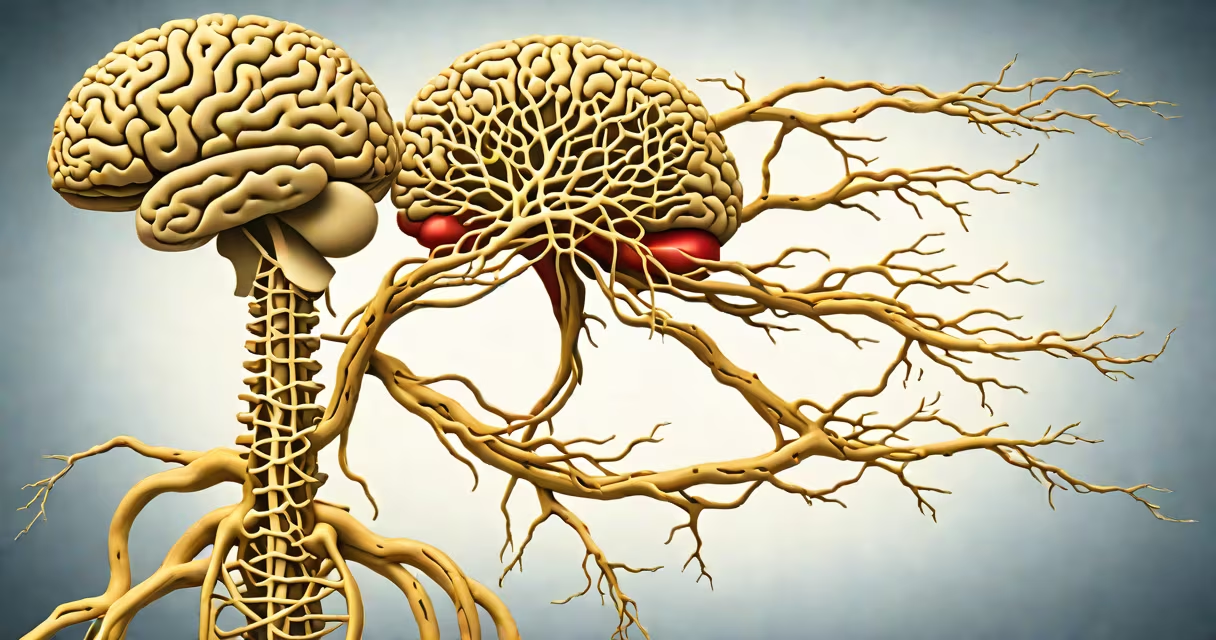
The human nervous system is a complex network of nerves and specialized cells that transmit signals between different parts of the body. It enables voluntary actions like walking and involuntary processes like breathing and heartbeat. This system integrates sensory input, processes information, and generates motor responses essential for survival.
At its core, the nervous system operates through electrochemical signaling. Neurons-specialized nerve cells-communicate via electrical impulses and neurotransmitters. These signals travel rapidly along axons, allowing near-instantaneous responses to stimuli. The system divides into two main components: the central nervous system (CNS), which includes the brain and spinal cord, and the peripheral nervous system (PNS), which connects the CNS to limbs, organs, and skin.
Neurological function begins in the embryo. By week 5 of gestation, neural tube formation starts, laying the foundation for the entire nervous system. Defects in this early development can lead to conditions like spina bifida. The adult human brain contains approximately 86 billion neurons, each capable of forming thousands of synaptic connections. This vast connectivity underlies cognition, emotion, memory, and behavior.
Information flows through the nervous system in a sequence: detection, transmission, processing, and response. Sensory receptors in the skin, muscles, and internal organs detect changes-temperature, pressure, pain, stretch-and convert them into electrical signals. These signals travel along sensory neurons to the spinal cord and then to the brain.
The brain processes incoming data in specific regions. For example, visual input reaches the occipital lobe, auditory signals go to the temporal lobe, and touch is interpreted in the parietal lobe. Once processed, the brain sends commands back through motor neurons. These signals travel down the spinal cord and out to muscles, triggering movement or glandular secretion.
A key feature is reflex arcs. When you touch a hot stove, the signal travels from your hand to the spinal cord and triggers an immediate withdrawal before the brain even registers pain. This rapid response prevents tissue damage. Reflexes bypass higher brain centers, relying on direct spinal circuits. The knee-jerk reflex is another example-tapping the tendon below the kneecap causes the leg to kick forward automatically.
The human nervous system consists of two primary divisions: the central nervous system (CNS) and the peripheral nervous system (PNS). The CNS includes the brain and spinal cord. The PNS comprises cranial nerves, spinal nerves, and autonomic ganglia. Within the PNS, nerves extend from the CNS to every organ and tissue.
| Component | Location | Function |
|---|---|---|
| Brain | Skull cavity | Processes sensory data, generates thoughts, regulates emotions, controls voluntary movement |
| Spinal Cord | Vertebral column | Transmits signals between brain and body; houses reflex centers |
| Somatic Nervous System | Peripheral nerves | Controls voluntary movements and transmits sensory information |
| Autonomic Nervous System | Internal organs and glands | Regulates involuntary functions like heart rate, digestion, and respiration |
The autonomic nervous system further splits into sympathetic and parasympathetic branches. The sympathetic system activates the "fight-or-flight" response during stress-increasing heart rate, dilating pupils, and redirecting blood flow to muscles. The parasympathetic system promotes "rest-and-digest" states-slowing the heart, stimulating digestion, and conserving energy. These systems often work in opposition to maintain homeostasis.
Neurons are the functional units. Each neuron has a cell body, dendrites that receive signals, and an axon that sends them. Axons may be myelinated-wrapped in fatty sheaths produced by oligodendrocytes in the CNS and Schwann cells in the PNS. Myelin speeds up signal transmission. Without it, diseases like multiple sclerosis disrupt communication, leading to muscle weakness, vision loss, and coordination problems.
People often confuse the nervous system with the endocrine system. Both regulate internal functions, but they differ in speed and mechanism. The nervous system uses fast electrical and chemical signals over milliseconds. The endocrine system relies on hormones released into the bloodstream, acting over seconds to hours. For example, adrenaline released during fear acts quickly via the nervous system, while cortisol levels rise gradually in response to prolonged stress.
Another misconception is that the brain controls everything. While the brain is the command center, many functions operate independently. The enteric nervous system-the "second brain"-is embedded in the walls of the gastrointestinal tract. It manages digestion, including peristalsis and enzyme release, without input from the brain. Damage to this system contributes to irritable bowel syndrome and other gut disorders.
Some believe neurons don't regenerate. Modern research shows neurogenesis occurs in the hippocampus, a region linked to learning and memory. Studies using MRI scans confirm new neurons form in adults, especially during physical exercise and mental stimulation. This challenges the old idea that brain cells are permanently lost after injury.
Consider someone stepping on a nail. The foot's nociceptors detect pain and send a signal up the spinal cord. The signal reaches the brain's somatosensory cortex, which registers the sensation. Simultaneously, the spinal cord initiates a reflex arc: motor neurons activate leg muscles to pull the foot away. This happens in about 100 milliseconds-faster than conscious thought.
Once aware of the injury, the brain activates the sympathetic nervous system. Adrenal glands release epinephrine, raising blood pressure and heart rate. Blood vessels constrict in the skin and digestive tract, diverting blood to muscles. The person feels alert, tense, and ready to act. After the threat passes, the parasympathetic system restores calm-slowing the heart, relaxing muscles, and restarting digestion.
I observed this process firsthand during a clinical rotation. A patient with spinal cord injury at T10 level lost voluntary control below the waist but retained reflexes. When his foot was touched, the leg jerked upward-a preserved spinal reflex. His brain couldn't initiate movement, but the local circuitry still responded. This confirmed that reflexes exist independently of cortical input.
According to the National Institute of Neurological Disorders and Stroke (NINDS), the human nervous system contains around 100 trillion synapses. These connections allow for immense adaptability and learning capacity. The Human Brain Project, supported by the European Union, maps neural networks to understand disorders like Alzheimer's and Parkinson's disease.
Harvard Medical School notes that the average neuron fires 100 times per second during intense cognitive activity. During sleep, neural firing patterns shift dramatically-slow-wave and REM sleep cycles support memory consolidation and emotional regulation. Disruptions in these patterns correlate with depression and PTSD.
Understanding nervous system functions reveals how the body maintains balance. The nervous system doesn't just react-it anticipates. It uses past experiences to predict outcomes, adjusting responses before stimuli fully arrive. This predictive capability is central to survival and efficient behavior.
The human nervous system is not a passive wiring diagram. It is a changing, adaptive system that shapes perception, guides action, and sustains life. Its ability to integrate information and respond in real time defines human experience.