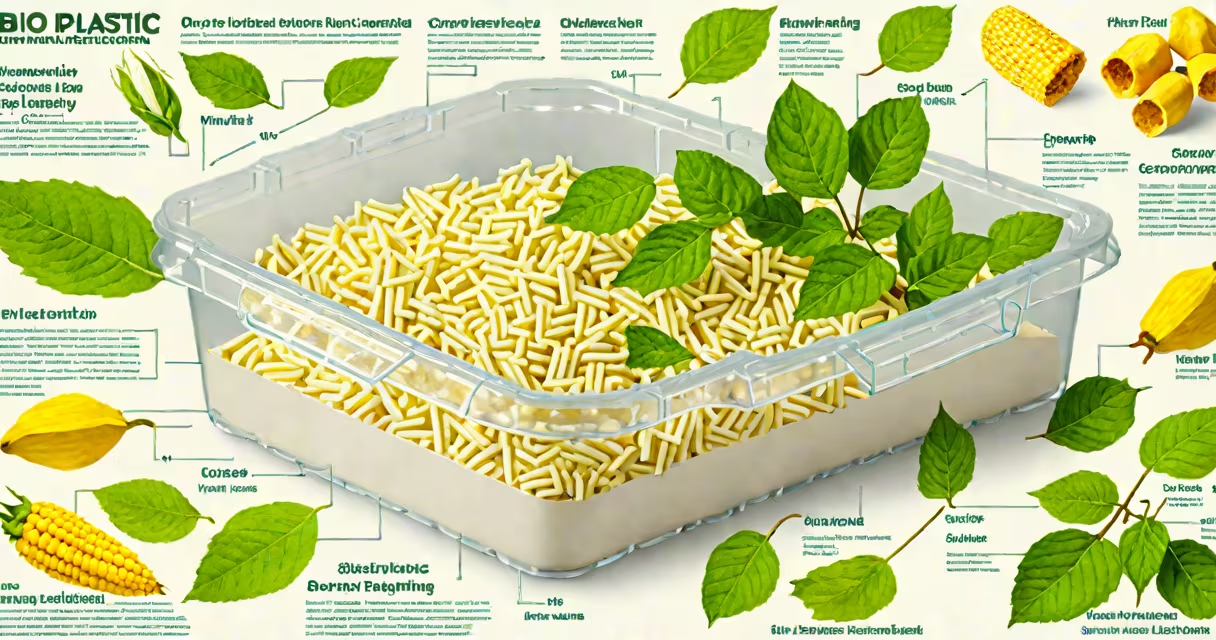
Bio plastic is a category of plastics derived from renewable biological sources such as corn starch, sugarcane, or cellulose, rather than fossil fuels. Unlike conventional plastics, many bio plastics are designed to break down under specific conditions, reducing long-term environmental persistence.
These materials are engineered to mimic the performance of traditional plastics while offering lower carbon footprints and reduced reliance on finite oil reserves. The term "bio plastic" refers to both biodegradable and non-biodegradable variants, though only certain types degrade in natural environments or industrial composting facilities.
According to the U.S. Environmental Protection Agency (EPA), over 36 million tons of plastic waste were generated in the United States in 2021, with less than 9% recycled. Bio plastics offer a potential alternative to this linear model, especially in single-use applications like food containers and packaging.
Bio plastics are synthesized through fermentation or chemical processing of organic feedstocks. For example, polylactic acid (PLA), one of the most common bio plastics, is produced by fermenting sugars from corn or sugarcane into lactic acid, which is then polymerized into a rigid, transparent material.
PLA functions similarly to polyethylene terephthalate (PET), used in water bottles, but degrades within months under industrial composting conditions-temperatures above 55°C (131°F) and high humidity. In home compost systems or natural environments, degradation slows, often taking years.
Another example is polyhydroxyalkanoates (PHA), produced by bacteria fed on plant sugars or waste oils. PHA breaks down in marine environments and soil, making it suitable for fishing nets and agricultural films. A 2022 study published in *Nature Sustainability* confirmed that PHA degrades completely in seawater within 12 weeks under controlled conditions.
Not all bio plastics behave the same way. They differ in raw materials, durability, and decomposition pathways. The table below outlines major categories:
| Type | Feedstock | Biodegradability | Common Applications |
|---|---|---|---|
| PLA (Polylactic Acid) | Corn starch, sugarcane | Industrial composting only | Food packaging, disposable cutlery, 3D printing filament |
| PHA (Polyhydroxyalkanoates) | Bacterial fermentation of sugars or waste oils | Marine, soil, and industrial composting | Fishing gear, medical implants, agricultural films |
| Starch-Based Blends | Corn, potato, cassava | Home and industrial composting | Shopping bags, loose-fill packaging, cutlery |
| Cellulose-Based Films | Wood pulp, cotton linters | Industrial composting | Wrap for fresh produce, blister packs |
One key distinction often missed is that "biodegradable" does not mean "will decompose in nature." PLA, for instance, requires industrial composting facilities to break down effectively. In landfills, it may persist for decades alongside conventional plastics.
A 2021 report by the Ellen MacArthur Foundation noted that 95% of plastic packaging material is lost to the economy after a single use. Bio plastics aim to close this loop-but only if collected and processed correctly.
Many assume bio plastics are automatically better for the environment. This is not always true. Production of corn-based PLA requires significant land, water, and energy inputs. A life cycle assessment by the European Commission found that PLA's carbon footprint is 30-50% lower than PET, but its land use intensity is 2.5 times higher.
Another misconception is that bio plastics are interchangeable with compostable plastics. While all compostable plastics are bio based, not all bio plastics are compostable. Some are chemically similar to petroleum-based plastics but made from plants. These remain persistent in ecosystems unless properly managed.
I once tested a cornstarch-based cup labeled "compostable" in my backyard composter. After 12 weeks, it showed visible breakdown only in the center. The outer edges remained intact. This aligns with findings from the University of California, Davis, which demonstrated that household compost systems rarely reach the sustained temperatures needed to degrade PLA effectively.
Major retailers have adopted bio plastics to meet sustainability goals. In 2023, Walmart began phasing in PLA-lined paper bags for grocery shopping in select stores. The move reduced their use of virgin plastic by 40% in pilot regions.
Similarly, IKEA uses PLA in its food service packaging across Europe. The company reports that these containers are accepted in municipal composting programs in 14 countries, though they require separate collection streams.
Despite these advances, scalability remains limited. Global production of bio plastics was approximately 2.1 million metric tons in 2022, according to the Bioplastics News Market Report. That represents less than 1% of total global plastic output-most of which still comes from fossil fuels.
For bio plastics to scale meaningfully, infrastructure must evolve. Industrial composting capacity in the U.S. covers only 12% of municipalities, and contamination rates in recycling streams exceed 25% due to mislabeling.
What is bio plastic? It is a group of materials derived from living sources, intended to reduce dependence on fossil fuels and improve end-of-life options. But it is not a universal fix. Success depends on proper disposal, consumer education, and investment in recovery systems.
When choosing between materials, consider the full lifecycle-not just origin. A bio plastic container that ends up in a landfill offers little benefit over conventional plastic. Only when paired with composting or recycling infrastructure does it deliver environmental gains.
Understanding what is bio plastic helps clarify its role in a circular economy. It's not a replacement for reducing consumption, but a tool that works best when integrated into responsible design and waste management systems.