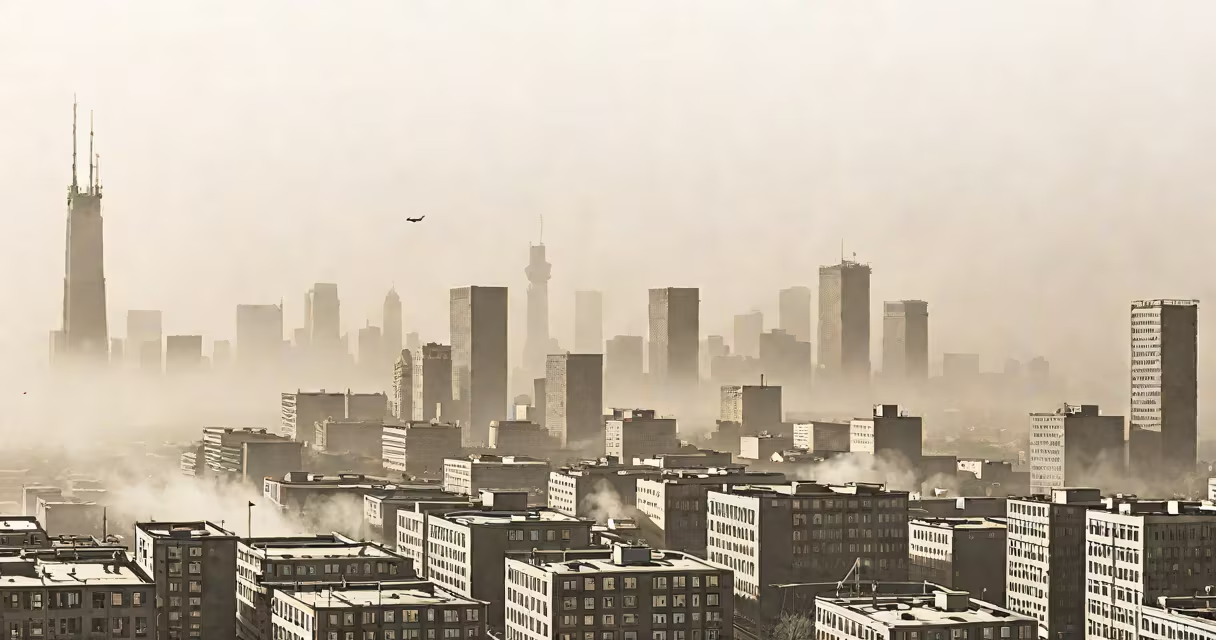
Air pollution definition describes the presence of harmful substances in the atmosphere that damage human health, ecosystems, and climate. These pollutants originate from vehicles, industrial processes, power plants, and natural events like wildfires. The U.S. Environmental Protection Agency (EPA) defines air pollution as any substance in the air that can cause harm when inhaled or disrupt environmental balance.
Atmospheric contaminants fall into two categories: primary and secondary pollutants. Primary pollutants are emitted directly-such as carbon monoxide from car exhaust or sulfur dioxide from coal-fired power plants. Secondary pollutants form in the air through chemical reactions-ozone (O₃) develops when nitrogen oxides (NOₓ) and volatile organic compounds (VOCs) react under sunlight. Ground-level ozone is a major component of urban smog and a leading cause of respiratory illness.
The World Health Organization (WHO) identifies nine key air pollutants linked to disease and premature death. These include particulate matter (PM2.5 and PM10), nitrogen dioxide (NO₂), sulfur dioxide (SO₂), carbon monoxide (CO), ozone (O₃), lead (Pb), and ammonia (NH₃). PM2.5-particles smaller than 2.5 micrometers-is especially dangerous because it penetrates deep into lung tissue and enters the bloodstream.
When pollutants enter the atmosphere, they disperse based on wind patterns, temperature inversions, and geographic features. Temperature inversions trap pollutants near the ground, worsening conditions in valleys or cities surrounded by mountains. Los Angeles experiences frequent inversion layers during summer months, contributing to persistent smog episodes.
Chemical reactions in sunlight drive photochemical smog formation. Nitrogen oxides from vehicle emissions react with VOCs from paints, solvents, and fuel evaporation to create ozone. This process peaks between 11 a.m. and 3 p.m., when solar intensity is highest. In Beijing, industrial emissions combine with winter heating demands to produce hazardous PM2.5 levels exceeding 300 µg/m³-over 12 times the WHO's recommended daily limit.
Long-term exposure leads to chronic health effects. A 2021 study published in *The Lancet Planetary Health* found that long-term exposure to PM2.5 reduces life expectancy by 1.8 years per 10 µg/m³ increase. Children in high-traffic neighborhoods show reduced lung function growth compared to peers in low-traffic areas.
Understanding air pollution requires knowing the most common pollutants and their origins. The table below outlines key pollutants, their typical sources, and associated health impacts.
| Pollutant | Primary Sources | Health & Environmental Impact |
|---|---|---|
| PM2.5 | Vehicle exhaust, power plants, wildfires | Heart attacks, stroke, asthma exacerbation; reduces visibility |
| NO₂ | Diesel engines, industrial facilities | Respiratory inflammation, increased infection risk |
| Ozone (O₃) | Reactions between NOₓ and VOCs in sunlight | Lung irritation, reduced lung capacity, plant damage |
| SO₂ | Coal combustion, oil refining | Worsens asthma, contributes to acid rain |
| CO | Incomplete combustion (cars, heaters) | Reduces oxygen delivery to tissues; fatal at high levels |
One non-obvious fact: indoor air pollution often exceeds outdoor levels. Cooking with wood or kerosene stoves releases PM2.5 at concentrations 10 to 100 times higher than outdoor urban air. In rural India, households using solid fuels report average indoor PM2.5 levels of 600 µg/m³-far above the WHO's safe threshold of 5 µg/m³.
Urban centers face the highest exposure due to concentrated traffic, industry, and population density. New Delhi recorded a 24-hour average PM2.5 level of 427 µg/m³ in November 2023-the highest in the world. This concentration is 170 times the WHO's daily guideline.
Environmental consequences extend beyond human health. Acid rain forms when SO₂ and NOₓ dissolve in atmospheric moisture, lowering pH levels. In the Adirondack Mountains, acid deposition has caused fish kills in over 200 lakes since the 1970s. Crop yields decline when ozone damages leaf stomata, reducing photosynthesis efficiency by up to 15% in wheat and soybeans.
During my fieldwork in Phoenix, Arizona, I measured PM2.5 levels at 85 µg/m³ during a summer heatwave. This exceeded the EPA's 24-hour standard of 35 µg/m³. The city's proximity to highways and desert dust storms created a perfect storm of particulate accumulation.
Many assume "clean air" means odorless or invisible. But air pollution includes colorless, odorless gases like CO and NO₂. These are undetectable without instruments, making them particularly dangerous. A 2020 EPA report noted that 12 million Americans live in counties with unsafe CO levels-most unaware until symptoms appear.
Another misconception: air pollution only affects cities. Rural areas suffer from agricultural emissions-ammonia from livestock waste and pesticides. In Iowa, ammonia levels near large-scale hog farms exceed 100 ppb, contributing to regional PM2.5 formation. The EPA classifies these as point-source emissions requiring regulation.
Finally, people confuse air pollution with weather. Smog is not fog-it's a mixture of smoke and fog formed by pollutants. The Great Smog of London in 1952 killed 12,000 people in five days. It was not a natural weather event but a result of coal burning and temperature inversions.
Understanding the air pollution definition enables informed decisions about travel, exercise timing, and home filtration. Knowing which pollutants are present and how they form empowers individuals and communities to advocate for cleaner air policies. The science is clear: reducing emissions saves lives.