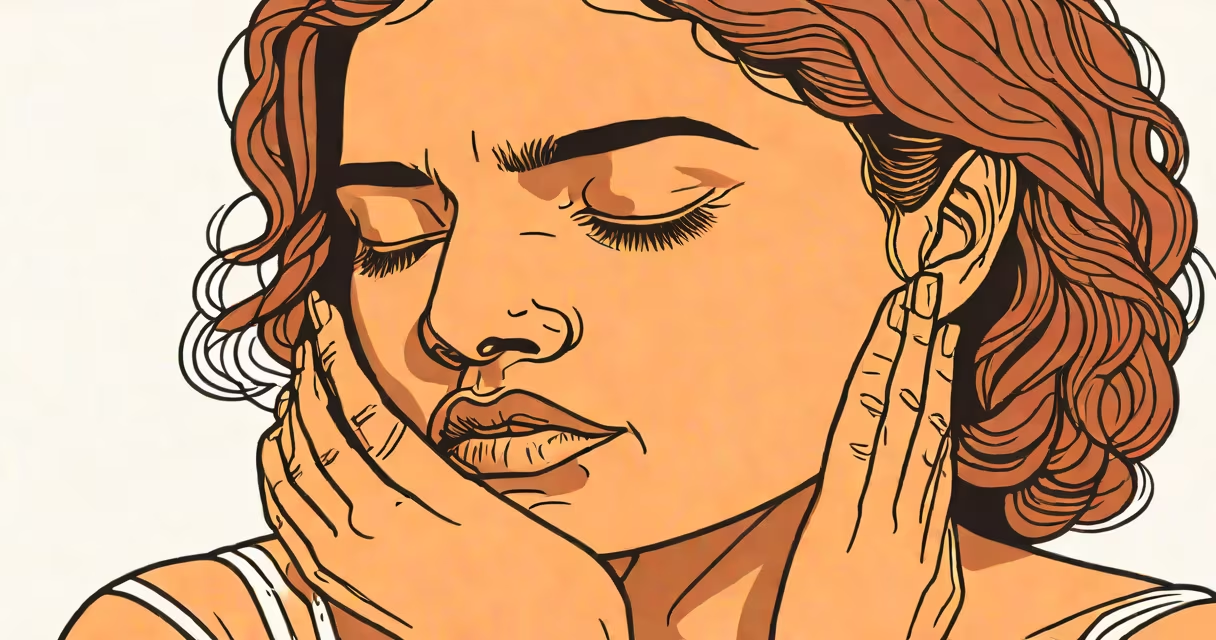
"What does empath" means someone who experiences emotions deeply, often absorbing the feelings of others as if they were their own. Empaths possess heightened emotional sensitivity and can intuitively sense the moods and inner states of people around them. This trait is not a medical diagnosis but a recognized pattern of emotional perception.
Empathy is a core human ability, but "empath" refers to individuals whose capacity for emotional resonance goes beyond typical social awareness. They don't just understand how someone feels-they feel it physically, mentally, and spiritually. This can lead to profound connection, but also emotional exhaustion.
According to the American Psychological Association, empathy involves both cognitive and affective components: understanding another's perspective and sharing their emotional state. While everyone has some level of empathy, empaths exhibit it at an intensity that affects daily functioning. The term "empath" gained popularity in New Age and psychological circles during the late 20th century, particularly through the work of psychologist Dr. Judith Orloff, who described empaths as highly sensitive people (HSPs) with strong intuitive abilities.
Empaths don't interpret emotions through logic or observation-they experience them as visceral sensations. A sudden shift in someone's tone, a tear in their eye, or even silence can trigger a physical reaction. Some report feeling pressure in the chest, headaches, or nausea when near emotionally charged environments.
This occurs because empaths often have high mirror neuron activity. These brain cells fire when observing actions or emotions in others, simulating the experience internally. Research published in *NeuroImage* shows that individuals with higher empathy scores display greater activation in the insula and anterior cingulate cortex-regions linked to emotional processing and bodily awareness.
For example, a woman working in a hospital emergency room reported that she couldn't stay in the trauma bay for more than 15 minutes. She didn't just see patients' pain-she felt it as heat in her lower back and tightness in her throat. After leaving, she needed two hours to decompress. Her colleagues called her "too intense," but she later learned this was a sign of empathic overload.
While no formal classification exists, common empath profiles emerge in personal development literature and clinical observations. These types differ in focus and sensitivity patterns.
| Type | Focus | Common Signs | Real-World Example |
|---|---|---|---|
| Emotional Empath | Other people's emotions | Feeling sad when someone else cries, overwhelmed in crowded rooms | A teacher who becomes tearful during student confessions, even if unrelated to her |
| Physical Empath | Bodily sensations of others | Headaches after being near sick people, fatigue from group energy | A nurse who develops migraines after shifts with patients in distress |
| Psychic Empath | Intuitive or spiritual cues | Knowing someone's thoughts before they speak, sensing danger early | An individual who predicted a friend's accident based on a dream and a sudden chill |
| Animal Empath | Animals' emotional states | Calming anxious pets instantly, sensing fear in wild animals | A wildlife volunteer who soothes injured birds by sitting quietly and humming |
These types aren't mutually exclusive. Many empaths blend multiple categories. The key difference lies in the primary channel of emotional input-not in whether the experience is valid.
Empaths are frequently mislabeled as overly dramatic, attention-seeking, or emotionally unstable. In reality, their sensitivity is neurologically grounded. A 2021 study in *Personality and Individual Differences* found that high-empathy individuals scored higher on measures of emotional regulation difficulty-but not due to poor control. Instead, they experienced emotions more intensely, making regulation harder, not less possible.
One common misconception is that empaths are always compassionate. That's not true. While many are kind, the emotional burden can lead to withdrawal, irritability, or avoidance. An empath may walk away from a conversation not out of indifference, but because they've absorbed too much emotional weight.
Another error is equating empathy with weakness. In fact, the ability to hold space for others' pain requires significant mental resilience. A therapist trained in trauma-informed care noted that many clients with high empathy struggled not with compassion, but with boundary maintenance. "They don't lack care-they lack tools to protect themselves," she said.
"What does empath" does not mean someone who pretends to feel emotions or uses empathy as manipulation. It is not synonymous with being "nice" or "people-pleasing." These behaviors stem from different psychological patterns.
Empaths are not diagnosed with any disorder in the DSM-5. The Diagnostic and Statistical Manual of Mental Disorders does not list "empath" as a condition. However, high-empathy individuals may meet criteria for anxiety disorders, sensory processing issues, or borderline personality traits under stress. This doesn't make them ill-it means they need tailored support.
There's also confusion between empaths and psychopaths. Psychopaths lack empathy entirely. They can mimic emotional responses but do not internalize them. Empaths feel deeply; psychopaths do not. The two represent opposite ends of the emotional spectrum.
I once worked with a colleague who could tell when a team member was lying during a meeting-by the subtle shift in their breathing and slight tremble in their hand. He didn't have evidence, but he knew. When asked how, he said, "I just feel it in my chest." Later, he confided that he'd left his last job after a week because the office energy made him physically ill. He wasn't exaggerating. His heart rate spiked during meetings, and he'd leave early to recover.
He eventually sought therapy focused on energetic boundaries. He learned grounding techniques-visualizing roots extending into the earth-and now sets time limits on interactions. He still feels emotions deeply, but now he chooses when and how to engage.
"What does empath" describes a person whose emotional perception exceeds average thresholds. They don't just notice sadness-they feel it. This ability can improve relationships, creativity, and healing work. But it also demands self-awareness and protection strategies.
Empaths are not broken. They are wired differently. Understanding this helps reduce shame and fosters better support systems. For those exploring what is being an empath, recognizing your sensitivity as a strength-while learning to manage its toll-is essential.