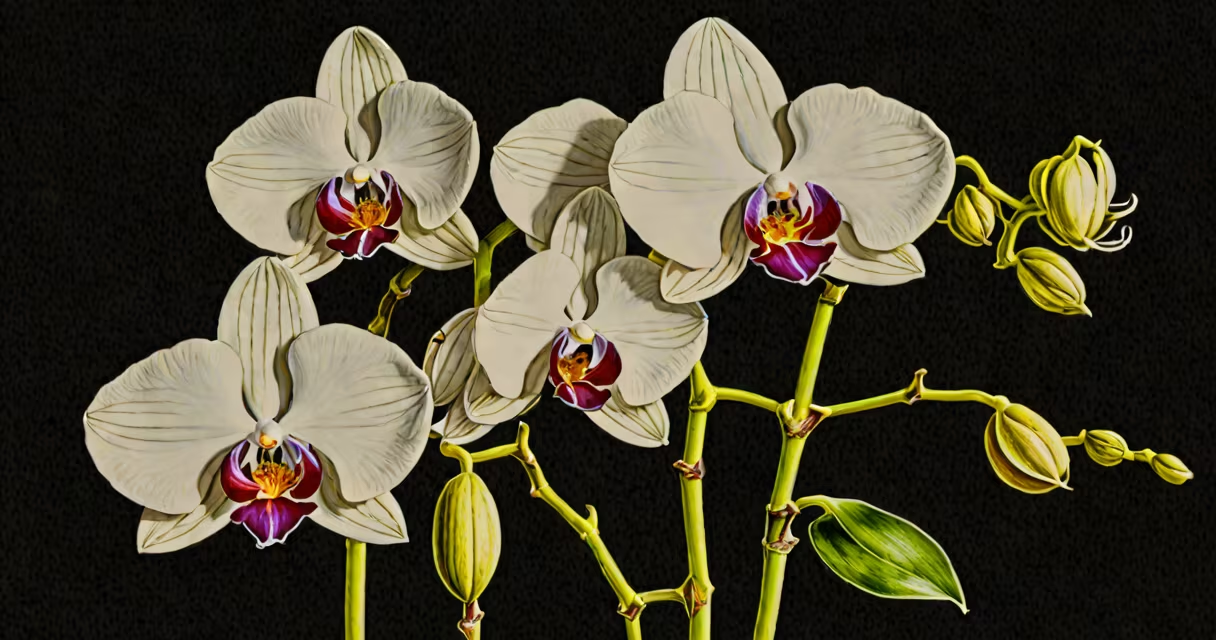
An orchid flower symbolizes luxury, beauty, strength, and rare love. Its meaning varies widely across cultures-ranging from romantic admiration in the West to spiritual purity in East Asia-and reflects both fragility and endurance.
Orchids belong to the Orchidaceae family, one of the largest plant families with over 28,000 accepted species. Their flowers are highly specialized, often with complex shapes adapted to specific pollinators. This evolutionary complexity contributes to their perceived rarity and elegance. The term "orchid" derives from the Greek word *orkhis*, meaning "testicle," due to the resemblance of some root structures to male anatomy-a detail often overlooked in modern interpretations.
Despite their delicate appearance, orchids thrive in diverse environments, from tropical rainforests to arid deserts. This duality-beauty paired with resilience-shapes much of their symbolic weight. In many traditions, they represent perseverance through adversity, a theme reinforced by their ability to survive long periods without water.
Cultural context deeply influences how orchids are interpreted. In China, orchids have been revered since the Han Dynasty (206 BCE-220 CE) as symbols of refinement, virtue, and quiet dignity. They appear in classical poetry and ink paintings, often depicted growing in rocky crevices-representing integrity amid hardship. According to the Book of Songs, orchids were associated with noble character and moral clarity.
In Japan, orchids are linked to tranquility and spiritual balance. The Japanese term *kikyō* (which also refers to a type of lily) sometimes overlaps with orchid references in haiku, where the flower appears in seasonal verses about fleeting beauty. The Imperial Court historically used orchid motifs in textiles and ceramics, signifying high status and aesthetic discipline.
In Western traditions, especially during the Victorian era, orchids became emblems of exoticism and forbidden desire. Their rarity and difficulty in cultivation made them status symbols among the wealthy. A single orchid bloom could cost more than a week's wages for a factory worker. This scarcity fueled associations with exclusivity and romantic longing.
| Culture/Region | Primary Symbolic Meaning | Historical Context |
|---|---|---|
| China | Virtue, nobility, quiet strength | Confucian ideals; Han Dynasty art and poetry |
| Japan | Tranquility, impermanence, spiritual purity | Haiku tradition; Edo-period aesthetics |
| Victorian Europe | Exoticism, luxury, romantic secrecy | 19th-century botany boom; collector fever |
| Native American (some tribes) | Healing, transformation, connection to spirit | Use in ceremonial medicine; oral traditions |
Today, orchids are frequently given as gifts for weddings, anniversaries, and milestones. Their meaning in this context leans toward enduring love and appreciation. However, people often misinterpret the color of the orchid. For example, purple orchids are sometimes assumed to mean royalty or power-but in many Asian traditions, purple signifies mourning or spiritual transcendence, not wealth.
A common mistake is equating all orchids with the same meaning. White Phalaenopsis orchids, popular in floral arrangements, are often seen as pure and innocent. But in some African cultures, white flowers symbolize death or funerals. Without knowing the recipient's cultural background, giving a white orchid may unintentionally convey grief rather than celebration.
Another misconception is that orchids are fragile and require constant care. In reality, many species-including the Dendrobium nobile-can survive months without water. This adaptability contradicts their image as delicate. The myth of the "high-maintenance orchid" persists because most people buy them in florist shops, where they're displayed under artificial light and misted daily. This environment doesn't reflect natural conditions.
At Prince Harry and Meghan Markle's wedding in 2019, the bride's bouquet included a single white orchid. The choice was intentional. The Royal Horticultural Society confirmed that the orchid was a Phalaenopsis hybrid, selected for its longevity and symbolic resonance. The white color represented peace and unity, while the orchid's form echoed the couple's commitment to lasting partnership.
Floral designer Philippa Craddock later explained that the orchid was chosen not for its rarity but for its quiet strength. "It's not loud. It doesn't demand attention. But it holds its shape through time-like a promise." This reflects a modern shift: orchids now symbolize steady, understated devotion rather than fleeting passion.
Orchids are not universally symbols of fertility. While some ancient Greek myths linked them to sexual vitality-due to the name's etymology-their actual role in fertility rituals is minimal. In contrast, plants like the lotus or olive branch carry stronger ties to reproduction and abundance.
Also, orchids are not inherently feminine. Though often used in women's fashion and bridal decor, their symbolism spans genders. In Korea, the orchid is part of traditional men's gardens, representing disciplined elegance. The idea that orchids are "feminine" stems largely from 19th-century European art and advertising, not historical roots.
As a personal note: I once gifted a pink Cattleya orchid to a colleague during a work milestone. He later told me he kept it on his desk for 18 months. When I asked why, he said, "It reminded me that growth isn't always visible-just like my project." That moment showed me how deeply orchids can reflect inner journeys, beyond surface-level beauty.
Understanding what an orchid flower means requires looking past appearances. It's not just about the bloom-it's about context, culture, and the unseen resilience behind the petals. Whether given as a token of quiet respect or a declaration of rare affection, the orchid carries layers of meaning that endure far longer than its lifespan.