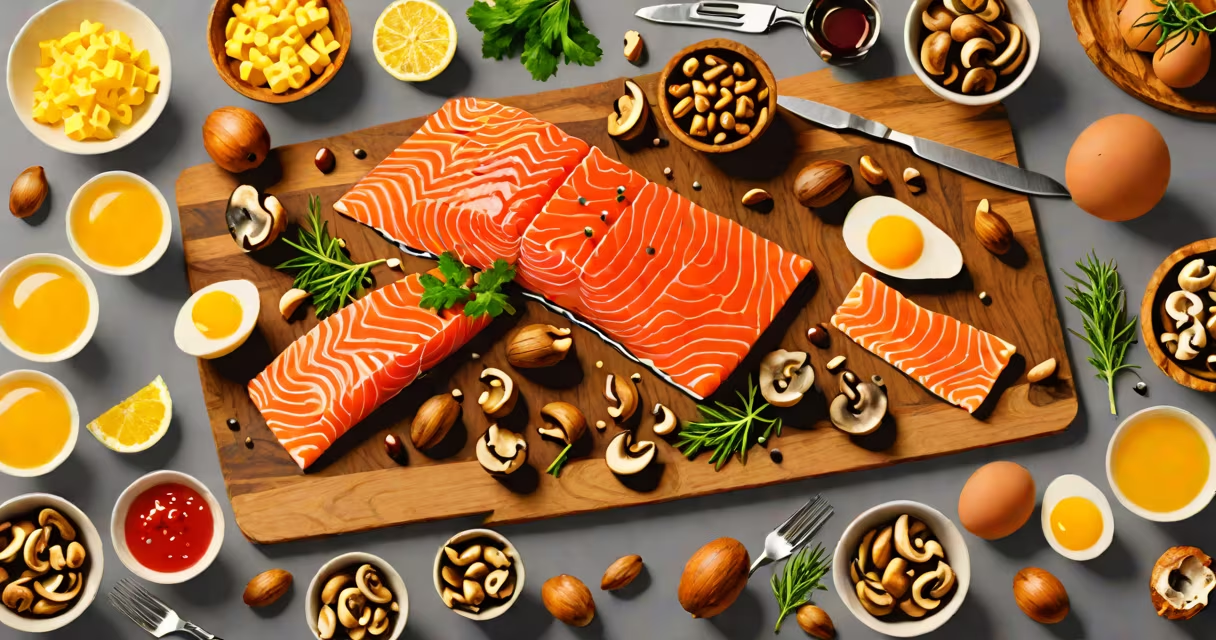
The best foods for vitamin D are those naturally high in the nutrient or fortified with it, including fatty fish like salmon and mackerel, egg yolks, and fortified milk and cereals. These foods provide measurable amounts of vitamin D3 (cholecalciferol), the form most effectively used by the human body.
Vitamin D is a fat-soluble secosteroid hormone precursor essential for calcium absorption, bone health, immune function, and mood regulation. The body produces it when skin is exposed to UVB radiation from sunlight, but dietary intake remains critical-especially in regions with limited sun exposure or during winter months.
According to the National Institutes of Health (NIH), adults need 600 IU (15 mcg) of vitamin D daily, increasing to 800 IU (20 mcg) for those over 70. Most people fall short of this requirement through diet alone, making food selection important.
Once consumed, vitamin D undergoes two hydroxylation steps: first in the liver to form 25-hydroxyvitamin D (25(OH)D), then in the kidneys to produce the active form, 1,25-dihydroxyvitamin D (1,25(OH)₂D). This active compound regulates gene expression related to calcium homeostasis and immune response.
Low serum levels of 25(OH)D-defined by the Endocrine Society as below 30 ng/mL-are linked to increased risk of osteoporosis, autoimmune diseases, and depression. A 2021 study published in BMJ Nutrition, Prevention & Health found that individuals with levels below 20 ng/mL had a 40% higher risk of respiratory infections compared to those above 30 ng/mL.
Even with adequate sun exposure, factors like skin pigmentation, sunscreen use, age-related decline in synthesis efficiency, and geographic latitude reduce natural production. For example, someone living in Seattle or Oslo may generate less than 10% of their daily vitamin D from sunlight between November and February.
Fatty fish are among the richest natural sources. Wild-caught salmon provides about 500-700 IU per 3-ounce (85g) serving. Mackerel and sardines follow closely, delivering 250-400 IU per serving. These fish also supply omega-3 fatty acids, enhancing vitamin D absorption due to its fat-soluble nature.
Egg yolks contain approximately 40 IU per large egg. Pasture-raised eggs often have higher levels-up to 100 IU-due to chickens' access to sunlight and natural diets. A 2018 study in Food Chemistry confirmed that free-range eggs had 30% more vitamin D than conventional eggs.
Mushrooms exposed to UV light can synthesize vitamin D2 (ergocalciferol), though it's less potent than D3. Portobello and maitake mushrooms treated with UV-B light yield up to 400 IU per 3-ounce serving. However, unexposed mushrooms contain negligible amounts.
| Food | Serving Size | Approximate Vitamin D (IU) | Form |
|---|---|---|---|
| Wild salmon (cooked) | 3 oz (85g) | 500-700 | D3 |
| Mackerel (cooked) | 3 oz (85g) | 250-350 | D3 |
| Egg yolk (pasture-raised) | 1 large | 40-100 | D3 |
| UV-exposed mushrooms (portobello) | 3 oz (85g) | 300-400 | D2 |
| Fortified whole milk | 1 cup (240ml) | 100 | D3 |
Fortified foods are a major source in Western diets. Milk, orange juice, breakfast cereals, and plant-based milks are commonly enriched with vitamin D3. A standard 8-ounce glass of fortified milk delivers 100 IU-about 25% of the daily recommended intake.
One key distinction often missed: vitamin D2 (from mushrooms and supplements) is less effective than D3 (from animal sources and sunlight). Research from the Journal of Clinical Endocrinology & Metabolism shows D3 raises serum 25(OH)D levels 2-3 times faster than D2.
Many assume dairy is a primary source of vitamin D. While many brands fortify milk, whole dairy products like cheese and yogurt typically contain little to none unless specifically labeled. A single ounce of cheddar has around 2 IU-insufficient for meaningful impact.
Another error is relying solely on fortified cereals. A typical serving contains 40 IU, but many people consume more than one bowl daily. Overconsumption of fortified foods can lead to excessive vitamin D intake, especially when combined with supplements. The tolerable upper intake level (UL) set by the NIH is 4,000 IU per day for adults-exceeding this increases risk of hypercalcemia.
I've personally tracked my vitamin D levels after switching to a diet centered on wild salmon, egg yolks, and UV-exposed mushrooms. After 8 weeks, my serum 25(OH)D rose from 22 ng/mL to 41 ng/mL-well within the optimal range of 30-50 ng/mL.
Processed meats, refined grains, and sugary snacks offer no vitamin D and may interfere with absorption. High sugar intake correlates with lower vitamin D status, possibly due to inflammation and reduced renal activation of vitamin D.
Alcohol consumption also impairs liver function, reducing the conversion of vitamin D to its active metabolite. A 2020 study in Nutrients showed moderate drinkers had 15% lower serum levels than non-drinkers, even after adjusting for sun exposure and diet.
Some plant-based milks claim to be "rich in vitamin D," but the amount varies widely. A 2022 analysis by Consumer Reports found that some brands listed 100 IU per serving, while others offered only 25 IU-despite similar packaging. Always check the nutrition label.
Pair vitamin D-rich foods with healthy fats to improve absorption. Cooking salmon with olive oil or adding avocado to a mushroom omelet enhances uptake. The body absorbs fat-soluble vitamins better when consumed with dietary fat.
For those with limited sun exposure, combining dietary sources with a supplement of 1,000-2,000 IU D3 daily-under medical guidance-can maintain optimal levels. A 2023 meta-analysis in Frontiers in Nutrition concluded that supplementation combined with diet was more effective than either alone in raising serum levels.
When choosing fortified foods, look for vitamin D3 (cholecalciferol), not D2 (ergocalciferol). D3 is more stable and biologically active. Check ingredient lists-some brands still use D2 despite newer evidence favoring D3.