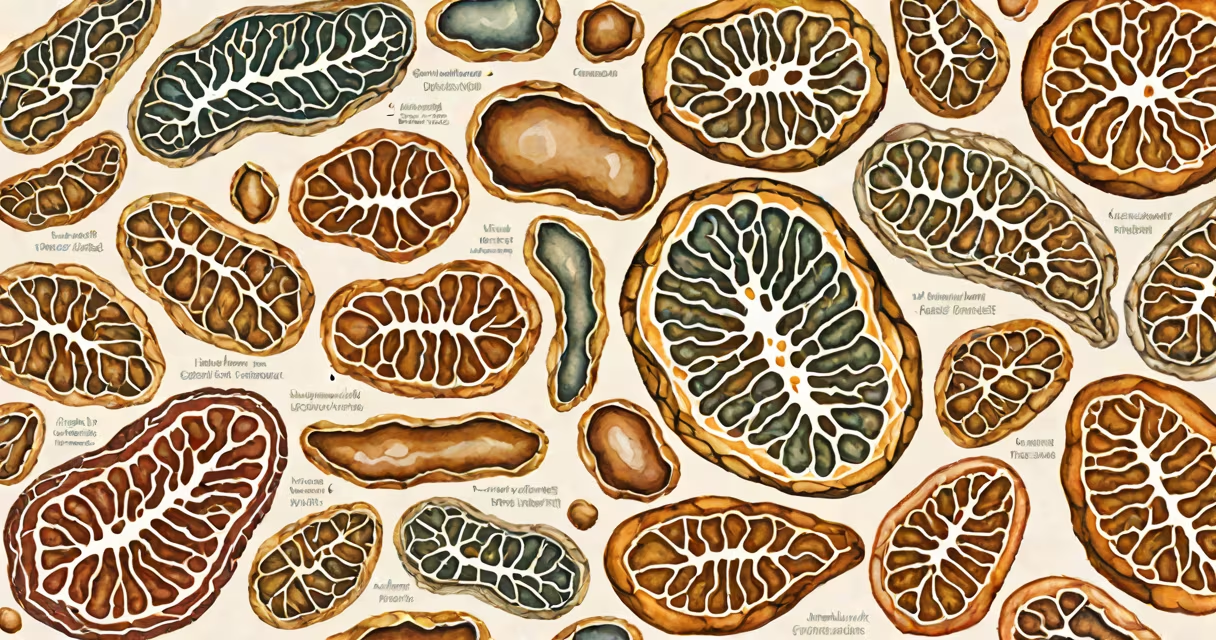
Mitochondrial diseases are a group of rare genetic disorders caused by defects in mitochondria-the organelles responsible for generating cellular energy through oxidative phosphorylation. These conditions disrupt ATP production, leading to widespread dysfunction in high-energy-demand tissues like brain, heart, and muscle.
More than 350 distinct mutations in nuclear DNA or mitochondrial DNA (mtDNA) have been linked to disease. Symptoms vary widely but commonly include muscle weakness, neurological decline, seizures, vision and hearing loss, and cardiomyopathy. Diagnosis often requires specialized testing such as muscle biopsy, enzyme assays, and genetic sequencing.
Each cell contains hundreds to thousands of mitochondria. They convert nutrients into adenosine triphosphate (ATP), the primary energy currency of cells. When mitochondrial function fails due to genetic errors, cells cannot meet energy demands, especially in organs requiring constant activity.
Defects may affect any of the five protein complexes in the electron transport chain. For example, Complex I deficiency accounts for about 25% of pediatric cases. Even mild reductions in enzyme activity can cause severe clinical outcomes because tissues like neurons and cardiac myocytes rely heavily on continuous ATP supply.
A key factor in disease expression is heteroplasmy-the presence of both mutant and normal mtDNA within a cell. Since mtDNA is inherited maternally and not subject to recombination, mutation load varies between tissues and individuals. A child may inherit a high proportion of mutated mtDNA, triggering early-onset disease, while another with lower levels remains asymptomatic.
Several well-defined syndromes illustrate the diversity of mitochondrial disease presentations:
| Disease | Primary Genetic Cause | Common Symptoms | Prevalence Estimate |
|---|---|---|---|
| Leigh syndrome | Nuclear genes (e.g., SURF1, NDUFS1); mtDNA mutations | Developmental regression, hypotonia, brainstem lesions, lactic acidosis | 1 in 30,000-40,000 live births |
| MELAS | MT-TL1 gene mutation (m.3243A>G) | Stroke-like episodes, seizures, migraine, diabetes, hearing loss | 1 in 5,000-10,000 in populations with European ancestry |
| Kearns-Sayre syndrome (KSS) | Large-scale mtDNA deletions (often sporadic) | Progressive external ophthalmoplegia, pigmentary retinopathy, cardiac conduction defects | 1 in 100,000 |
| Neuropathy, Ataxia, and Retinitis Pigmentosa (NARP) | MT-ATP6 gene mutation (m.8993T>G/C) | Ataxia, peripheral neuropathy, vision loss, dementia | Rare; ~100 reported cases globally |
These conditions demonstrate how single mutations can produce multisystem effects. For instance, the m.3243A>G mutation in MT-TL1 causes MELAS by impairing mitochondrial protein synthesis, reducing ATP output, and increasing reactive oxygen species-leading to vascular damage and stroke-like events even in young adults.
Most mitochondrial diseases manifest during infancy or childhood, though adult-onset forms exist. The nervous system and skeletal muscle are most vulnerable due to their high metabolic rates. However, any organ can be affected-liver failure, kidney disease, and endocrine dysfunction occur less frequently but are clinically significant.
Environmental triggers such as infections, fasting, or certain medications (e.g., valproic acid, statins) can unmask latent disease. Stress on energy metabolism exacerbates underlying defects, leading to acute decompensation. For example, a child with undiagnosed mitochondrial encephalopathy may develop coma after a viral illness due to inability to maintain cerebral energy homeostasis.
Mitochondrial dysfunction is not limited to inherited disorders. Secondary mitochondrial impairment occurs in common conditions like type 2 diabetes, Parkinson's disease, and aging itself. Research shows reduced Complex I activity in substantia nigra neurons of Parkinson's patients-a finding suggesting shared mechanisms between rare genetic diseases and more prevalent neurodegenerative disorders.
One persistent myth is that mitochondrial diseases are always fatal in childhood. While severe forms like infantile lactic acidosis carry high mortality, others progress slowly. Some individuals with KSS live into their 50s with managed care. Survival depends on early diagnosis, symptom control, and multidisciplinary support.
Another misconception is that all mitochondrial diseases follow maternal inheritance. Although mtDNA is passed exclusively through the mother, many nuclear-encoded mitochondrial proteins are inherited autosomal recessively or dominantly. Mutations in genes like POLG (polymerase gamma) cause Alpers-Huttenlocher syndrome, which presents with seizures and liver failure in children-typically inherited in an autosomal recessive pattern.
There is also confusion around diagnostic certainty. A positive test for a known pathogenic variant confirms disease, but variants of uncertain significance (VUS) complicate interpretation. A 2021 study in Genetics in Medicine found that nearly 30% of patients initially labeled "genetically undetermined" later received a definitive diagnosis after whole-exome sequencing and functional validation.
In 2018, a 24-year-old woman presented with recurrent headaches, vision loss, and a seizure. Brain MRI showed bilateral parieto-occipital lesions consistent with stroke-like episodes. Blood lactate was elevated at 4.2 mmol/L (normal: 0.5-2.2). Muscle biopsy revealed ragged-red fibers and reduced Complex I activity.
Genetic testing identified the m.3243A>G mutation in MT-TL1. Her mother had similar symptoms but milder progression, illustrating variable expressivity. Treatment included coenzyme Q10, L-carnitine, and avoiding fasting. Over two years, her cognitive function stabilized, and she experienced fewer episodes with lifestyle modifications.
This case highlights that while no cure exists, targeted interventions improve quality of life. Early recognition prevents irreversible damage. The patient's outcome contrasts sharply with untreated cases, where rapid neurological decline leads to death within months.
I observed a child with Leigh syndrome during a neurology rotation. He had stopped walking at age 3 and developed severe dystonia. His parents were unaware of the condition until a routine blood test revealed lactic acidosis. After genetic testing confirmed a mutation in SUCLG1, they learned the risk of recurrence in future pregnancies was 25%.
The family struggled with decisions about prenatal testing and reproductive options. This experience underscored that mitochondrial diseases are not just biological phenomena-they involve profound emotional, ethical, and financial burdens. Access to genetic counseling and metabolic specialists remains limited in rural areas.
What are some mitochondrial diseases? They are a diverse set of inherited and acquired disorders rooted in defective cellular energy production. Conditions like Leigh syndrome, MELAS, and Kearns-Sayre exemplify how mutations in nuclear or mitochondrial DNA disrupt important functions across multiple organ systems. Diagnosis requires a combination of clinical evaluation, biochemical testing, and genetic analysis.
Understanding these diseases is essential for identifying at-risk individuals and providing timely interventions. Advances in gene therapy and mitochondrial replacement techniques offer hope, but current management focuses on symptom relief and prevention of metabolic crises. Early detection remains the most effective strategy for improving long-term outcomes.