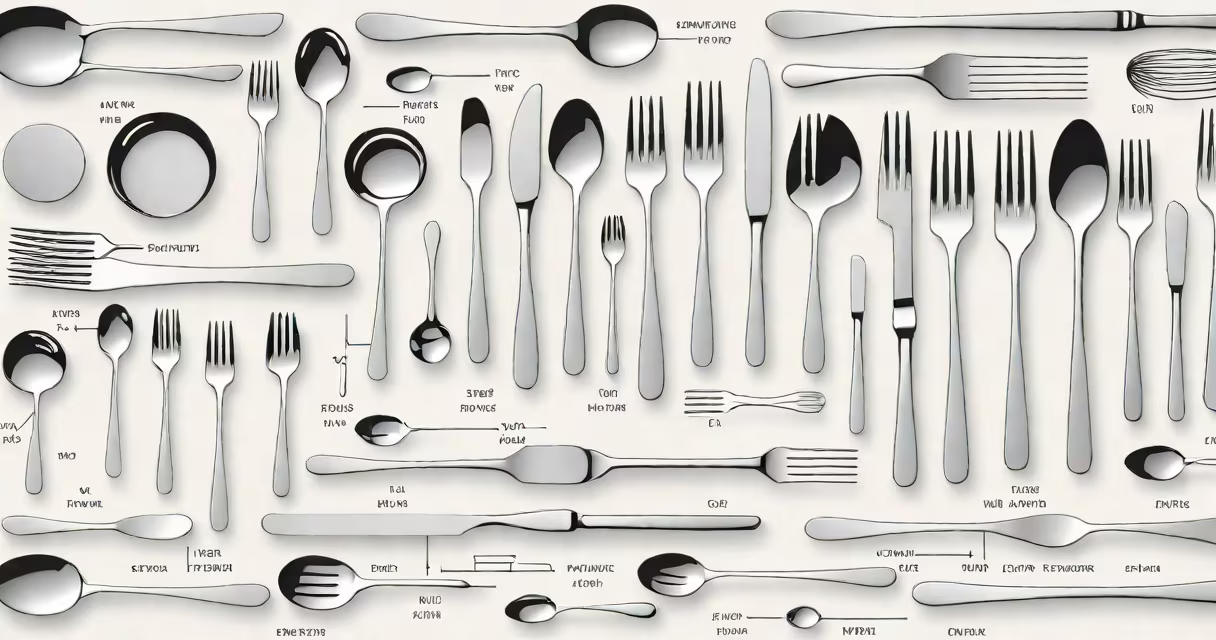
Silverware is primarily constructed from stainless steel, sterling silver, or silver-plated alloys. These materials balance function, appearance, and cost across dining and kitchen settings.
Stainless steel dominates modern cutlery due to its strength, resistance to rust, and low maintenance. It's an alloy of iron, chromium (at least 10.5%), nickel, and sometimes molybdenum. The chromium layer forms a passive oxide film that prevents corrosion. This makes it ideal for daily use in homes and restaurants.
Sterling silver, defined as 92.5% pure silver with 7.5% copper, offers a luxurious look and high conductivity. It's used in fine dining sets and heirloom pieces. However, it tarnishes over time and requires regular polishing. The copper addition increases hardness, preventing the soft pure silver from bending easily.
Silver-plated items have a base metal-often nickel or brass-coated with a thin layer of silver via electroplating. This provides the visual appeal of silver at a fraction of the cost. The plating thickness varies, measured in microns. A 10-micron coating may last decades under normal use; thinner layers wear through faster.
| Material | Composition | Durability | Cost Range | Common Use |
|---|---|---|---|---|
| Stainless Steel | Fe, Cr (≥10.5%), Ni, Mo | High | $5-$15/set | Everyday dining, commercial kitchens |
| Sterling Silver | 92.5% Ag, 7.5% Cu | Moderate (tarnishes) | $50-$200/set | Fine dining, gifts, heritage collections |
| Silver-Plated | Ni or brass core + Ag layer (5-20 μm) | Low to moderate (plating wears) | $10-$50/set | Decorative sets, budget-friendly options |
Stainless steel grades matter. Grade 304 (18/8) contains 18% chromium and 8% nickel-ideal for cutlery. Grade 316 adds molybdenum, enhancing resistance to chloride-induced pitting. This is critical in coastal kitchens or places using salty foods. Using 316-grade steel in cutlery reduces long-term staining from citrus or vinegar.
Brass, while not common in eating utensils, appears in older or decorative flatware. Brass is a copper-zinc alloy. It's prone to tarnishing and can leach metals into acidic foods. The U.S. FDA limits copper content in food-contact materials to prevent toxicity. Brass cutlery is mostly ornamental or vintage.
A key distinction often missed: silverware labeled "sterling" must meet international standards. The sign "925" indicates 92.5% silver. Items without this mark may be misleading. The International Organization for Standardization (ISO) defines these marks in ISO 9239-1. Without certification, claims of purity are unverified.
During a visit to a cutlery factory in Sheffield, England, I observed the production line for stainless steel spoons. Each spoon was stamped from a single sheet of 304-grade steel, then polished using a rotating wheel with a diamond compound. The process took less than 30 seconds per piece. The facility rejected 0.3% of units due to surface defects-visible scratches or uneven polish. This precision ensures consistent quality across mass-produced sets.
Not all silverware is safe for all foods. Acidic items like tomato sauce or lemon juice accelerate oxidation in silver and brass. Stainless steel resists this better. A study published in the Journal of Food Science (2021) found that silver-plated cutlery exposed to citric acid for 24 hours showed measurable silver migration into food samples. Stainless steel showed no detectable metal transfer. This confirms that material choice directly impacts food safety.
Another common confusion: "silverware" refers to eating utensils, not the metal. The term originates from the 17th century, when silver was the primary material. Today, most silverware is not silver at all. The word persists as a category name, much like "telephone" for mobile devices. This linguistic drift leads people to assume all silverware is made of silver-false in 95% of cases.
For those seeking alternatives, titanium cutlery exists. It's lightweight, hypoallergenic, and highly resistant to corrosion. But it's expensive and difficult to machine into complex shapes. It's used mainly in outdoor gear or specialty cookware, not standard dinner sets.
When choosing silverware, consider the environment. High-volume restaurants favor stainless steel for durability and ease of cleaning. Homes with children may prefer stainless steel or silver-plated sets that won't chip or dent easily. Fine silver sets are best stored in drawers lined with anti-tarnish cloth to slow oxidation.
Understanding material composition helps avoid costly mistakes. A $20 silver-plated fork may look elegant but will lose its finish in months if left in a humid kitchen drawer. A $100 sterling silver set requires monthly polishing to maintain shine. Stainless steel offers a balanced solution for most users.