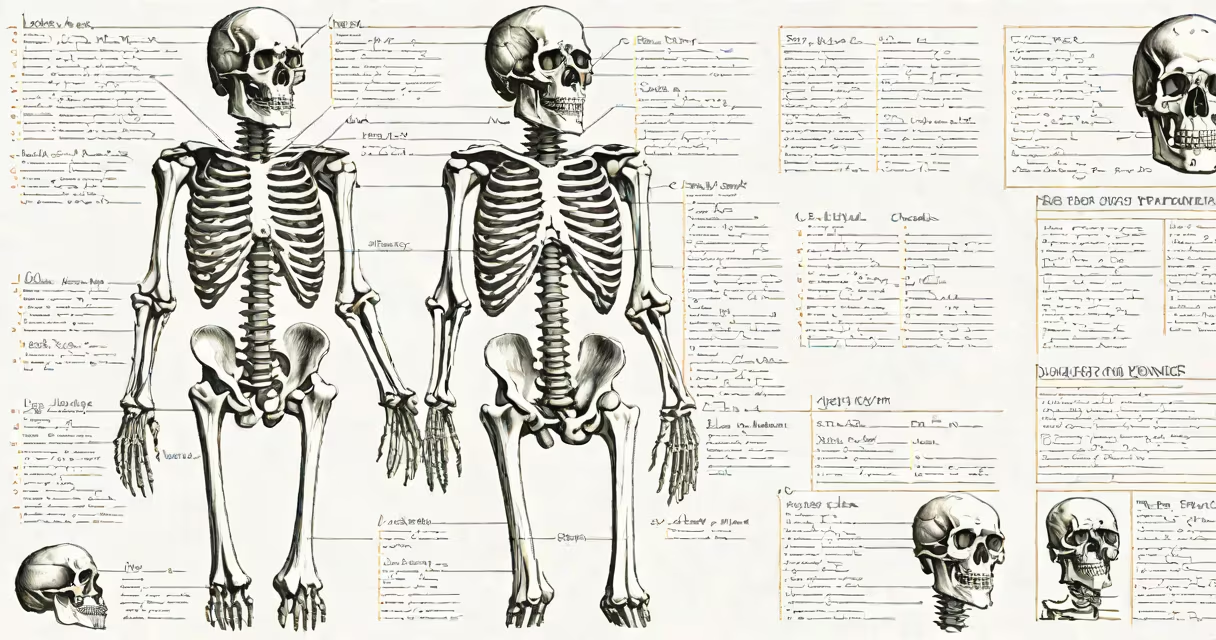
Human bones provide structural support, protect important organs, enable movement, store minerals, and produce blood cells. They form the structure of the body and maintain internal balance through multiple physiological roles.
Bones are living tissues that constantly remodel themselves. This changing process ensures strength and adaptability throughout life. The adult human skeleton contains 206 bones, distributed across the axial and appendicular skeletons.
Bone tissue consists of calcium phosphate crystals embedded in a collagen matrix. This composite structure resists compression and tension, allowing bones to bear weight while remaining flexible enough to absorb shock. When stress is applied, osteocytes detect strain and trigger remodeling via osteoblasts and osteoclasts.
For example, during walking, the femur experiences compressive forces exceeding 1.5 times body weight. Over time, mechanical loading stimulates bone deposition in high-stress areas, reinforcing the structure. This adaptation prevents fractures under daily loads.
Bone marrow inside long bones produces red blood cells, platelets, and most white blood cells. The process, called hematopoiesis, occurs primarily in the spongy bone of the pelvis, sternum, and vertebrae. Without this function, oxygen transport and immune defense would fail.
The five primary functions of human bones are support, protection, movement, mineral storage, and blood cell formation. Each serves a distinct purpose in maintaining bodily integrity and homeostasis.
| Function | Key Mechanism | Example |
|---|---|---|
| Support | Weight-bearing structure | Vertebrae support the spine and allow upright posture |
| Protection | Enclosure of sensitive organs | Ribcage shields the heart and lungs |
| Movement | Joint articulation with muscles | Humerus and radius enable arm flexion and extension |
| Mineral Storage | Calcium and phosphorus reservoir | Bone releases calcium during low blood levels |
| Blood Cell Production | Hematopoiesis in red marrow | Femur marrow generates 2 million red blood cells per second |
Each function operates independently yet interdependently. For instance, when blood calcium drops below 8.5 mg/dL, parathyroid hormone triggers bone resorption to release stored calcium. This mechanism maintains plasma calcium within a narrow range critical for nerve signaling and muscle contraction.
Many assume bones are inert structures. In reality, they are metabolically active. A single femur contains over 100,000 osteocytes-cells that monitor mechanical load and communicate with neighboring cells. These cells regulate bone turnover rates, which average 10% annually across the skeleton.
Another misunderstanding is that bones grow only during childhood. While longitudinal growth stops at epiphyseal plate closure around age 18-25, bone remodeling continues lifelong. Even in older adults, new bone forms at a rate of about 1 mm per month in healthy individuals.
A lesser-known fact: bones contain more calcium than any other organ. The skeleton holds approximately 99% of the body's calcium and 85% of its phosphorus. This reservoir enables rapid response to metabolic demands, such as during pregnancy or lactation, when calcium needs increase by up to 30%.
Understanding bone function explains why osteoporosis increases fracture risk. With reduced bone density, even minor falls can cause hip fractures. In the U.S., over 300,000 hip fractures occur annually among people aged 65+, often leading to hospitalization and long-term care dependency.
Consider a 70-year-old woman with vitamin D deficiency. Her intestines absorb less calcium, so her bones release more to maintain blood levels. Over time, this leads to porous, brittle bones. Without intervention, she may develop vertebral compression fractures-where spinal vertebrae collapse under body weight, causing height loss and chronic pain.
I once observed a patient with Paget's disease, a disorder of abnormal bone remodeling. His skull thickened over years, compressing cranial nerves. He reported hearing loss and headaches. Treatment with bisphosphonates slowed bone turnover and improved symptoms. This case illustrates how disrupted bone function affects multiple systems.
Bone function is not limited to anatomy-it influences nutrition, endocrinology, and physical activity. Regular weight-bearing exercise increases bone mineral density by stimulating osteoblast activity. Studies show that women who walk 30 minutes daily have 15% higher hip bone density than sedentary peers at age 60.
The function of human bones extends far beyond structural support. They regulate mineral balance, generate blood cells, and respond dynamically to mechanical and hormonal signals. Recognizing their multifaceted roles clarifies why bone health impacts nearly every aspect of well-being. Maintaining strong bones requires proper nutrition, physical activity, and medical monitoring when needed. This guide.