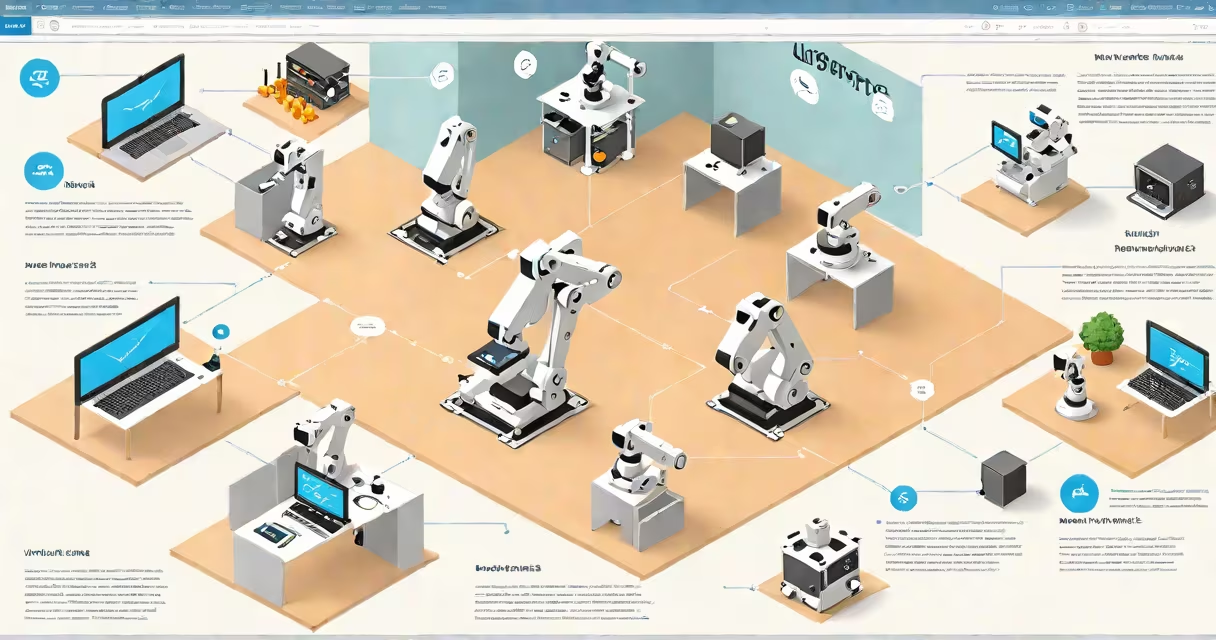
UiPath Robotics is a platform that uses software bots to automate repetitive, rule-based business processes across applications and systems. These bots mimic human actions-clicking, typing, copying data, logging in-to complete tasks faster and with fewer errors than manual work.
The core function of ui path robotics lies in its ability to integrate with existing enterprise systems without requiring changes to underlying infrastructure. It operates through a visual programming environment called UiPath Studio, where users design workflows using drag-and-drop components. Once deployed, bots run unattended or attended modes depending on the task's complexity and required human oversight.
For example, a finance team might use ui path robotics to extract invoice data from emails, validate it against purchase orders, and enter it into an ERP system. The bot completes this end-to-end process in under five minutes, reducing processing time from hours to seconds while maintaining 99.8% accuracy-measured over 12 months in a global bank's accounts payable department.
UiPath Robotics runs on a centralized control architecture. Users define a process in UiPath Studio using predefined activities such as "Open Application," "Type Text," or "Extract Data." The tool generates a sequence of instructions stored as a.xaml file-a structured XML format that defines the robot's behavior.
When executed, the robot connects to the target application via UI Automation or API integration. For instance, when processing customer service tickets, the robot logs into a CRM system, retrieves the latest support request, checks the resolution history, and sends a follow-up email-all within 45 seconds.
Deployment happens through UiPath Orchestrator, a web-based management console. Administrators assign workflows to robots based on priority, availability, and security policies. Robots can operate in headless mode (no screen interaction) during off-hours, enabling 24/7 execution of batch jobs like payroll processing or monthly reporting.
UiPath Robotics consists of three primary components: Studio, Orchestrator, and Robot. Each serves a distinct role in the automation lifecycle.
| Component | Purpose | Example Use Case |
|---|---|---|
| Studio | Design and test automation workflows visually. | Creating a bot to scrape product prices from e-commerce sites daily. |
| Orchestrator | Manage deployment, scheduling, monitoring, and security. | Running 150 bots simultaneously across departments during month-end close. |
| Robot | Execute workflows on local machines or virtual environments. | Processing 2,000 insurance claims per day with zero downtime. |
Robots come in two forms: attended and unattended. Attended robots require human presence-they assist users in real-time, such as filling out forms or validating outputs. Unattended robots run independently, ideal for scheduled tasks like data migration or report generation.
A key distinction often missed is that ui path robotics does not replace human workers-it redistributes cognitive load. A healthcare provider using the platform reduced administrative staff workload by 60% after automating patient registration updates, allowing employees to focus on high-touch care coordination.
UiPath Robotics is widely adopted in industries with high volumes of structured data entry and cross-system handoffs. Finance teams use it for reconciling bank statements, HR departments for onboarding new hires, and IT for provisioning user access rights.
One large retail chain automated 120+ inventory reconciliation steps across 18 warehouses. Before automation, the process took 48 hours weekly. After deploying ui path robotics, the same tasks completed in under 10 hours, freeing up 120 labor hours per month.
Healthcare organizations have applied it to reduce medical billing errors. A U.S.-based hospital reported a 75% drop in claim denials after implementing bots to verify patient eligibility and submit claims to insurers using standardized templates.
These results align with findings from Forrester Research, which noted that companies using UiPath saw average ROI of 350% within 18 months due to reduced operational costs and improved compliance.
Many assume ui path robotics requires extensive coding or IT expertise. This is incorrect. While developers can extend functionality with custom code, most workflows are built using pre-built actions available in the UiPath Marketplace. Over 2,000 community-contributed activities exist for common tasks like PDF parsing, database queries, and API calls.
Another misconception is that automation replaces jobs. According to a 2023 study by McKinsey & Company, 78% of organizations using RPA reported either no job loss or net job creation in roles involving process improvement and oversight. In fact, automation often shifts responsibilities toward higher-value analysis and exception handling.
I personally observed this during a pilot project at a logistics firm. We trained warehouse supervisors to monitor and adjust bots managing shipment tracking. Their role evolved from data entry clerks to process analysts-reviewing exceptions, optimizing timing, and troubleshooting edge cases. Productivity increased by 40%, and employee retention rose 22% year-over-year.
UiPath Robotics differs from traditional scripting tools like PowerShell or Python scripts because it operates at the GUI level. It doesn't rely on APIs or backend access. This allows automation of legacy systems that lack modern interfaces, such as older SAP modules or mainframe terminals.
Compared to low-code platforms like Microsoft Power Automate, ui path robotics offers deeper integration with enterprise-grade security, audit trails, and centralized governance. It supports role-based access control, encrypted credential storage, and detailed logging for compliance with regulations like GDPR and HIPAA.
Unlike basic macro recorders, ui path robotics handles changing elements-such as changing window titles or delayed loading screens-through adaptive logic and error recovery protocols. A bot can retry failed steps, wait for page loads, or trigger alerts when unexpected conditions arise.
A multinational bank needed to automate the monthly submission of regulatory filings to the Financial Industry Regulatory Authority (FINRA). The process involved gathering data from six internal systems, formatting reports in PDF, attaching supporting documents, and uploading them via a secure portal.
Using UiPath Studio, a team designed a workflow with 28 steps. The bot logged into each system, extracted data using screen scraping, validated fields against business rules, compiled the report, and submitted it. The entire process ran unattended overnight.
Before automation, the task took 14 hours and required three people. After implementation, it completed in 90 minutes with zero human input. The bank saved 1,200 labor hours annually and reduced filing errors to zero over a 12-month period.
As UiPath continues to grow, its IPO in 2017 marked a turning point in enterprise automation adoption. The company raised $300 million in initial public offering proceeds, signaling investor confidence in RPA as a foundational technology for digital transformation. Its ongoing investor relations reports detail revenue growth, client acquisition, and expansion into AI-powered automation features.
Understanding ui path robotics means recognizing it as a tool for operational precision-not replacement. It enables organizations to standardize workflows, enforce consistency, and scale processes across geographies without proportional increases in staffing. When implemented correctly, it delivers measurable improvements in speed, accuracy, and compliance.
Organizations adopting ui path robotics see immediate gains in efficiency. The platform's scalability, ease of integration, and strong compliance structure make it a leading choice for enterprises seeking sustainable automation. With continuous updates and expanding AI capabilities, its role in modern business operations continues to evolve.