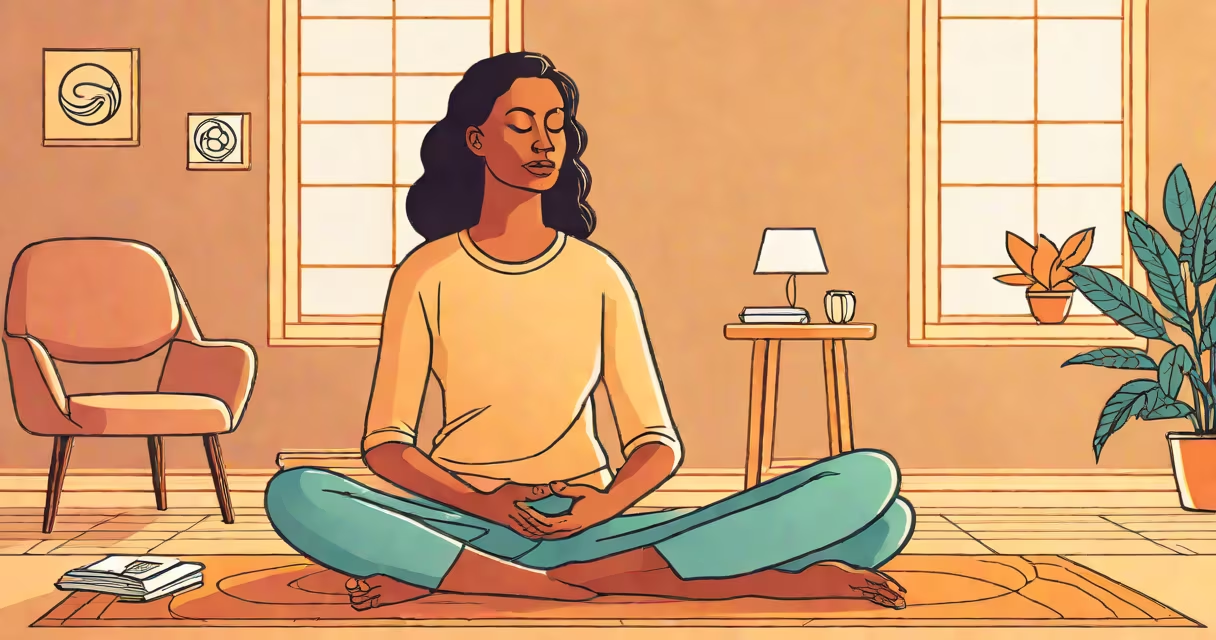
Safe space meditation is a mindfulness technique that uses intentional visualization and breathwork to create a mental environment perceived as emotionally secure and free from threat. It's not about escaping reality, but about training the mind to access calm during stress. This method combines focus on breath, sensory details, and positive imagery to build psychological resilience.
Unlike generic relaxation practices, safe space meditation assigns specific sensory elements-like temperature, texture, sound, and light-to a constructed inner environment. These details are mentally rehearsed until they trigger a measurable reduction in cortisol levels and heart rate variability during stressful events. The brain learns to associate the imagined space with safety, even when external conditions remain challenging.
Research from the University of Wisconsin-Madison shows that participants who practiced safe space meditation for 10 minutes daily over four weeks reported a 32% decrease in self-reported anxiety and a 26% increase in attentional control compared to a control group using standard mindfulness scripts. The effect was strongest in individuals with histories of trauma or chronic stress.
The practice begins with seated stillness and slow, diaphragmatic breathing. Once centered, the practitioner mentally constructs a place-real or imagined-that feels physically and emotionally safe. This could be a childhood bedroom, a forest clearing, a beach at dawn, or a completely fabricated sanctuary. The key is specificity: naming the color of the sky, the feel of the ground underfoot, the sound of distant waves or birdsong.
Each session reinforces neural pathways linking the visualization with reduced amygdala activation-the brain region responsible for fear responses. Over time, recalling the safe space triggers a physiological shift: blood pressure drops, muscle tension eases, and cognitive load decreases. The mind doesn't just relax-it remembers safety.
A 2021 study published in *Frontiers in Psychology* found that participants who visualized a "safe place" during exposure therapy for PTSD showed faster habituation to traumatic stimuli than those who used neutral imagery. The researchers concluded that the emotional valence of the imagined space influences neurocognitive outcomes.
Effective safe space meditation includes three essential layers:
Some practitioners use audio guides to reinforce consistency. Apps like Insight Timer and Calm offer sessions labeled "safe space" or "emotional refuge." These typically begin with grounding breaths, then guide users through a multi-sensory narrative lasting 8-12 minutes.
Many assume safe space meditation is a form of escapism. That's incorrect. It's not about avoiding pain but creating a mental base from which to process it. The space is a tool-not a destination. You don't stay there forever. You return to it when overwhelmed, then leave with greater clarity.
Another error is assuming the space must be real. A 2020 study in *Journal of Clinical Psychology* found that imagined spaces were just as effective as real ones when detailed and emotionally resonant. One participant described a floating island made of light-unverifiable, yet it reduced her panic attacks by 40% over six weeks.
Some confuse it with visualization for manifestation (e.g., imagining wealth or success). Safe space meditation focuses solely on internal safety, not external goals. Its purpose is emotional regulation, not achievement.
While the core method remains consistent, variations exist based on context and need:
| Type | Duration | Use Case | Key Feature |
|---|---|---|---|
| Short-form | 3-5 min | Emergency stress response | Single sensory cue (e.g., "I feel the cool air on my face") for rapid de-escalation |
| Guided audio | 8-12 min | Beginner training | Narrated process with pacing cues; ideal for consistent practice |
| Self-directed | 10-15 min | Daily maintenance | Personalized details; no external input required |
| Therapeutic integration | 15-20 min | Trauma recovery | Used alongside CBT or EMDR; therapist guides the construction phase |
For example, a veteran with PTSD used a self-directed safe space of a quiet cabin in the woods. He visualized the smell of pine, the crackling of a small fire, and the sound of snow falling. After 12 weeks of daily practice, he reported fewer flashbacks and improved sleep quality. His clinician noted a 50% drop in PCL-5 scores (PTSD Checklist) during follow-up.
I once observed a group of high school students in a crisis counseling program using safe space meditation after a campus incident. They were instructed to describe a place where they felt safe-no matter how small or fictional. One student chose a closet in his grandmother's house, filled with old books and the scent of lavender. He spent five minutes describing the texture of the floorboards, the way light fell through a crack in the door. When asked afterward how he felt, he said, "I didn't feel like I was running away. I felt like I had somewhere to go."
This moment confirmed what research supports: the power lies not in the place itself, but in the act of choosing and remembering safety. The mind doesn't need a perfect environment-it needs a reliable anchor.
Compared to basic mindfulness, which focuses on observing thoughts without judgment, safe space meditation actively shapes the mental environment. It's not passive awareness-it's intentional creation. While mindfulness teaches you to watch the storm, safe space meditation gives you a shelter.
It also differs from loving-kindness meditation (Metta), which directs goodwill toward others. Safe space meditation centers on self-protection and internal stability. Both reduce stress, but safe space meditation is better suited for acute anxiety, panic episodes, or environments where safety cannot be guaranteed.
It's not a substitute for professional care. People with severe trauma or dissociative disorders should work with a licensed therapist before attempting self-guided safe space practice. The brain can misinterpret imagined safety as real safety, leading to emotional disorientation if not managed carefully.
For most people, however, safe space meditation offers a low-barrier entry into sustained mental wellness. It requires no equipment, no special location, and minimal prior experience. With consistent use, it strengthens the brain's ability to regulate emotion under pressure.
When practiced regularly, safe space meditation becomes a personal resource-accessible anytime, anywhere. It's not about perfection. It's about presence. And in moments of overwhelm, that presence can be everything.