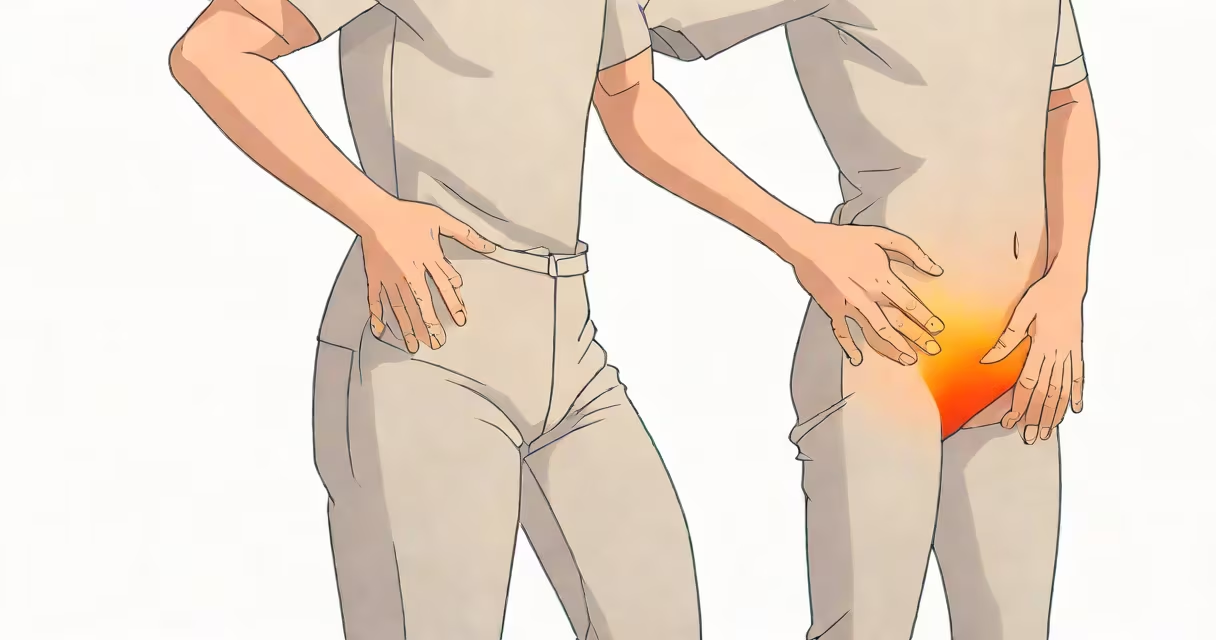
Pain below hip bone right side refers to discomfort localized beneath the right pelvic bone, often in the lower abdomen or groin area. It may result from musculoskeletal strain, organ-related issues, or nerve irritation. Accurate identification of the source is essential because symptoms can mimic conditions ranging from minor injury to serious internal problems.
This pain typically arises from structures near the right iliac crest-the curved upper edge of the pelvis-or from underlying tissues and organs. Common triggers include physical activity, sudden movements, or medical conditions affecting the kidneys, appendix, or reproductive system. The location and quality of the pain help differentiate between mechanical, inflammatory, and systemic origins.
For example, a 32-year-old runner reported sharp pain below the right hip bone after increasing training volume. The pain worsened during walking and sitting, resolving with rest and ice. A physical exam revealed tenderness over the right iliopsoas muscle, leading to a diagnosis of iliopsoas strain-a condition confirmed by ultrasound imaging.
The area below the right hip bone lies over the right lower quadrant of the abdomen. Key anatomical elements include the right iliac fossa, which houses parts of the large intestine, the appendix, and the right ureter. Muscles such as the rectus abdominis, external oblique, and iliopsoas attach to the pelvic bone and can become strained during repetitive motion or sudden twisting.
Nerve pathways in this region include branches of the lumbar plexus and the genitofemoral nerve. Irritation of these nerves due to compression or inflammation can cause referred pain that feels deep or burning. For instance, a herniated disc at L1-L2 may compress the L2 nerve root, resulting in pain radiating to the right hip and groin.
Internal organs contribute. The appendix, located in the right lower quadrant, can become inflamed-leading to acute pain that starts near the navel and migrates downward. Kidney stones passing through the right ureter often cause severe, colicky pain that begins in the flank and travels toward the groin.
Causes of pain below hip bone right side fall into four categories: musculoskeletal, gastrointestinal, urological, and gynecological. Each has distinct patterns and diagnostic markers.
| Type | Common Causes | Pain Quality | Red Flags |
|---|---|---|---|
| Musculoskeletal | Iliopsoas strain, hip flexor tear, sacroiliac joint dysfunction | Aching, sharp with movement | Pain worsens with leg lifting or bending forward |
| Gastrointestinal | Appendicitis, diverticulitis, constipation | Dull to sharp, may start centrally | Fever, loss of appetite, rebound tenderness |
| Urological | Kidney stones, urinary tract infection | Colicky, radiates to groin | Severe pain, nausea, blood in urine |
| Gynecological (females) | Ovarian cyst rupture, ectopic pregnancy, endometriosis | Intermittent, cyclic or sudden onset | Menstrual irregularity, vaginal bleeding |
One non-obvious distinction: pain from a ruptured ovarian cyst often presents as sudden, sharp pain that resolves within hours. This differs from appendicitis, where pain gradually intensifies over 6-12 hours and becomes constant. A study published in Annals of Emergency Medicine found that 87% of patients with acute appendicitis reported migration of pain from the epigastrium to the right lower quadrant-this pattern is key to early recognition.
Another overlooked factor is referred pain. For example, a patient with gallbladder disease may report pain in the right shoulder or upper abdomen-but in rare cases, it can refer to the right lower quadrant, mimicking appendicitis. Misdiagnosis rates remain high when clinicians rely solely on location without considering systemic signs.
Many assume pain below hip bone right side stems from a pulled muscle or a "pinched nerve." While common, these explanations overlook serious alternatives. A 44-year-old woman experienced persistent pain below her right hip bone for five days. She attributed it to gardening. But when fever and vomiting developed, she sought care. CT scan revealed a 7 mm kidney stone obstructing the right ureter-treated with hydration and medication.
Similarly, a 28-year-old man had recurring pain in the right lower abdomen after running. He believed it was a muscle strain. After two weeks of worsening pain and night sweats, he was diagnosed with Crohn's disease via colonoscopy. His initial presentation mimicked musculoskeletal strain, delaying treatment by months.
These cases illustrate why self-diagnosis is risky. Pain below hip bone right side can mask systemic illness. The American College of Gastroenterology notes that up to 15% of appendicitis cases present with atypical symptoms, including pain in the flank or groin.
Initial assessment includes history, physical exam, and targeted testing. A positive Rovsing's sign-pain in the right lower quadrant when pressing on the left side-suggests appendicitis. A negative test does not rule it out, however.
Imaging is critical. Ultrasound is first-line for suspected appendicitis in children and pregnant women. CT scans offer higher accuracy in adults, detecting inflammation, abscesses, or obstruction. For kidney stones, non-contrast CT is the gold standard, identifying stones as small as 1 mm.
Treatment varies by cause. Iliopsoas strain responds to rest, ice, and physical therapy. Appendicitis requires surgical removal of the appendix. Kidney stones may pass spontaneously with hydration and analgesia, but larger stones (>6 mm) often need intervention such as lithotripsy or stenting.
As a clinician, I've seen patients delay care for weeks due to fear of surgery or uncertainty about severity. One patient with a perforated appendix presented with fever and rigid abdomen-delayed diagnosis led to sepsis. Early evaluation prevents complications.