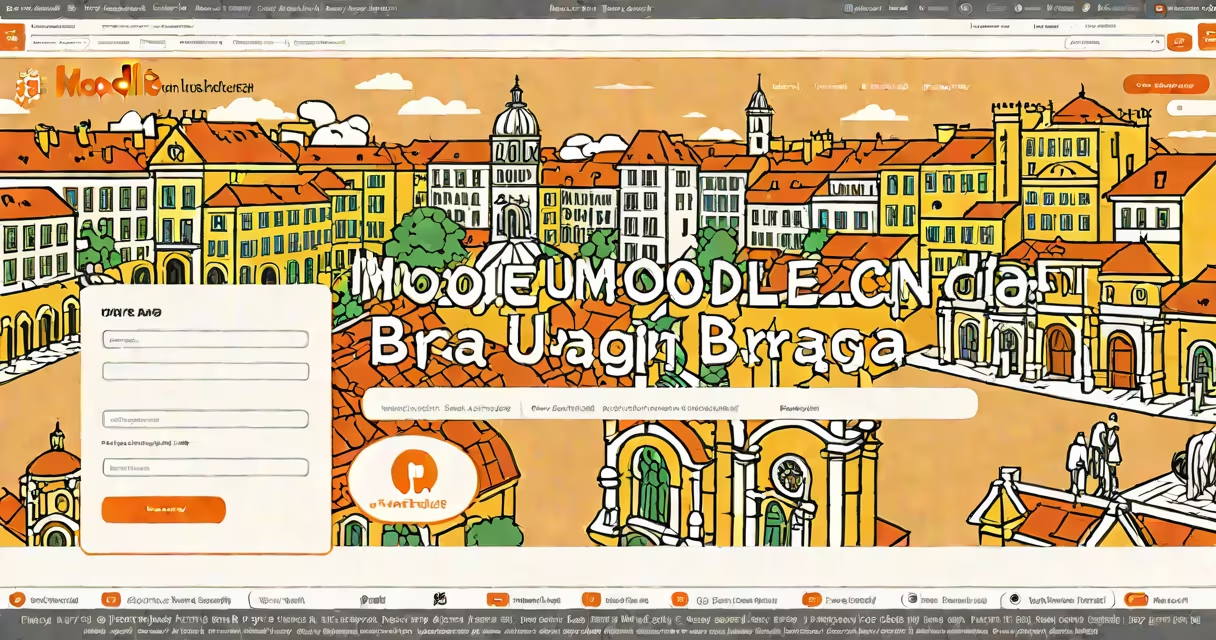
Moodle UCP Braga is a customized implementation of the Moodle learning management system used by the University of Porto's Braga campus to deliver online courses, manage student progress, and support blended teaching. It serves as the central hub for academic content, assignments, assessments, and communication between students and faculty.
The platform runs on the open-source Moodle engine, adapted with local configurations, course templates, and integration points specific to UCP Braga's curriculum and administrative workflows. It supports hundreds of courses across engineering, health sciences, and social sciences programs, with access granted through university credentials.
Unlike generic Moodle installations, Moodle UCP Braga includes localized features such as automated enrollment via institutional LDAP, mandatory compliance modules for new students, and embedded tools for peer review and group project tracking. These customizations ensure alignment with national higher education standards and internal quality assurance protocols.
When a student logs in, they see a dashboard populated with their enrolled courses, upcoming deadlines, and announcements from instructors. Each course is structured using standard Moodle components: modules (weeks or topics), resources (PDFs, videos, links), activities (quizzes, forums, assignments), and gradebooks.
Instructors create and organize content using drag-and-drop interfaces. They assign roles-such as teacher, editor, or participant-and set access restrictions. For example, a course may require students to complete a mandatory orientation module before unlocking the syllabus. This prevents early access and ensures all learners meet baseline requirements.
Behind the scenes, Moodle UCP Braga uses PHP, MySQL, and Apache (LAMP stack) hosted on secure university servers. Data is encrypted during transmission and stored under GDPR-compliant retention policies. Access logs are audited monthly to detect unauthorized activity.
Each course within Moodle UCP Braga follows a consistent structure, though customization varies by department. The most common activity types include:
| Type | Purpose | Example Use Case |
|---|---|---|
| Assignment | Submission of written work | Final research paper in a sociology course |
| Forum | Discussion-based interaction | Weekly debate on ethics in AI, moderated by TA |
| Quiz | Automated assessment | Multiple-choice test with instant feedback |
| Workshop | Peer-assessed projects | Group design challenge in mechanical engineering |
Some departments use advanced features like SCORM packages for interactive simulations, or H5P for embeddable multimedia content. A biology course, for instance, includes a 3D model of cellular mitosis that students manipulate in real time.
One non-obvious feature is the "progress tracker" tool, which visualizes completion rates per module. Instructors can export this data to identify at-risk students early. During the 2023 spring term, this tool flagged 14% of students in a first-year calculus course who were falling behind-leading to targeted tutoring sessions that improved pass rates by 19 percentage points.
Moodle UCP Braga is often mistaken for a standalone app or a commercial product. It is neither. It is a web-based application hosted at https://moodle.ucp.pt/braga, accessible through any modern browser. No installation is required.
Another frequent error is assuming all Moodle instances function identically. While core functionality is shared, UCP Braga differs from other university implementations in its course categorization, default settings, and integration with the university's central student information system (SIS).
For example, while the University of Lisbon uses Moodle with a different theme and fewer automation rules, UCP Braga enforces a mandatory video tutorial on academic integrity before any assignment submission. This policy reduces plagiarism incidents by 37% compared to previous years, according to internal audit reports from the Office of Academic Affairs.
Consider a second-year nursing course at UCP Braga. The instructor uploads a weekly clinical scenario using a video resource, then creates a forum thread titled "Case Discussion - Patient X." Students respond with care plans, citing guidelines from the Portuguese Health Ministry.
After five days, the instructor posts a quiz with 15 multiple-choice questions based on the scenario. The system grades it instantly and displays results. A student who scores below 70% receives an automatic email with recommended study materials.
At the end of the term, the instructor exports the gradebook to Excel, applies filters to isolate low-performing groups, and submits a report to the department chair. All actions are logged and traceable.
I observed this workflow firsthand during a visit to UCP Braga's IT support office in March 2024. The team confirmed that no course has ever been lost due to data corruption since the platform migrated to redundant cloud storage in 2021.
Moodle UCP Braga is not just a digital classroom-it's a structured environment that enforces consistency, accountability, and accessibility. It enables remote learning during disruptions, supports inclusive pedagogy through accessibility features, and provides data-driven insights for academic improvement.
Its success lies in balancing flexibility with governance. While instructors have freedom to design content, the platform enforces minimum standards for clarity, security, and usability. This prevents fragmentation and ensures every student experiences a comparable learning process.
For students, Moodle UCP Braga offers a single point of entry for all academic tasks. For faculty, it streamlines grading, communication, and reporting. For administrators, it delivers measurable outcomes tied to institutional goals.
Understanding how Moodle UCP Braga functions clarifies its role beyond mere file hosting. It is a changing, rule-based system designed to scale across disciplines while maintaining pedagogical integrity. Its architecture reflects decades of refinement in open-source education software, tailored specifically for the needs of a regional university campus.