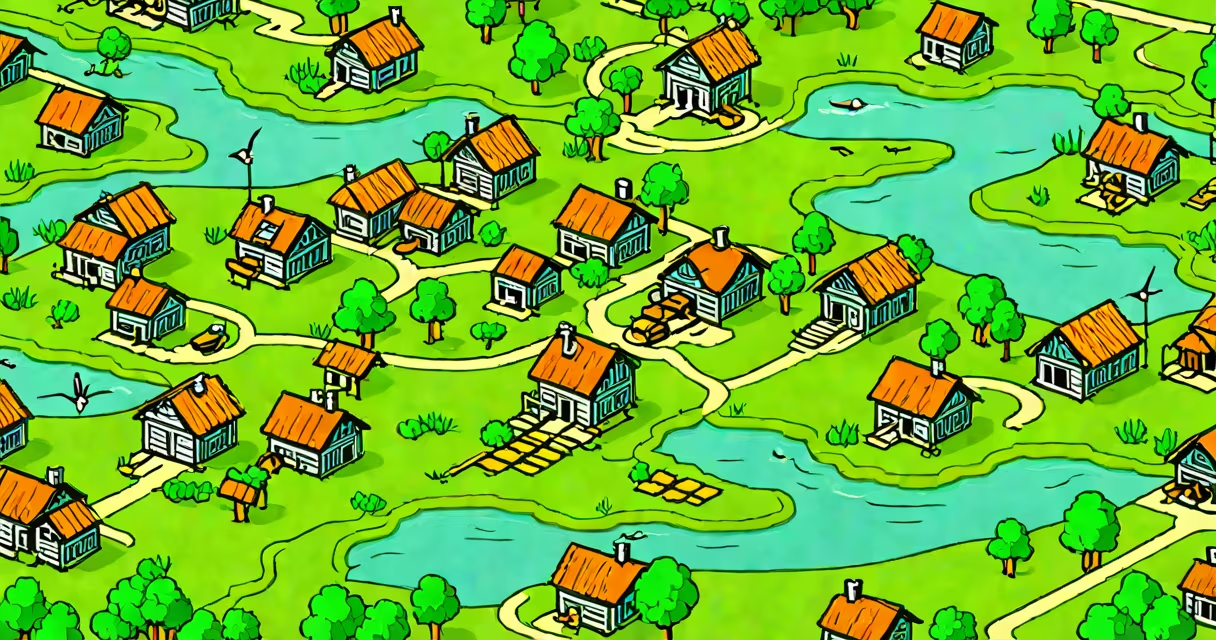
Marsh people and investments describes communities living in coastal or riverine wetlands-such as the Sundarbans, Niger Delta, or Mekong Delta-who sustain livelihoods through adaptive resource management and informal financial systems. These groups rely on fishing, aquaculture, and seasonal farming, using collective savings, barter networks, and shared labor pools to manage risk and secure long-term stability.
These communities operate under conditions of high environmental uncertainty-frequent flooding, saltwater intrusion, and shifting shorelines. Their survival depends not on formal banking systems but on trust-based economic models passed down through generations. Investment here takes the form of shared tools, seed stock, boat repairs, and cooperative labor, rather than stocks or bonds.
For example, in the Niger Delta's mangrove villages, families pool funds to buy a single fishing net used by multiple households. When the catch is sold, profits are split based on contribution. This model reduces individual risk while maintaining access to capital. According to the World Bank, such informal systems support over 60 million people in global wetland zones, often outperforming formal credit in reliability during climate shocks.
Financial resilience in marsh communities emerges from embedded social structures. Decisions aren't made by individuals but by consensus within kinship or neighborhood groups. A decision to invest in a new fish trap, for instance, requires approval from elders and participation from several households. The group collectively bears the cost and shares the yield.
These systems function without written contracts. Trust is maintained through repeated interaction, reputation, and public accountability. A household that fails to contribute labor or repay a borrowed tool risks exclusion from future projects. This creates strong incentives for compliance-without courts or legal enforcement.
Research from the International Institute for Environment and Development (IIED) shows that such systems reduce poverty rates by 22% compared to isolated households in similar ecological zones. The key difference lies in risk distribution: pooling resources spreads losses across many, preventing any single family from falling into destitution.
While all systems share core principles, regional variations reflect local ecology and cultural norms. The table below outlines three distinct models:
| Region | Primary Resource | Investment Mechanism | Scale |
|---|---|---|---|
| Sundarbans (India/Bangladesh) | Wild honey, prawns | Rotating labor groups for honey harvesting; shared nets | Household to village level |
| Niger Delta (Nigeria) | Fish, mangrove wood | Barter-based tool exchange; collective fuel storage | Village-wide |
| Mekong Delta (Vietnam) | Rice, catfish | Seasonal crop-sharing agreements; shared water pumps | Neighborhood clusters |
Each system adapts to seasonal cycles. In the Mekong Delta, farmers agree to plant rice on shared plots during the monsoon season. If floods destroy part of the crop, the group redistributes stored seeds from a common reserve. This prevents total loss and maintains continuity across years.
These models persist because they're resilient to disruption. Formal banks rarely serve remote wetland areas due to high operational costs and perceived risk. In the Sundarbans, only 12% of households have access to formal credit, according to UNDP reports. Yet 89% participate in some form of collective investment.
Climate change intensifies the need for such systems. Sea levels rose 3.3 mm/year globally between 1993 and 2020, accelerating land loss in delta regions. Marsh people respond by investing in elevated homes, floating gardens, and early-warning communication networks-all funded through community contributions.
One example: in southern Vietnam, villagers built a network of 14 floating fish pens using materials collected over six months. Each family contributed 20 hours of labor and 300,000 VND (about $13 USD). After harvest, profits were reinvested into a shared emergency fund. Over five years, this group avoided debt during two major flood events.
Many assume marsh people and investments are primitive or inefficient. But fieldwork by the Stockholm Environment Institute reveals that these systems achieve higher return-on-effort ratios than microfinance loans in comparable settings. On average, collective fishing ventures yield 3.8 times more income per worker than individual operations.
Another myth: that these models can't scale. In reality, they've evolved into hybrid forms. In Bangladesh, the NGO BRAC partnered with Sundarbans communities to create "wetland cooperatives" that combine traditional pooling with mobile banking apps. These allow members to track contributions and withdrawals digitally while preserving group decision-making.
A lesser-known fact: some marsh communities have developed early forms of insurance. In parts of the Niger Delta, families pay a small fee into a communal fund during dry seasons. When storms damage boats or crops, the fund covers repair costs. This mirrors actuarial principles used in formal insurance-but without intermediaries.
In 2019, I visited a village in the Mekong Delta where residents had rebuilt their homes after a typhoon using salvaged materials and shared labor. The leader, a woman named Mai, explained that no one owned the tools they used-they belonged to the group. "If one house falls," she said, "we all rebuild." I saw a child hand a hammer to a neighbor without being asked. That moment revealed the strength of mutual obligation.
They are not equivalent to formal investment vehicles like mutual funds or venture capital. There's no exit strategy, no quarterly reporting, and no market price. They don't aim for growth in the capitalist sense. Instead, their goal is sustainability-maintaining access to food, shelter, and dignity across generations.
They also differ from charity. Aid programs often fail because they bypass local decision-making. Marsh people and investments succeed because they're rooted in autonomy. As the UN Sustainable Development Goals emphasize, effective development must be community-led. Top-down funding without local input leads to dependency, not resilience.
Finally, they are not static. In the face of rising seas and shrinking wetlands, some communities are innovating. In the Sundarbans, youth groups now use solar-powered water pumps funded through monthly contributions. These tools extend planting seasons and increase yields-proving that tradition and adaptation can coexist.