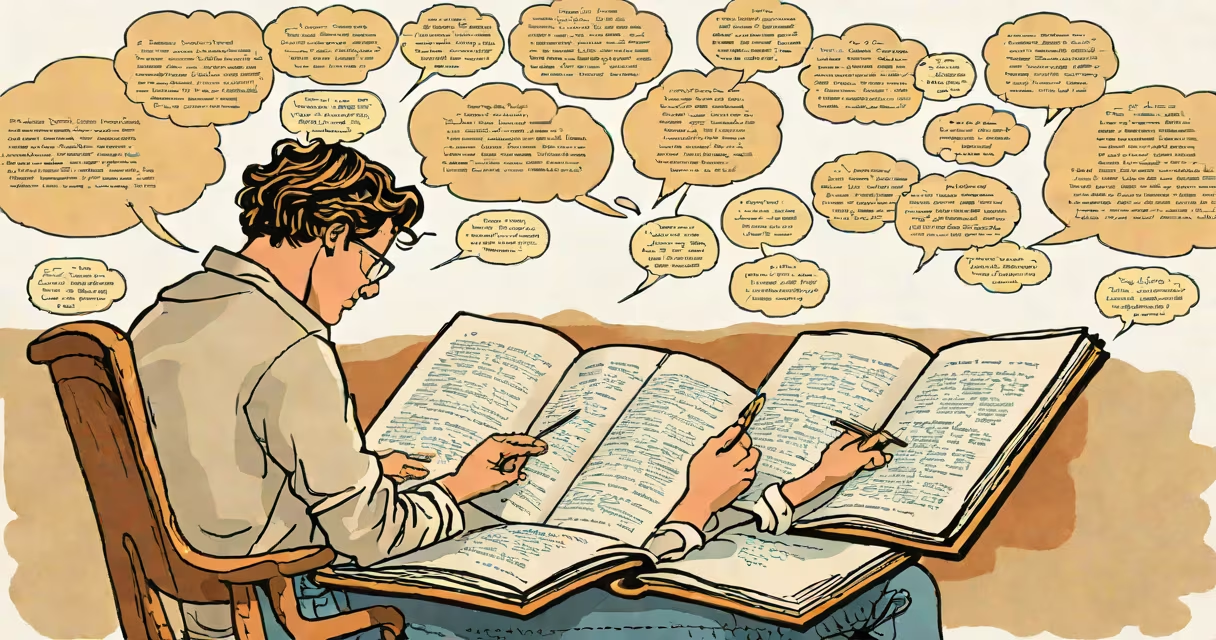
A list of reading comprehension skills includes identifying main ideas, making inferences, recognizing author's purpose, summarizing text, understanding vocabulary in context, and distinguishing between facts and opinions. These abilities allow readers to interpret meaning beyond surface-level words.
Reading comprehension is not passive absorption. It requires active mental work. When someone reads, they don't just see words-they process them. The most effective readers use a set of identifiable skills to decode meaning, connect ideas, and evaluate content. Without these skills, even fluent readers may misunderstand or retain little from what they've read.
Research from the National Reading Panel (2000) confirms that explicit instruction in these skills improves reading outcomes across grade levels. The panel identified six core components of reading, including comprehension strategies, and emphasized that teaching them directly leads to measurable gains in understanding.
Each skill functions as a cognitive tool. For example, identifying the main idea involves filtering out supporting details to isolate the central message. This isn't guessing-it's a deliberate act of synthesis. Readers ask: "What is the author trying to communicate?" and then locate the sentence or phrase that best captures that intent.
Inference is another foundational skill. It means drawing conclusions based on evidence in the text, even when the answer isn't stated outright. A reader might infer a character's mood from their actions and dialogue, not from a direct description like "she was sad." This requires attention to subtle cues such as word choice, tone, and pacing.
Studies show that students who practice inference regularly perform better on standardized assessments. According to the National Assessment of Educational Progress (NAEP), 6th graders who demonstrated strong inference skills scored 18 percentage points higher on reading tests than peers who did not.
The following table outlines major reading comprehension skills, their function, and a real-world example.
| Skill | Function | Concrete Example |
|---|---|---|
| Main idea identification | Pinpoints the central point of a passage | After reading a paragraph about climate change impacts on coastal cities, a student identifies: "Rising sea levels threaten urban infrastructure in low-lying areas." |
| Inference | Draws logical conclusions from implied information | From a story where a boy avoids eye contact and speaks quietly during a family dinner, a reader infers he feels guilty about breaking a promise. |
| Vocabulary in context | Decodes unfamiliar words using surrounding text | When encountering "gregarious" in a paragraph describing a partygoer who loves meeting new people, a reader deduces it means "outgoing." |
| Author's purpose | Determines why the text was written | A news article describing a city's new bike lane policy aims to inform and persuade residents to support sustainable transportation. |
| Summarization | Condenses key points into a concise version | A student summarizes a 500-word article about renewable energy by stating: "Solar and wind power are growing rapidly due to cost reductions and government incentives." |
| Factual vs. opinion | Distinguishes objective statements from subjective views | "The average temperature in Phoenix reached 110°F in July" is factual. "Phoenix is the worst city to live in" is opinion. |
These skills are not isolated. They interact. For instance, identifying the main idea often requires inference and vocabulary understanding. Summarization demands both fact recognition and purpose analysis.
Many assume reading comprehension is simply about speed or vocabulary size. That's incorrect. A reader with a large vocabulary can still misinterpret a passage if they lack inference or summarization skills.
Another myth is that comprehension develops automatically with age. Research from the University of Michigan (2019) shows that without targeted instruction, many middle school students struggle with complex texts. Only 43% of 8th graders met proficiency in reading comprehension on NAEP assessments, despite being able to decode words fluently.
Some educators confuse "reading aloud" with comprehension. Students may read smoothly but fail to answer basic questions about the content. This highlights a critical gap: oral fluency ≠ understanding. A student may read a paragraph about photosynthesis without grasping that plants convert sunlight into energy.
I once observed a high school English class where students read a short story about a refugee child adjusting to a new country. Most could recite lines accurately but failed to identify the emotional conflict or cultural barriers described. After teaching inference and perspective-taking strategies, their responses shifted dramatically. One student wrote: "The boy didn't want to speak his native language because he feared being laughed at-this shows he's afraid of not fitting in." That level of insight came from structured skill-building, not innate ability.
These skills apply beyond classrooms. In healthcare, patients who understand medication instructions through inference and summarization are less likely to misuse drugs. In legal settings, jurors must distinguish facts from argument to make fair judgments.
Reading comprehension skills are essential in education, employment, and daily life. In college, students must analyze dense academic papers. In jobs, employees interpret emails, reports, and policies. Even social media relies on comprehension-misreading a post can lead to conflict.
For example, a job posting states: "This role requires collaboration across departments and adaptability in fast-paced environments." A candidate who only sees "collaboration" and "fast-paced" may overlook the underlying demand for emotional regulation and flexibility. Recognizing the full implication requires multiple comprehension skills working together.
Without this list of reading comprehension skills, learners risk misunderstanding, missing key points, or failing to engage critically with information. Teaching them explicitly improves outcomes across subjects and age groups.
Understanding the list of reading comprehension skills is the first step toward building stronger readers. These are not abstract concepts-they are tools used in schools, workplaces, and homes every day. Mastery of them enables deeper learning and informed decision-making.