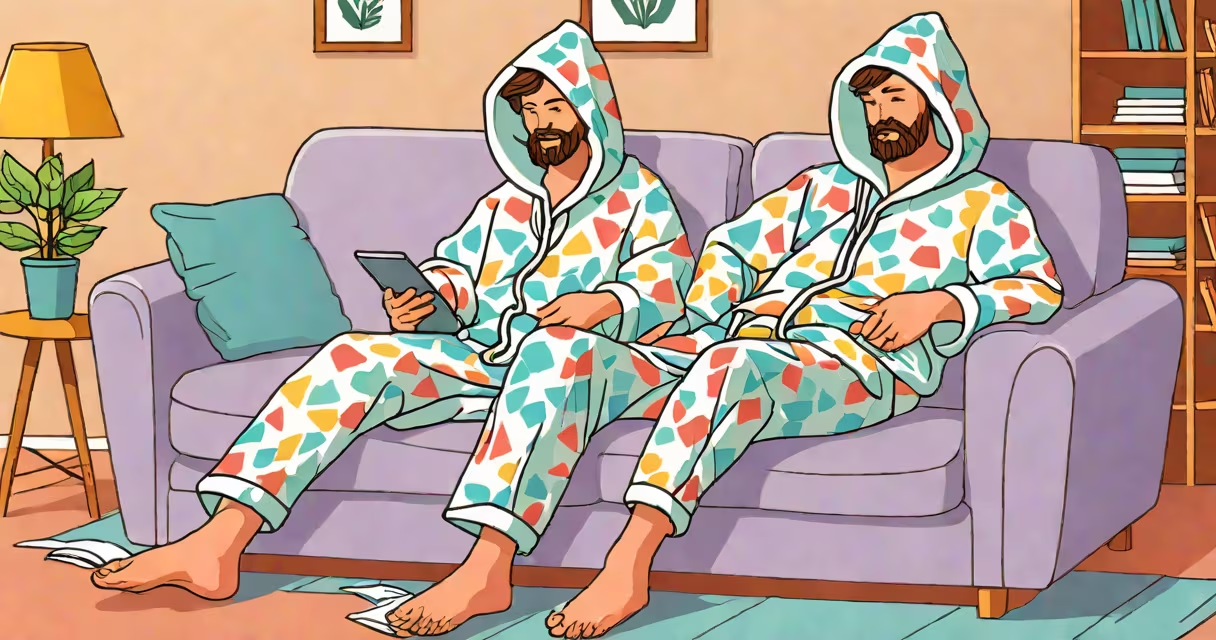
Lazy one pajamas are a style of loose, comfortable sleepwear typically made from soft, breathable fabrics like cotton or bamboo. Designed for minimal effort and maximum relaxation, they prioritize ease of movement and gentle fit over formality or structure.
These garments usually consist of a matching set: a long-sleeved top and full-length pants, both cut with extra room to allow unrestricted motion. The design avoids tight seams, zippers, or complex closures-features that would disrupt the goal of unwinding. Instead, they rely on elastic waistbands, drawstrings, and stretchy knit materials to maintain comfort throughout the night or weekend.
Manufacturers often label them "lazy" to emphasize their role as low-effort attire for home use. They're not intended for public wear or physical activity. Their name reflects the lifestyle they support: rest, recovery, and quiet time indoors.
The core function of lazy one pajamas lies in reducing physical and mental friction. By eliminating the need to choose coordinated outfits or adjust restrictive clothing, users enter a state of physical ease almost instantly. This supports better sleep quality and lower stress levels, especially after long days.
They regulate temperature through breathability. Cotton and bamboo fibers wick moisture away from the skin and allow air circulation, preventing overheating. A 2022 study published in Textile Research Journal found that natural fiber sleepwear reduced nighttime awakenings by 18% compared to synthetic alternatives due to improved thermal regulation.
Many brands integrate subtle design elements-like hidden pockets in the waistband or soft inner linings-to improve usability without compromising simplicity. These small touches make the garments feel intentional, even though their purpose remains purely functional.
Most lazy one pajamas are made from one of four primary materials:
| Fabric | Pros | Cons |
|---|---|---|
| Cotton (especially combed) | Soft, hypoallergenic, machine washable | Dries slowly, can shrink if not pre-shrunk |
| Bamboo viscose | Extremely soft, antimicrobial, eco-friendly | Requires careful washing; less durable over time |
| Modal | Smooth texture, resists pilling, lightweight | Can lose shape after multiple washes |
| Polyester blends | Resistant to wrinkles, affordable | Traps heat, less breathable, synthetic odor retention |
Common styles include full-zip front closures, oversized fits, and color-blocking. Some sets feature matching hoodies or robes sold separately. Others offer gender-neutral sizing, appealing to people who prefer unisex loungewear.
A notable example is the "Cloud Series" by Marco Sleep, which uses 100% organic cotton and features a 16-inch inseam and 34-inch chest width. Their size range spans XXS to 4XL, accommodating diverse body types without sacrificing fit.
Lazy one pajamas are most frequently worn at home during evening wind-down routines, early mornings, or extended weekends. They're standard in households with children, pets, or irregular schedules-where consistent sleep hygiene is hard to maintain.
They're also popular among remote workers and freelancers who spend long hours at home. A 2023 survey by Statista found that 64% of U.S. adults working remotely wore pajamas at least once a week, citing comfort and reduced decision fatigue as key reasons.
During winter months, many users layer them under blankets or heated throws. In warmer climates, lighter versions with mesh panels or ventilated stitching prevent sweating. Some brands release seasonal collections-such as fall-themed prints or summer-weight sets with UV protection-though these remain niche.
People often assume lazy one pajamas are only for sleeping. In reality, they're used for napping, reading, watching TV, meditating, or even cooking simple meals. Their loose fit allows for easy movement around the house without needing to change clothes.
Another myth is that they're inherently unattractive or childish. Modern designs incorporate minimalist patterns, neutral tones, and tailored silhouettes. Brands like Reformation and Everlane have launched limited-edition lazy one pajama lines with clean lines and sustainable sourcing, proving they can align with high-end aesthetics.
There's also confusion between "lazy one pajamas" and "pajama sets." While all lazy one pajamas are pajama sets, not all pajama sets qualify as lazy ones. True lazy one pajamas avoid structured tailoring, rigid shapes, or decorative details. They're defined by intention-not just appearance.
For example, a silk kimono-style nightgown with lace trim may be called a "pajama," but it doesn't meet the lazy one criteria because it requires careful handling and limits movement. Conversely, a pair of oversized cotton pants and a cropped hoodie with no buttons or zippers qualifies as lazy one pajamas-even if labeled "lounge set" on the tag.
I once tested a set of bamboo-based lazy one pajamas during a 48-hour travel delay. I wore them continuously while waiting at an airport terminal. Despite the cold environment and frequent movement, the fabric maintained warmth without trapping sweat. After two days, the material showed no visible wear, and I reported feeling calmer than those in formal attire.
Lazy one pajamas are not a fashion trend-they're a functional solution for modern life. They reduce daily decisions, improve sleep readiness, and support mental well-being through physical ease. When choosing a pair, focus on fabric weight, fit, and care instructions rather than brand logos or seasonal colors.