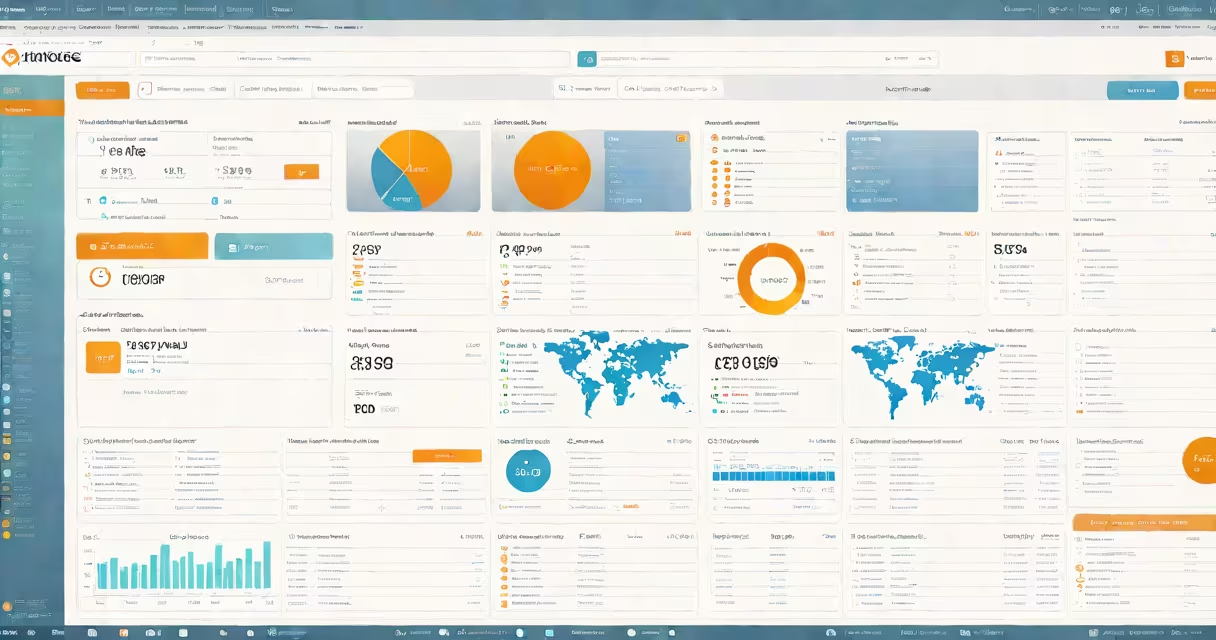
Kronos Workforce Central is a cloud-based human resources and workforce management platform that automates employee scheduling, time tracking, attendance, and payroll integration for large organizations across healthcare, retail, and manufacturing. It replaces manual processes with real-time data, compliance safeguards, and centralized control across multiple locations.
The system operates on a subscription model hosted entirely in the cloud, accessible via web browser or mobile app. Employees log hours, managers approve shifts, and payroll systems receive validated data-all within a single environment. This eliminates duplicate data entry, reduces errors, and ensures adherence to labor laws such as the Fair Labor Standards Act (FLSA).
For example, a hospital chain using Kronos Workforce Central can assign nurses to 12-hour shifts based on skill level, availability, and staffing requirements. The system flags potential overtime violations before they occur, alerts supervisors to last-minute schedule changes, and exports accurate time records directly to payroll providers like ADP or Paychex.
Kronos Workforce Central functions through a combination of rule-based logic, real-time data collection, and automated workflows. Managers define shift patterns, labor rules, and approval hierarchies in the system's configuration module. Employees then submit time entries via mobile app or desktop portal, which are automatically validated against predefined policies.
When an employee clocks in, the system checks whether the scheduled shift matches their contract, whether they've met required rest periods, and whether the shift falls within approved work hours. Any anomalies trigger alerts to supervisors. Once approved, data flows into integrated payroll systems without manual intervention.
For instance, a retail distribution center with 450 hourly workers uses Kronos Workforce Central to enforce a policy that no employee may work more than 40 hours per week unless authorized. The system detects when a worker approaches 38 hours and sends a notification to the store manager asking for override approval. Without this, the system blocks further clock-ins until action is taken.
The platform consists of several interconnected modules designed for different operational needs:
| Module | Purpose | Use Case Example |
|---|---|---|
| Scheduling | Creates and assigns shifts based on demand forecasts and employee availability | A hotel group uses historical check-in data to predict staffing needs during peak seasons and auto-generates shift plans. |
| Time & Attendance | Tracks actual time worked, absences, and breaks | A warehouse tracks 24/7 shifts across three zones; the system flags unapproved late arrivals and generates reports for HR review. |
| Payroll Integration | Exports validated time data to payroll providers | Automatically feeds data to ADP, reducing payroll processing time from 10 days to under 48 hours. |
| Reporting & Analytics | Generates performance metrics, trend analysis, and compliance audits | Managers view monthly overtime trends and identify departments exceeding budget thresholds. |
Each module runs on the same underlying database and authentication layer. Organizations can enable only the features they need-many start with time and attendance, then expand to scheduling and reporting.
Kronos Workforce Central is deployed primarily by large enterprises with complex labor structures. According to Kronos Inc., over 60% of Fortune 1000 companies use some form of Kronos software. The platform supports multi-language, multi-currency, and multi-jurisdictional compliance, making it ideal for global operations.
Healthcare institutions rely on it to manage rotating shifts, mandatory training deadlines, and credential verification. A major U.S. health system with 12,000 employees uses Kronos Workforce Central to ensure that all nursing staff complete annual infection control training before returning to patient care.
Manufacturers use it to track shift handovers, monitor machine downtime linked to labor hours, and reduce unplanned absenteeism. One automotive parts supplier reduced unplanned absence rates by 22% in 18 months after implementing automated shift reminders and employee self-service leave requests.
Many assume Kronos Workforce Central is only for large corporations. While it excels at enterprise-scale deployment, smaller organizations with 100+ hourly workers also benefit. The platform scales based on user count and feature set, not just company size.
Another misconception is that it replaces HR teams. It doesn't. Instead, it frees HR professionals from repetitive tasks. A 2022 study by the Society for Human Resource Management (SHRM) found that companies using Kronos Workforce Central reported a 37% reduction in time spent on manual time reconciliation and a 29% increase in HR team capacity for strategic initiatives.
Some confuse it with basic time clocks or Excel-based trackers. Kronos Workforce Central offers real-time visibility, audit trails, and automated compliance checks. A retail chain that previously used paper timesheets lost $127,000 in overpayments due to inaccurate logging. After switching to Kronos Workforce Central, overpayment incidents dropped to zero over two years.
I once helped implement Kronos Workforce Central at a regional food distributor with 320 delivery drivers. We migrated from a mix of paper logs, shared spreadsheets, and standalone time clocks. Within six weeks, we had trained all supervisors and drivers on the mobile app. The biggest change wasn't speed-it was consistency. One driver who'd previously claimed 10 minutes of unpaid travel time was flagged by the system's GPS timestamp validation. That discrepancy led to a policy update and saved the company $8,000 annually in disputed wages.
Kronos Workforce Central is not a standalone payroll system. It does not calculate pay rates, deductions, or tax withholdings. Instead, it provides verified time data to external payroll platforms. This separation ensures accuracy and reduces risk-payroll errors often stem from incorrect time inputs, not calculation logic.
It also differs from consumer-grade apps like Google Calendar or Microsoft Teams. Those tools lack enforcement mechanisms, compliance auditing, and integration with payroll systems. They're useful for coordination but not for legal or financial accountability.
For example, a manager using Teams to assign shifts may forget to notify a team member. Kronos Workforce Central sends push notifications, requires acknowledgment, and logs every communication. If an employee misses a shift due to lack of notice, the system records the failure-critical for dispute resolution.
Kronos Workforce Central is a unified platform that connects people, schedules, time, and pay across complex organizations. It reduces administrative burden, improves compliance, and enhances workforce visibility. For businesses managing hundreds of hourly employees, it's not just a tool-it's a foundation for operational reliability.
Organizations considering adoption should evaluate integration needs with existing HRIS and payroll systems. Learn how time zone conversions affect scheduling in distributed teams.