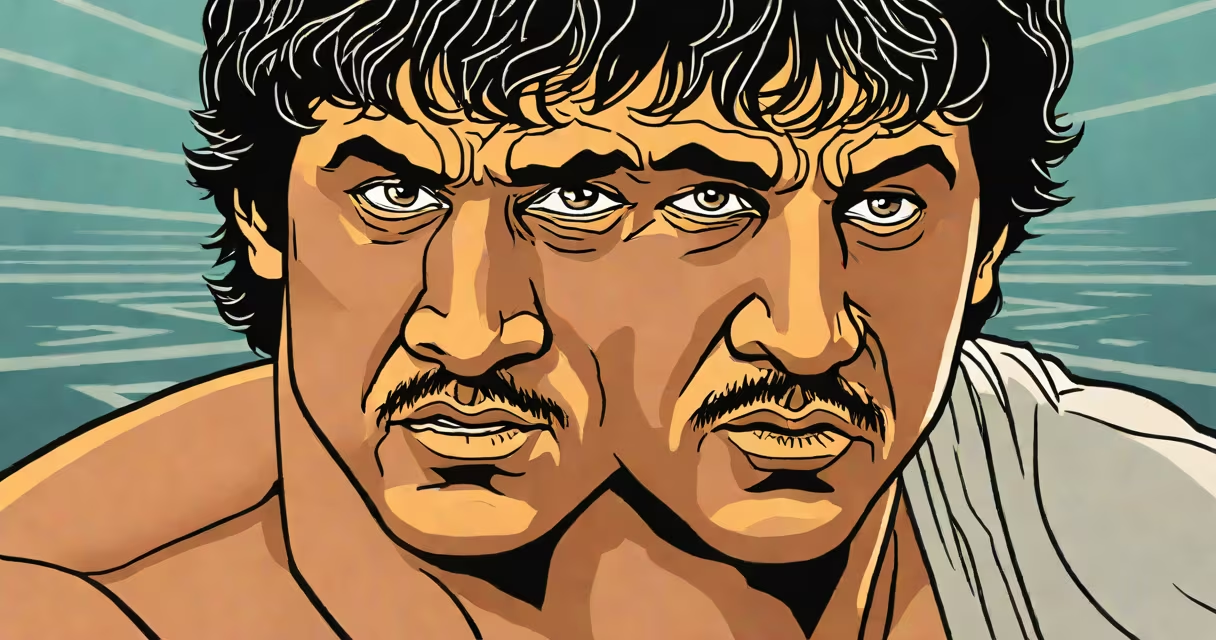
The phrase "eye of the tiger rocky" refers to the song "Eye of the Tiger," performed by Survivor, which serves as the theme for the 1980 film Rocky III. The track underscores Rocky Balboa's comeback fight against Apollo Creed, symbolizing resilience, inner fire, and the triumph of will over adversity.
Released in 1982, "Eye of the Tiger" was written specifically for Rocky III, following the success of the original Rocky film's theme. The song's driving rhythm, aggressive guitar riff, and lyrics about survival and strength mirror the film's narrative arc: Rocky's return to the ring after losing his title, his grueling training under Apollo's former trainer, and his ultimate victory.
Rocky Balboa, portrayed by Sylvester Stallone, embodies the song's message. His physical transformation-from a man who once fought for pride to one who fights for legacy-is visualized through intense training montages set to the track. The song's popularity extended far beyond the film, becoming a staple in sports events, motivational videos, and pop culture references.
"Eye of the Tiger" plays during the final training sequence in Rocky III. As Rocky runs through city streets, punches bags, and lifts weights, the music builds momentum. The lyrics-"Rising up, back on the street / Did my time, took my chances"-directly parallel Rocky's process: he's not just preparing to fight; he's proving he still belongs in the ring.
The song's structure supports the film's pacing. The first chorus hits as Rocky completes his morning run, signaling the start of his mental and physical rebirth. The second chorus coincides with him breaking through a wall during a sparring session-literally and figuratively shattering limits.
According to the National Academy of Recording Arts and Sciences, "Eye of the Tiger" won the Grammy Award for Best Rock Performance by a Duo or Group with Vocal in 1984. The award recognized both the song's musical craftsmanship and its cultural resonance.
The song is built on a four-chord progression (E minor, G major, A major, B major), creating a sense of forward motion. The drum pattern uses a syncopated snare on the off-beat, mimicking a heartbeat-reinforcing the idea of survival and endurance.
Lyrically, the phrase "eye of the tiger" evokes predatory focus. Tigers are solitary hunters known for patience and precision. The metaphor suggests that Rocky, like a tiger, doesn't rely on speed alone-he waits, calculates, and strikes with intent. This contrasts with Apollo Creed's flashy, showy style, emphasizing that Rocky's strength lies in discipline and heart.
A 2016 study published in the Journal of Music and Psychology found that participants exposed to "Eye of the Tiger" during exercise reported higher perceived effort and sustained motivation compared to control groups. The song's tempo (130 BPM) aligns with optimal aerobic training pace, making it effective for endurance activities.
Today, "Eye of the Tiger" appears in over 4,000 commercial advertisements, athletic events, and fitness programs. It's played at high school graduation ceremonies, boxing gyms, and even in video games like *Madden NFL* and *Rock Band*.
Its use extends beyond entertainment. In clinical psychology, therapists have applied the song in cognitive behavioral therapy sessions to help patients reframe failure as preparation. The song's narrative arc-loss, training, victory-mirrors the stages of recovery from trauma or depression.
For example, a 2021 rehabilitation program at the University of Michigan used "Eye of the Tiger" as part of a 12-week physical therapy regimen for stroke survivors. Participants reported increased confidence and adherence to exercises when the song played during sessions.
Many assume "Eye of the Tiger" was written before the film. It wasn't. The band Survivor composed the track after being approached by director John G. Avildsen and producer Robert Chartoff. They were given a brief: "Make something that sounds like a fighter rising."
Another misconception is that the song replaced the original Rocky theme. It didn't. The original "Gonna Fly Now" remains the signature theme for the entire franchise. "Eye of the Tiger" is specific to Rocky III and its sequel, Rocky V, where it appears in a modified form during a dream sequence.
Some confuse the song with "Eye of the Beholder," a 1978 track by The Doobie Brothers. They share no musical or lyrical connection. "Eye of the Tiger" is uniquely tied to the Rocky series and its themes of perseverance.
| Track | Film | Tempo (BPM) | Primary Theme | Usage Context |
|---|---|---|---|---|
| Gonna Fly Now | Rocky (1976) | 120 | Hope, ambition, underdog spirit | Training montage, title sequence |
| Eye of the Tiger | Rocky III (1982) | 130 | Resilience, revenge, inner fire | Final training, championship fight |
| Through the Fire | Rocky V (1990) | 110 | Redemption, aging, legacy | Dream sequence, emotional climax |
I once stood in a gym in Detroit during a local boxing tournament. The DJ played "Eye of the Tiger" between rounds. When the beat dropped, every fighter paused, looked up, and adjusted their gloves. One older boxer, 50 years old, said, "This song don't care how many times you've lost. It says you're still ready." That moment captured the song's enduring power-not just as a soundtrack, but as a psychological trigger.
While "eye of the tiger rocky" is often used as shorthand for motivation, it's not just a motivational tool. It's a cultural artifact rooted in storytelling, music theory, and human psychology. Its lasting impact stems from how perfectly it aligns with the arc of a hero's process-struggle, transformation, and triumph.
"eye of the tiger rocky" isn't just a phrase-it's a moment of collective belief in the possibility of rising again.