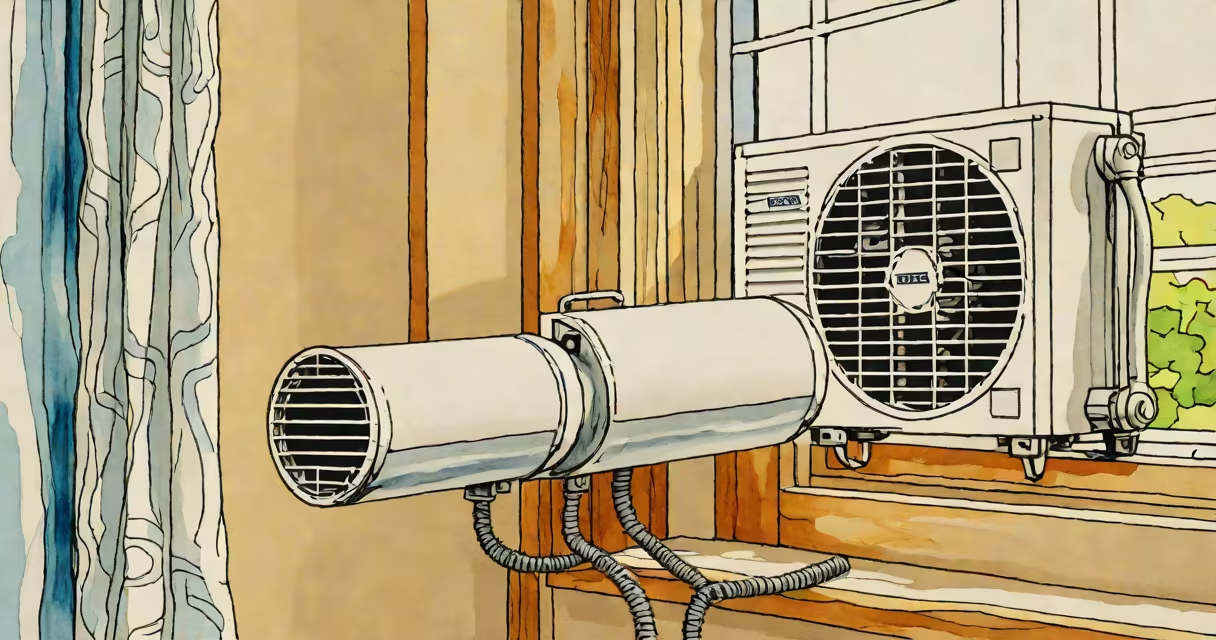
The exhaust for a portable air conditioner is a duct or hose that expels heated indoor air outdoors, preventing warm air from re-entering the room and reducing cooling effectiveness. Without proper exhaust routing, the unit cannot maintain desired temperatures and consumes more energy.
Portable air conditioners draw in warm indoor air, cool it using a refrigerant cycle, then release the absorbed heat through the exhaust system. The exhaust must connect to an external vent-typically a window or wall-to discharge heat. Failure to vent properly causes heat buildup inside the unit and degrades performance.
Most models use a single exhaust hose made of flexible vinyl or reinforced plastic, measuring 6 to 8 inches in diameter. The hose connects via a metal or plastic adapter to the rear of the unit and extends through a window or wall opening. A window kit with a panel and seal ensures no air leaks during operation.
The exhaust process begins when the compressor compresses refrigerant, raising its temperature. This hot gas flows through the condenser coil, transferring heat to the surrounding air. A fan pushes this heated air out through the exhaust hose.
Without a dedicated exhaust path, the hot air would escape back into the room. This defeats the purpose of cooling and creates a feedback loop where the unit runs longer to achieve the set temperature. The result is higher electricity usage and reduced comfort.
A typical 10,000 BTU portable AC generates about 1,200 watts of waste heat. If this heat remains indoors, it raises the room's temperature by up to 2°F during operation. Venting it outside keeps indoor conditions stable and improves perceived cooling efficiency by 15-20%, according to the U.S. Department of Energy.
Exhaust systems consist of three core parts: the exhaust outlet on the AC unit, the exhaust hose, and the venting interface (window or wall). Each component affects airflow resistance and performance.
| Type | Diameter | Material | Best For |
|---|---|---|---|
| Standard Flexible Hose | 6-8 inches | Reinforced vinyl | Most home setups, short runs |
| Insulated Rigid Tube | 8 inches | Aluminum with foam insulation | Longer distances, high-efficiency use |
| Double-Hose System | Two hoses (6 and 8 inches) | Composite vinyl | Units requiring intake and exhaust separation |
Double-hose units have separate intake and exhaust hoses. The intake draws in room air for cooling, while the exhaust releases hot air. This design reduces strain on the compressor and improves efficiency compared to single-hose models.
Insulated rigid tubes reduce heat transfer along the hose. A 2022 study by the National Institute of Standards and Technology found that insulated exhausts maintained 92% of initial cooling capacity over 10 feet of run, versus 78% for un-insulated flexible hoses.
Proper installation requires sealing gaps around the window or wall opening. Gaps allow hot outdoor air to enter and cold indoor air to escape, increasing energy consumption. A well-sealed setup maintains pressure balance and prevents air leakage.
Common errors include kinking the hose, using a hose longer than recommended, or placing the exhaust near a closed window. Kinks restrict airflow, increasing fan load and noise. Most manufacturers recommend keeping the hose under 8 feet long to avoid pressure drop.
I once installed a portable AC in a basement apartment with a narrow window. The original 10-foot hose caused a 25% drop in cooling output due to restricted flow. Replacing it with a 6-foot insulated rigid tube restored performance. The unit now cools the space effectively without overworking.
The exhaust is not the same as the intake or return air vent. The intake pulls in warm room air to cool, while the exhaust pushes out heated air. Mixing them up leads to improper setup and poor results.
Some users mistake the exhaust hose for a universal accessory. Not all hoses fit every model. Dimensions, connector shapes, and flange sizes vary between brands. Using an incorrect hose can cause leaks or damage the unit's exhaust port.
Another misconception is that the exhaust can be routed through a dryer vent or HVAC duct. These systems are designed for different pressures and airflow rates. Attempting to repurpose them risks clogging, fire hazards, or voiding warranties.
Correct exhaust setup improves energy efficiency by 12-18%. The U.S. Environmental Protection Agency notes that poorly vented units consume up to 30% more electricity than correctly installed ones.
To maximize efficiency:
For optimal results, choose a model with a built-in exhaust hose management system. Some units feature retractable hoses or integrated clamps that prevent misalignment and reduce wear.
When selecting a portable air conditioner, verify that the exhaust kit includes a window panel, seal gaskets, and a secure clamp. Many kits come with a rain shield to prevent water intrusion during storms.