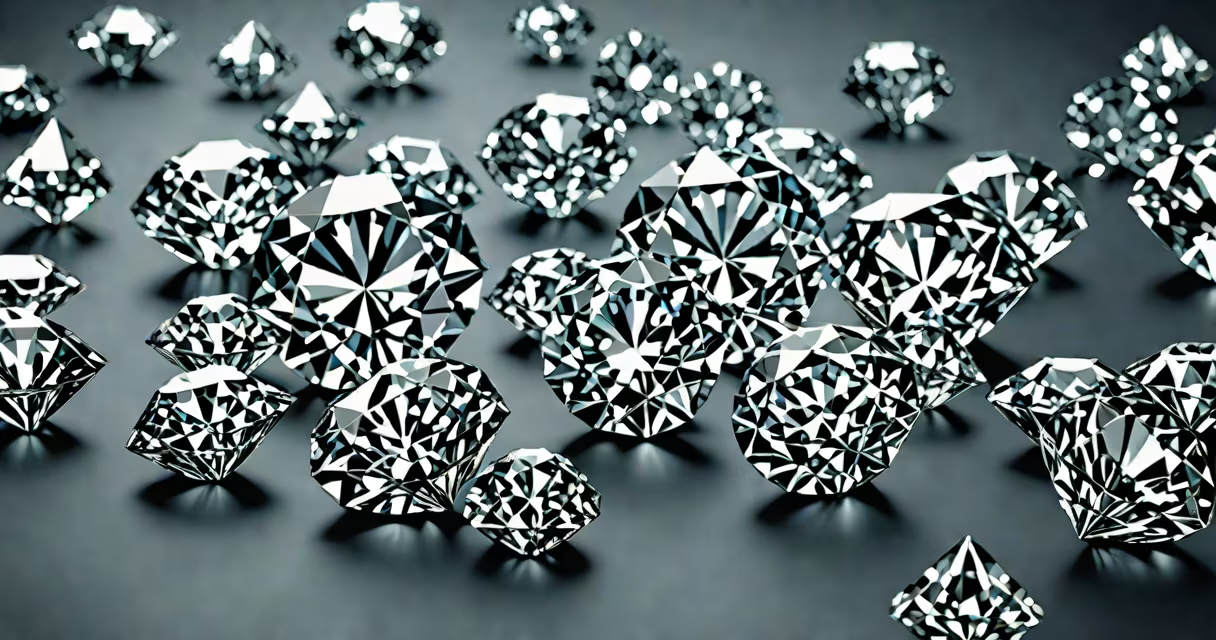
Swarovski does not sell natural or lab-grown diamonds. The brand manufactures high-quality crystal jewelry using leaded glass cut to simulate diamonds, not actual gemstones.
Swarovski's signature product is not mined or formed through geological processes-it's engineered. The company uses a proprietary cutting technique called "Aurora Borealis" to create refractive brilliance that mimics the fire and sparkle of diamonds. This process involves precise angles and coatings applied to synthetic crystal, not carbon-based gemstones.
For clarity: natural diamonds are crystallized carbon formed under extreme pressure over millions of years. Swarovski crystals are man-made, composed of quartz sand, lead oxide, and other minerals. They are not classified as diamonds under gemological standards.
Swarovski crystals are crafted from leaded glass-specifically, a blend of silica, lead oxide, and metal oxides. The lead content (typically 30% or higher) increases refractivity, making the crystal reflect light more intensely than standard glass. This gives the illusion of brilliance seen in diamonds.
The cutting process uses computer-guided lasers to achieve exact angles. A single crystal may have up to 160 facets-far more than a typical diamond's 58. More facets mean more light reflection, creating a dazzling effect under direct illumination. This is why Swarovski pieces often appear brighter than real diamonds in certain settings.
Despite their visual similarity, Swarovski crystals do not score on the Mohs hardness scale like diamonds. On a scale of 1 to 10, diamonds rate a 10-the hardest known natural material. Swarovski crystals rate around 6.5-7, meaning they can scratch easily and are prone to cloudiness over time with exposure to oils and abrasives.
Swarovski produces several crystal lines, each designed for different applications:
| Type | Composition | Use Case | Price Range (USD) |
|---|---|---|---|
| Classic Crystal | Leaded glass, 30% lead | Jewelry, fashion accessories | $20-$150 |
| Aurora Borealis (AB) | Coated with iridescent film | High-end fashion, stage wear | $50-$300 |
| Special Effects (SE) | Custom cuts, colored glass | Art installations, film props | $100-$500+ |
AB-coated crystals are especially popular in red-carpet fashion. Designers like Alexander McQueen and Dolce & Gabbana have used them in runway pieces. The coating creates a rainbow shimmer under shifting light-something real diamonds cannot replicate.
Swarovski products appear in film, theater, and high-fashion design. The brand supplies crystals for costumes in productions like *The Great Gatsby* (2013), *Black Panther* (2018), and *The Crown*. These applications rely on the ability to catch and reflect light dramatically under stage and camera lighting.
In consumer jewelry, Swarovski is used for affordable alternatives to diamond engagement rings. A 14K gold band with a 6mm Swarovski crystal center piece retails for $120. That's less than 10% of the cost of a comparable diamond ring with a 1-carat stone (which averages $4,000-$6,000).
One key difference: Swarovski crystals are not graded by the Gemological Institute of America (GIA). Real diamonds receive GIA certification detailing cut, color, clarity, and carat weight. Swarovski stones are labeled by size and finish, not by quality metrics.
Many people assume Swarovski sells diamonds because of marketing language. Phrases like "diamond-like" or "sparkle like a diamond" are used in advertising-but these are metaphors, not claims of authenticity.
Another misconception: Swarovski is not a jeweler in the traditional sense. It does not mine, cut, or certify gemstones. The company focuses exclusively on crystal manufacturing and licensing. Its partnerships with brands like H&M and Versace are for design collaboration-not for sourcing real diamonds.
A critical distinction: Swarovski does not offer resale value. Unlike real diamonds, which can be appraised and resold, Swarovski crystals depreciate rapidly. A vintage 1980s Swarovski brooch may fetch $50 at auction-well below original retail price.
I once examined a Swarovski pendant worn by a client at a gala event. Under ambient light, it looked indistinguishable from a diamond. But under a handheld UV lamp, the crystal emitted a faint greenish tint-natural diamonds show no fluorescence. The difference was visible only under controlled conditions, but it confirmed that synthetic materials behave differently than real gems.
Do Swarovski sell diamonds? No. They produce crystal jewelry that imitates diamonds visually. The brand is transparent about this-its official website states, "Our crystals are not diamonds. They are precision-cut glass designed to capture light."
If you seek authentic diamonds, look to certified retailers such as Blue Nile or James Allen. For affordable, eye-catching accessories, Swarovski remains a trusted name-but not for real gemstones.