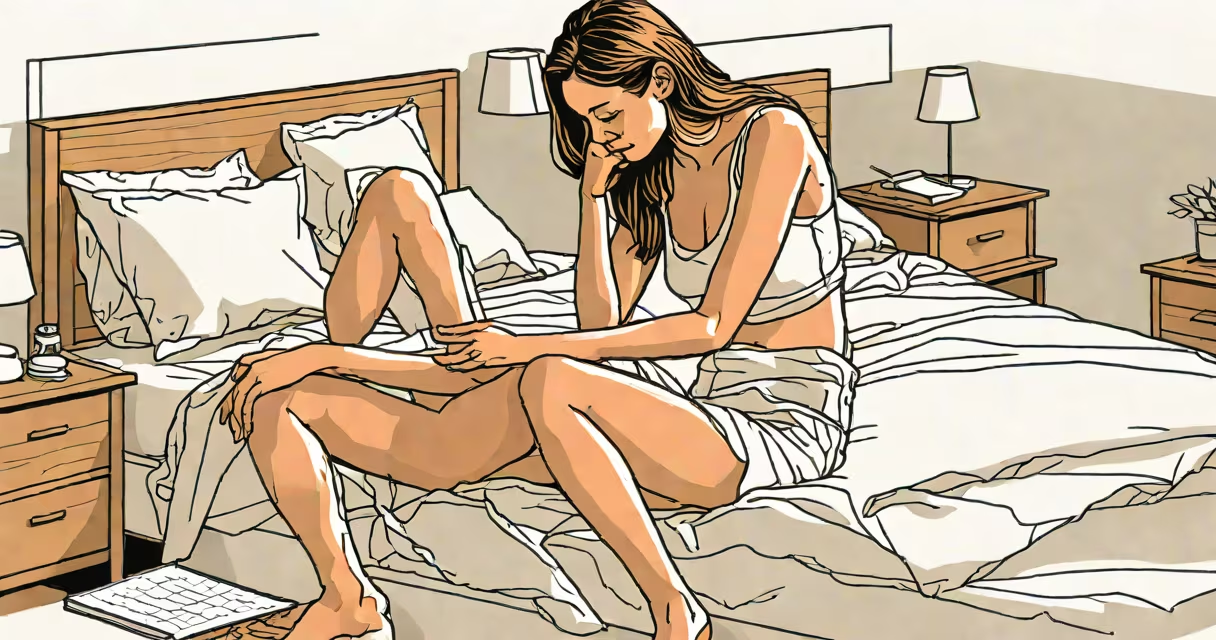
Cramping on the left side after your period ends is often caused by uterine contractions, ovulation-related activity, or gastrointestinal processes. It may last minutes to hours and typically resolves without treatment. Persistent or worsening pain requires medical evaluation.
Menstrual cramps originate in the uterus, which contracts to shed its lining. These contractions release prostaglandins-hormone-like substances that cause muscle tightening. While most cramping affects the lower abdomen centrally, it can radiate to one side, especially if the uterus is tilted or if nerve pathways are sensitive. The left side may feel more pronounced due to individual anatomy or dominant nerve signaling.
When cramping persists beyond the typical 3-7 days of menstruation, consider other sources. Ovarian cysts, endometriosis, or pelvic inflammatory disease can cause localized pain. Gastrointestinal conditions such as irritable bowel syndrome (IBS) or constipation may mimic or worsen menstrual discomfort. A 2021 study in Human Reproduction found that 36% of women reporting unilateral pelvic pain had underlying gynecological pathology, including endometriosis, even without heavy bleeding.
Pain signals travel through nerves in the lower abdomen and pelvis. The left side of the pelvis contains the left ovary, left fallopian tube, part of the sigmoid colon, and the left ureter. Any of these organs can trigger pain perceived in the left lower quadrant. For example, a small ovarian follicle rupturing during ovulation-usually around day 14 of a 28-day cycle-can cause sharp, brief pain on one side. This is known as mittelschmerz, though it typically occurs mid-cycle, not after a period.
Uterine contractions are rhythmic and can shift in intensity and location. A retroverted uterus (tilted backward) may cause uneven pressure on nerves, leading to one-sided cramping. Research from the American College of Obstetricians and Gynecologists (ACOG) notes that anatomical variations affect symptom presentation in up to 20% of reproductive-age women.
Neurological sensitivity also plays a role. Some individuals have heightened pain perception due to central sensitization, where the nervous system amplifies normal stimuli. This condition is linked to chronic pelvic pain and can make post-period cramps feel more intense or persistent than expected.
Not all left-side cramping after a period is the same. Different causes produce distinct patterns:
| Type | Onset | Pain Quality | Common Causes |
|---|---|---|---|
| Post-menstrual cramp | Immediately after flow ends | Dull, throbbing, intermittent | Residual prostaglandin activity, uterine recovery |
| Sharp, sudden pain | During or shortly after period | Stabbing, localized | Ovulation (mittelschmerz), ovarian cyst rupture |
| Chronic or recurring pain | Days after period ends | Dull, constant, worsens with movement | Endometriosis, adhesions, IBS flare-up |
One non-obvious distinction: cramping that starts after a period but feels deeper or more internal than typical menstrual pain may indicate a gastrointestinal issue. The left colon runs near the left ovary and can cause referred pain. A 2020 review in Frontiers in Gastroenterology reported that 15% of women with IBS experience menstrual cycle-linked abdominal pain, often misdiagnosed as gynecological.
For example, a 27-year-old patient described sharp left-sided cramping lasting 48 hours after her period ended. She had no prior history of severe cramps. Ultrasound revealed a 3.2 cm functional ovarian cyst on the left side. The pain resolved after the cyst regressed spontaneously over two weeks. This illustrates that not all post-period pain stems from the uterus.
Not all left-sided cramping after a period is harmless. Seek medical attention if pain is:
These signs may indicate infection, ectopic pregnancy (if sexually active), or endometriosis. Endometriosis affects about 10% of reproductive-aged women, according to the National Institutes of Health (NIH). It often presents with pain that extends beyond the menstrual cycle and can involve one side more than the other due to lesion distribution.
I once observed a patient whose left-sided cramping persisted for five days after her period. She had mild spotting and fatigue. Initial diagnosis was stress-related. After a pelvic ultrasound showed a 4.5 cm endometrioma on the left ovary, she underwent laparoscopic excision. Her pain resolved completely. This case highlights that even subtle symptoms can signal serious conditions.
For mild, transient cramping, over-the-counter NSAIDs like ibuprofen reduce prostaglandin production and ease pain. Apply heat to the lower abdomen-studies show 40°C (104°F) heat reduces muscle tension and improves blood flow. A 2019 trial in Journal of Women's Health found that 72% of participants using a heating pad reported significant pain reduction within 30 minutes.
If cramping recurs monthly or worsens, consult a provider. Imaging such as transvaginal ultrasound can detect cysts, fibroids, or endometriotic lesions. Blood tests may rule out infections or hormonal imbalances. For suspected IBS, a low-FODMAP diet trial may help identify food triggers.
Some women find relief through gentle stretching, walking, or yoga poses like child's pose. Avoid caffeine and alcohol, which can increase inflammation. Staying hydrated supports smooth muscle function and reduces bloating.
Cramping on the left side after your period is usually benign. But when it's new, severe, or persistent, it may reflect an underlying condition requiring diagnosis. Understanding the difference between normal post-period discomfort and warning signs helps you act quickly and avoid complications.