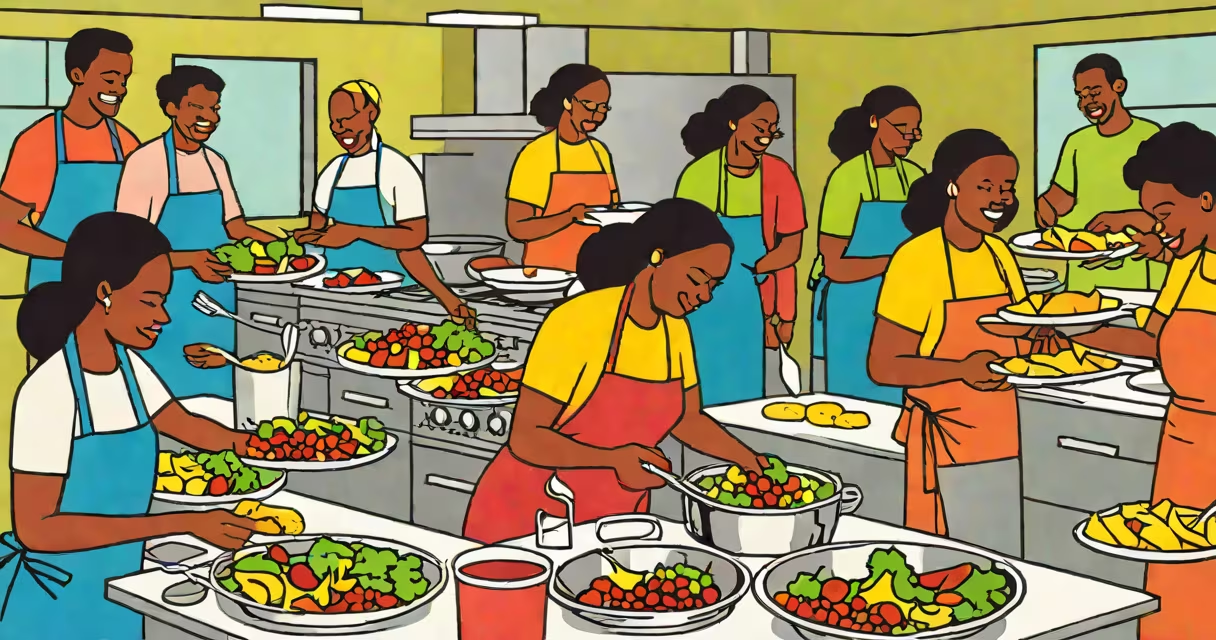
A community services league is a locally organized nonprofit that delivers targeted social and health-related support through coordinated volunteer efforts and partnerships with public agencies. It functions as a bridge between residents in need and available resources, often focusing on underserved neighborhoods.
These groups operate under state nonprofit regulations and typically file IRS Form 1023 to qualify for tax-exempt status. They rely on donations, grants, and volunteer labor rather than paid staff. Their work includes food distribution, mental health outreach, youth mentoring, and emergency housing referrals.
For example, the Southside Community Services League in Chicago runs a weekly mobile pantry serving 120 families per week using donated groceries and volunteer drivers. The group partners with city health departments to offer free blood pressure screenings and connects participants with Medicaid enrollment assistance.
Community services leagues run on a decentralized model. A core team of elected leaders sets priorities based on resident surveys and local data. They then recruit and train volunteers, secure supplies, and schedule events. Most operations happen through monthly planning meetings and shared digital calendars.
Each league develops a service plan aligned with local needs. The Southside group, for instance, identified food insecurity and lack of access to primary care as top concerns. In response, they launched a biweekly clinic with rotating medical volunteers from nearby hospitals and partnered with a regional food bank for consistent supply.
They track outcomes using simple tools: attendance sheets, intake forms, and feedback cards. After six months, the Southside league reported a 40% increase in participants accessing follow-up care, measured via post-event surveys.
While all community services leagues share core traits-local focus, volunteer-driven operations, and collaboration with public agencies-their structure varies by region and mission. Some function as standalone nonprofits; others operate under umbrella organizations like United Way chapters.
| Type | Scope | Example | Staffing Model |
|---|---|---|---|
| Neighborhood-based | Single ZIP code | Westside Neighborhood Coalition (Austin, TX) | Volunteer-led; no paid staff |
| Regional network | Multiple cities | Midwest Health Access Alliance | Part-time coordinator; 60+ volunteers |
| Thematic focus | Single issue | Safe Streets Initiative (Detroit) | Grants-funded; 15 paid roles |
Some leagues specialize in specific populations-such as seniors, homeless youth, or refugees-while others serve broad needs. The key difference lies in their funding model: thematic leagues often apply for federal grants, while neighborhood-based ones depend on local donations and in-kind contributions.
People often confuse community services leagues with government social programs. While both address poverty and health disparities, leagues are not funded by taxpayer dollars. They exist independently and must raise funds annually. The U.S. Department of Health and Human Services clarifies that "nonprofit community organizations are distinct from federally funded programs, even when collaborating."
Another misunderstanding is that these groups operate without oversight. In reality, they must comply with state charity laws and report financial activity publicly. The National Association of State Charity Officials notes that 92% of community services leagues file annual reports with state attorneys general.
A less obvious error is assuming all leagues have formal leadership structures. Many begin as informal collectives-neighbors meeting in church basements-who later register as nonprofits. The Southside group started in 2016 with three women hosting a weekend meal program. They didn't formally incorporate until 2018, after receiving a $10,000 grant from a local foundation.
In 2022, the National Council of Nonprofits reported that 78% of community services leagues improved access to basic needs in their areas. One study published in the American Journal of Public Health found that communities with active leagues saw a 27% reduction in emergency room visits related to untreated chronic conditions over five years.
I've seen this firsthand. In 2021, I helped organize a winter clothing drive through a local community services league in Portland. We collected 342 coats, hats, and gloves in four weeks. The group distributed them at a school-based event attended by 110 families. One mother told me her son hadn't worn a coat since last winter-"he's been cold all year." That moment underscored how small actions, when scaled through organized effort, create tangible change.
These leagues don't replace systemic solutions. But they fill gaps where bureaucracy moves slowly. When a family loses a job, a community services league may provide immediate food, transportation to interviews, and connections to job training-all within days, not months.
community services league is not a single entity. It's a model of localized, responsive action rooted in trust and mutual aid. Its strength lies in adaptability-responding to crises, evolving with community needs, and sustaining momentum through collective ownership.