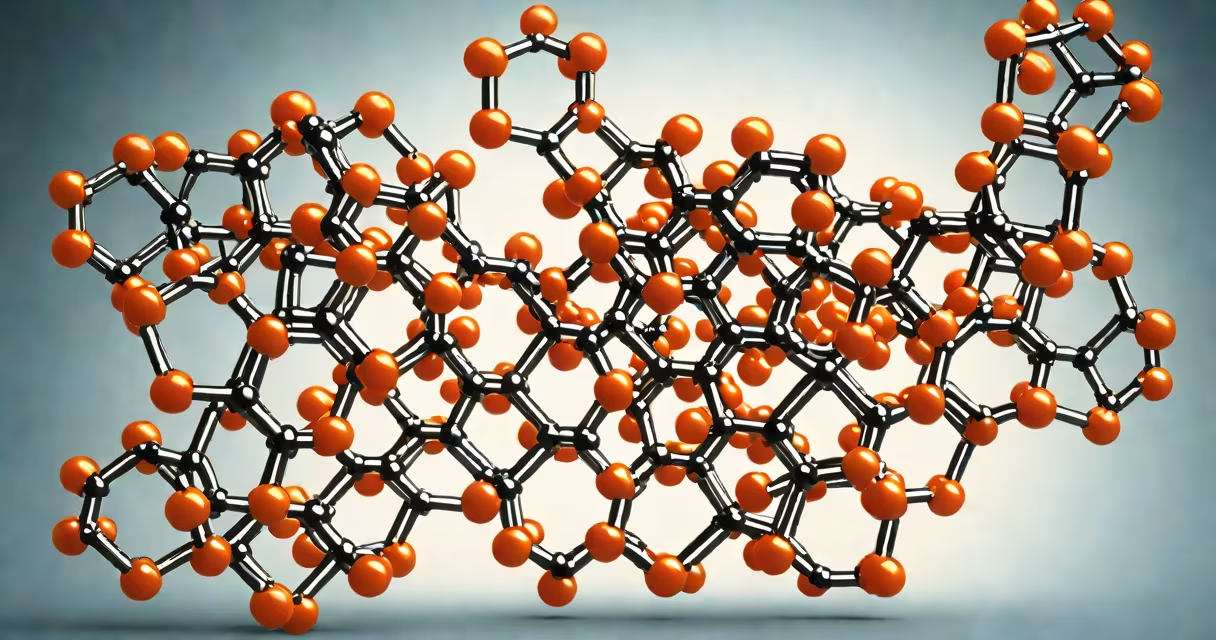
Common benzene derivatives are aromatic compounds formed by replacing one or more hydrogen atoms on a benzene ring with functional groups such as hydroxyl, amino, methyl, or carboxyl. These substitutions alter reactivity, solubility, and biological activity compared to unsubstituted benzene.
The benzene ring's stability arises from its delocalized π-electron system, which resists addition reactions. Substitution preserves this stability while introducing new chemical behavior. Common benzene derivatives include phenol, aniline, toluene, and benzoic acid-each with distinct industrial and biochemical roles.
These compounds appear in pharmaceuticals, plastics, dyes, and food additives. For example, phenol is used in antiseptics and resins; aniline is a precursor to dyes and rubber chemicals; toluene serves as a solvent and feedstock for explosives; benzoic acid acts as a preservative in foods and cosmetics.
Each derivative results from electrophilic aromatic substitution (EAS), where an electrophile replaces a hydrogen on the benzene ring. The substituent group influences both the reaction rate and position of further substitution.
For instance, electron-donating groups like -OH (hydroxyl) in phenol activate the ring toward ortho and para positions. Electron-withdrawing groups like -COOH (carboxyl) in benzoic acid deactivate the ring and direct incoming electrophiles to meta positions.
Substituents also affect physical properties. Phenol's -OH group enables hydrogen bonding, raising its boiling point to 182°C compared to benzene's 80°C. Aniline's -NH₂ group makes it more basic than benzene and reactive in diazotization reactions.
Common benzene derivatives fall into categories based on their functional groups. The table below outlines key members, their structures, and primary uses.
| Derivative | Functional Group | Chemical Formula | Primary Use |
|---|---|---|---|
| Phenol | Hydroxyl (-OH) | C₆H₅OH | Disinfectants, resins, pharmaceuticals |
| Aniline | Amino (-NH₂) | C₆H₅NH₂ | Dye intermediates, rubber accelerators |
| Toluene | Methyl (-CH₃) | C₆H₅CH₃ | Solvent, TNT precursor, paint thinner |
| Benzoic Acid | Carboxyl (-COOH) | C₆H₅COOH | Food preservative, synthetic intermediate |
Phenol's use in carbolic soap during the 19th century marked early recognition of its germicidal properties. Modern applications include bisphenol A production, which forms polycarbonate plastics used in eyewear and medical devices.
Aniline's role in dye synthesis began with mauveine, the first synthetic dye discovered in 1856 by William Henry Perkin. Today, aniline-based dyes remain important in textile manufacturing.
Toluene's high octane rating makes it valuable in gasoline blending. Its conversion to TNT (trinitrotoluene) via nitration illustrates how simple substitution leads to complex, high-energy materials.
Many confuse common benzene derivatives with polycyclic aromatic hydrocarbons (PAHs), such as naphthalene or anthracene. While PAHs contain fused benzene rings, common derivatives have single rings with substituents.
Another error is assuming all derivatives are toxic. Benzene itself is carcinogenic, but many derivatives are safe at regulated levels. Benzoic acid, for example, is approved by the FDA at concentrations up to 0.1% in food products.
Non-obvious fact: Despite similar names, "toluene" and "toluol" refer to the same compound. "Toluol" is an older name still seen in historical literature, but IUPAC recommends "toluene." This naming consistency avoids confusion in chemical databases.
Consider a jar of pickled cucumbers labeled "natural preservatives." The ingredient list likely includes benzoic acid. At pH below 5, benzoic acid remains undissociated and penetrates microbial cell membranes. Inside cells, it dissociates into benzoate ions, disrupting proton gradients and inhibiting enzyme function.
At 0.05% concentration, benzoic acid prevents spoilage by bacteria like Clostridium botulinum. This level is well below the 0.1% limit set by the European Food Safety Authority (EFSA) and the U.S. FDA.
Without this derivative, shelf life for fermented vegetables would drop from months to days. The mechanism relies on the benzene ring's stability allowing targeted disruption of cellular processes without degrading under heat or light.
Understanding common benzene derivatives clarifies how small structural changes yield large functional differences. A single -OH group transforms inert benzene into a compound used in antiseptics and polymers.
These compounds are foundational in organic synthesis. For example, the Kolbe-Schmitt reaction converts sodium phenoxide to salicylic acid-an intermediate in aspirin production. This process hinges on the nucleophilicity of the phenoxide ion, enabled by the aromatic ring's electron density.
During my undergraduate lab work, I synthesized aniline from nitrobenzene using tin(II) chloride reduction. The reaction required careful temperature control to avoid over-reduction. Observing the color change from pale yellow to dark brown confirmed successful conversion. This hands-on experience underscored how subtle electronic effects govern reactivity.
Common benzene derivatives are not interchangeable. Their unique properties stem from substituent identity, position, and electronic influence. Recognizing these differences enables precise application in medicine, materials science, and environmental management.