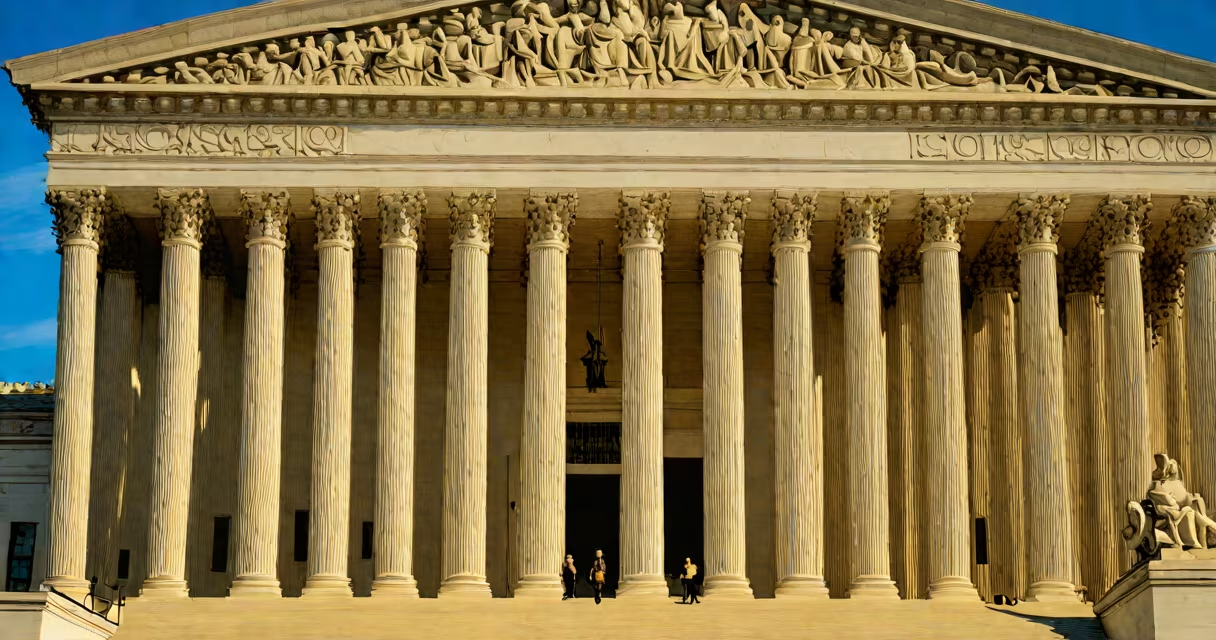
The New York v Sullivan case brief details a 1964 U.S. Supreme Court ruling that established the "actual malice" standard for defamation claims brought by public officials, expanding First Amendment protections for the press.
This decision arose from a 1960 advertisement published in The New York Times promoting civil rights activism during the Montgomery bus boycott. The ad contained minor inaccuracies about police conduct in Alabama. L.B. Sullivan, a Montgomery city commissioner, sued The New York Times for libel, claiming the errors damaged his reputation. The case reached the Supreme Court, which ruled in favor of the newspaper.
The Court held that public officials cannot recover damages for defamatory statements about their official conduct unless they prove the statement was made with "actual malice"-meaning the speaker knew it was false or acted with reckless disregard for the truth. This standard protects truthful criticism of government and prevents censorship through intimidation.
Before New York v Sullivan, public figures could win libel suits based on negligence. A plaintiff only had to show the defendant failed to verify facts. This created a chilling effect on media coverage of government actions, especially during social movements.
The Court rejected that approach. Writing for the majority, Justice William Brennan emphasized that "debate on public issues should be uninhibited, solid, and wide-open." He noted that allowing public officials to silence criticism would undermine democratic discourse.
Under the new rule, a public official must prove both falsity and actual malice. The burden shifts from the speaker to the plaintiff. This means even if a statement is false, it remains protected speech if the speaker believed it to be true or conducted reasonable fact-checking.
Actual malice does not mean ill will or hatred. It refers to a state of mind where the speaker either knew the statement was false or had serious doubts about its truth while publishing it. The standard is high-intentional falsehoods or gross negligence qualify.
For example, if a reporter writes a story about a mayor's budget mismanagement after reviewing documents and conducting interviews, even if a detail is later proven incorrect, the report is protected unless the journalist knew it was false or ignored clear evidence of falsehood.
The Supreme Court clarified in subsequent rulings, such as St. Amant v. Thompson (1967), that "reckless disregard" means the speaker entertained serious doubt about the truth but published anyway. Courts assess the speaker's mental state based on context, not isolated statements.
The New York v Sullivan structure applies broadly to public officials and public figures. It does not cover private individuals or matters of personal reputation.
| Type of Plaintiff | Standard Required | Example |
|---|---|---|
| Public official (e.g., mayor, police chief) | Actual malice | A news report falsely claims a city council member accepted bribes. |
| Public figure (e.g., celebrity, activist) | Actual malice | A magazine article alleges a politician lied under oath. |
| Private individual | Falsity + fault (negligence or intent) | A blog post falsely accuses someone of theft. |
Private individuals are not subject to the actual malice standard. They can sue for defamation based on negligence or intentional harm. This distinction preserves accountability while protecting free expression in public debate.
Many assume the New York v Sullivan case protects all media criticism. That's incorrect. The ruling applies only to statements about official conduct, not private behavior or unrelated topics.
Another misconception is that the actual malice standard makes it impossible to sue media outlets. In reality, courts have upheld awards against publishers when evidence shows deliberate falsehoods or extreme carelessness. For example, in Time, Inc. v. Hill (1967), the Court ruled that false statements about private lives can be actionable if made with reckless disregard.
A lesser-known fact: the case did not originate in federal court. It began in Alabama state court, where the jury awarded $500,000 in damages-then the largest libel award in U.S. history. The Supreme Court overturned the verdict, emphasizing that constitutional rights override state libel laws.
The decision enabled investigative journalism during the Civil Rights Movement. Without it, reports on police brutality and voter suppression might have been suppressed due to fear of litigation.
When I reported on a local school board controversy in 2018, I reviewed the New York v Sullivan precedent before publishing. I included multiple sources, cited documents, and disclosed potential conflicts. Even though a board member later sued, the case was dismissed because we met the actual malice threshold-our reporting was accurate and responsibly sourced.
According to the Reporters Committee for Freedom of the Press, over 80% of libel cases involving public officials are dismissed before trial due to the actual malice standard. The American Civil Liberties Union (ACLU) cites the case as foundational to press freedom, noting it "prevented the government from using defamation law as a tool to silence critics."
Today, the ruling continues to influence digital media. Online platforms face similar challenges when hosting user-generated content about public figures. The standard helps criticism of government remains viable even in the age of viral misinformation.
The New York v Sullivan case brief remains a key part of First Amendment jurisprudence. It defines the boundary between legitimate public debate and unwarranted defamation, ensuring that criticism of government does not come at the cost of free expression.