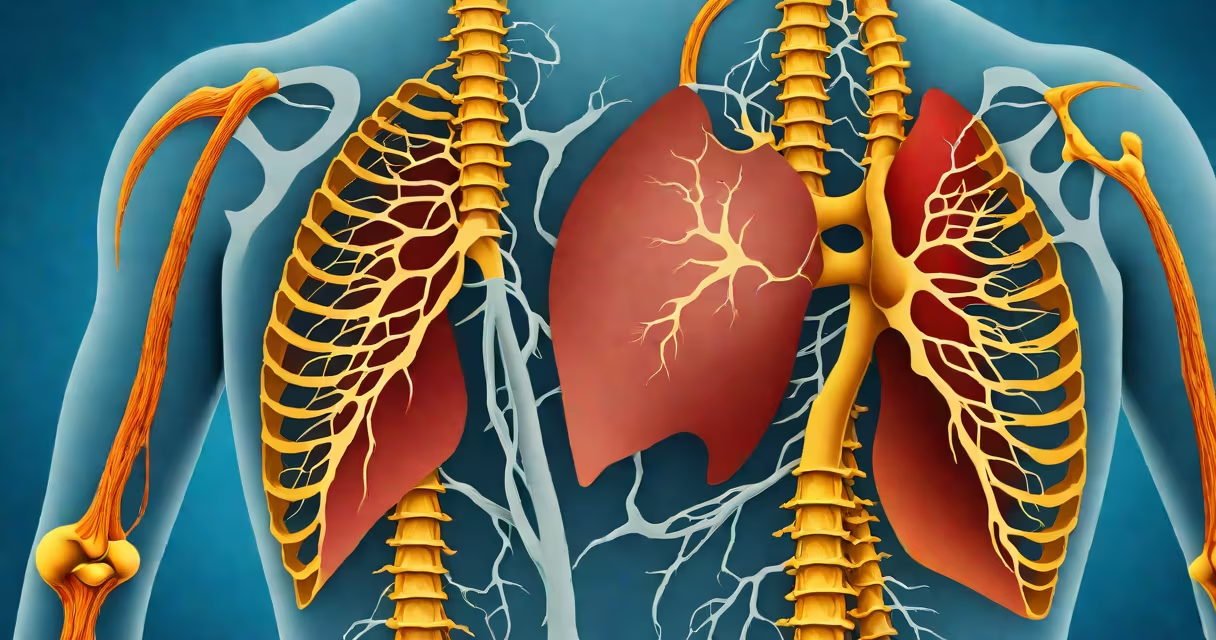
Lung cancer can cause back pain when tumors grow large enough to press on nerves or when cancer spreads to the spine or ribs. This pain typically develops in later stages and may worsen with movement or lying down.
Back pain from lung cancer is not common in early stages. Most people with early lung cancer have no symptoms. When pain appears, it often signals that the disease has progressed beyond the lungs. The American Cancer Society notes that back pain is reported in about 10-15% of patients with advanced lung cancer, especially when the cancer has spread to bone.
Not all back pain comes from cancer. Muscle strain, spinal degeneration, or herniated discs are far more frequent causes. But persistent, unexplained back pain-especially if it's worse at night or doesn't improve with rest-should prompt evaluation. A 2021 study in Cancer Medicine found that 12% of patients with stage III or IV non-small cell lung cancer experienced back pain as a primary symptom, often leading to delayed diagnosis.
Lung cancer causes back pain through direct invasion or metastasis. Primary tumors in the upper lobes of the lungs can press on the brachial plexus or sympathetic nerves, which run along the spine. This pressure triggers radiating pain that travels down the back or into the shoulders.
More commonly, back pain results from metastasis-cancer spreading to bones. The spine, particularly the thoracic vertebrae (mid-back), is a frequent site. Bone metastases weaken the vertebrae, causing instability, fractures, or nerve compression. Pain from these conditions is often dull, constant, and worsens with weight-bearing activities.
A 65-year-old man with a history of smoking presented with worsening mid-back pain over six weeks. He initially attributed it to arthritis. Imaging revealed a 4.2 cm mass in his right upper lobe and multiple lytic lesions in T7-T9 vertebrae. Biopsy confirmed adenocarcinoma of the lung with spinal metastasis. His pain improved after radiation therapy to the spine.
Not all back pain from lung cancer feels the same. The pattern and timing help distinguish cancer-related pain from musculoskeletal issues.
| Pain Type | Characteristics | Common Cause |
|---|---|---|
| Constant, deep ache | Worse at night, improves slightly with movement | Bone metastasis, nerve compression |
| Sharp, shooting pain | Travels down one side of the back or into limbs | Nerve root involvement (e.g., from tumor pressing on spinal cord) |
| Localized tenderness | Pain focused on one spot, may worsen with touch | Vertebral fracture due to weakened bone |
Unlike mechanical back pain, which improves with rest or changes in posture, cancer-related back pain often persists through sleep and doesn't respond to over-the-counter pain relievers. The National Complete Cancer Network (NCCN) guidelines emphasize that new-onset back pain in a smoker over 50 should trigger imaging to rule out metastasis.
Back pain alone does not mean you have lung cancer. But certain warning signs increase concern:
I once saw a patient with progressive lower back pain and leg weakness. He had no known cancer history. MRI showed a mass compressing the cauda equina-a critical bundle of nerves at the base of the spine. Biopsy revealed small cell lung cancer. The delay in diagnosis was due to initial misattribution to degenerative disc disease. Early recognition of neurological deficits is important.
Back pain from lung cancer is often misdiagnosed as mechanical or inflammatory. A 2020 review in Journal of Thoracic Oncology found that nearly 40% of patients with spinal metastases were initially treated for non-cancer causes, leading to average delays of 8 weeks before correct diagnosis.
If you have persistent back pain and risk factors like smoking, age over 50, or unexplained weight loss, seek medical evaluation. Start with a primary care provider who may order imaging such as an MRI or CT scan of the spine and chest.
Imaging can detect bone lesions or soft tissue masses. If cancer is suspected, a PET scan may confirm metastasis. Blood tests for tumor markers like CEA or CYFRA 21-1 can support diagnosis but are not definitive.
Treatment depends on the stage and location. Radiation therapy is effective for relieving pain from spinal metastases. Surgery may be needed if there's spinal instability or neurological compromise. Systemic treatments like chemotherapy or targeted therapy address the underlying cancer.
Back pain from lung cancer is not always treatable, but management can improve quality of life. Pain control is a priority. The NCCN recommends early palliative care consultation for patients with advanced disease, even if curative treatment is not possible.