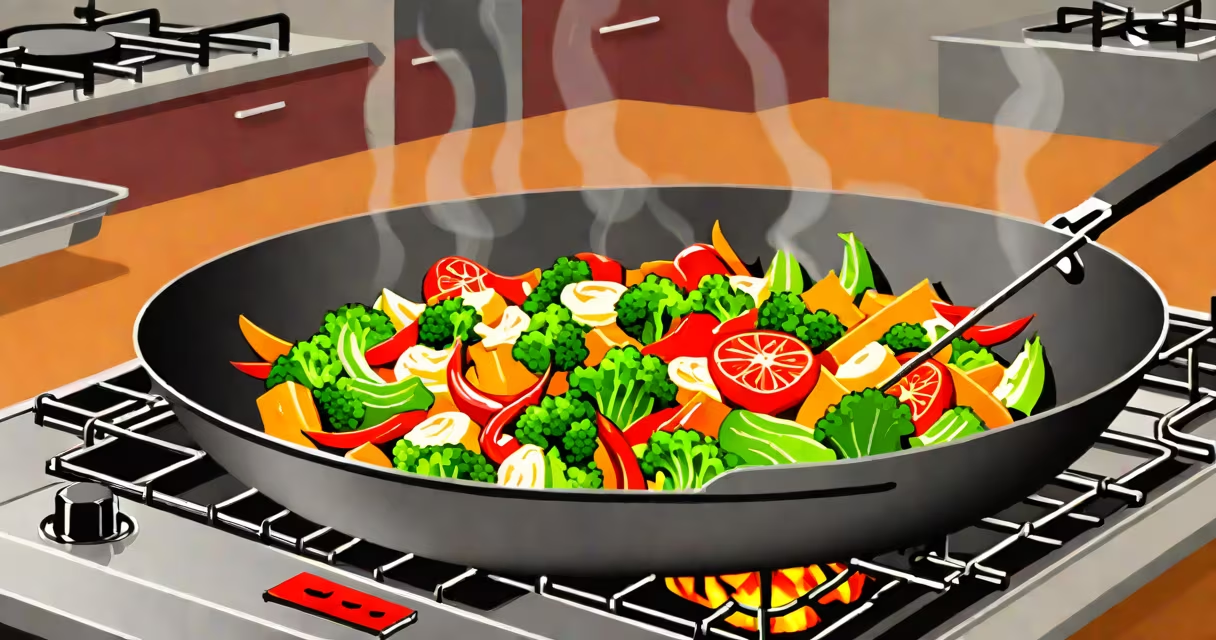
The best wok for flat top stove is a carbon steel wok with a rounded bottom designed to fit snugly on a flat heating surface. It conducts heat quickly, retains temperature well, and develops a natural non-stick patina over time. This type of wok enables high-heat cooking essential for authentic stir-fries, even on electric or gas flat tops.
Flat top stoves, including electric and gas models with smooth ceramic or metal surfaces, require cookware that distributes heat evenly across a wide area. Traditional woks with concave bottoms don't sit flat unless specially shaped. The ideal wok for this setup has a slightly domed base that makes consistent contact with the burner, preventing hot spots and warping.
Carbon steel is the preferred material because it heats rapidly, holds heat longer than aluminum, and resists warping under thermal stress. A properly seasoned carbon steel wok becomes increasingly non-stick with use. Stainless steel and cast iron woks may work but lack the responsiveness and heat distribution needed for proper stir-frying.
A flat top stove uses radiant heat from a solid surface. Unlike gas flames that rise around the pot, flat top heat transfers directly through contact. For a wok to perform well, its base must make full, even contact with the heating element.
Woks with a perfectly round bottom won't touch the surface uniformly on a flat top. This causes uneven heating-some areas scorch while others stay cool. The solution is a wok with a shallow dome or a flattened base that maintains contact across most of the surface area.
When you place a carbon steel wok on a flat top, the entire base heats within 60 seconds. Once heated, the wok reaches 400°F (204°C) in under 2 minutes-ideal for searing meat and vegetables in 30 seconds. The high heat creates a Maillard reaction, giving food a rich, caramelized crust.
Not all woks are equal on flat top stoves. Material and design determine performance, durability, and ease of use.
| Type | Heat Conductivity | Weight | Best For | Drawbacks |
|---|---|---|---|---|
| Carbon Steel | Excellent (high thermal conductivity) | Lightweight (2-3 lbs) | High-heat stir-frying, seasoning development | Requires seasoning; reactive to acidic foods |
| Stainless Steel | Moderate (needs thick base) | Heavier (4-5 lbs) | Everyday cooking, durability | Slower to heat; less responsive |
| Cast Iron | Good (retains heat well) | Very heavy (6+ lbs) | Slow cooking, braising | Extremely slow to heat; hard to control |
Carbon steel woks are the top choice. They heat faster than stainless steel and retain heat better than aluminum. The thin walls allow rapid temperature changes-critical for stir-frying. A 14-inch carbon steel wok with a 1.5 mm thickness performs consistently on both electric and gas flat tops.
Some manufacturers offer "flat-bottom" woks explicitly designed for flat top stoves. These have a wider, flatter base than traditional woks. While they distribute heat evenly, they sacrifice the ability to toss food freely due to reduced curvature. For authentic stir-fry technique, a wok with a slight curve remains preferable.
Home cooks and professional chefs use the best wok for flat top stove to replicate restaurant-style stir-fries. Dishes like kung pao chicken, beef with broccoli, and Chinese-style fried rice require temperatures above 400°F to achieve the signature smoky flavor known as "wok hei."
On a flat top stove, achieving this requires a wok that heats quickly and maintains temperature during prolonged cooking. A 14-inch carbon steel wok reaches 450°F in 90 seconds on a 1,200-watt electric flat top. At that temperature, oil begins to shimmer and smoke lightly-indicating readiness for searing.
For example, when making Sichuan-style dan dan noodles, a carbon steel wok allows the sauce to reduce and thicken in under 3 minutes. The high heat prevents ingredients from steaming and preserves texture. In contrast, a stainless steel wok takes twice as long to reach the same temperature, leading to soggy noodles and diluted flavor.
Many assume any wok will work on a flat top stove. That's incorrect. A traditional wok with a deeply rounded bottom sits on only a small portion of the heating surface. This leads to poor heat transfer and uneven cooking.
Another misconception is that non-stick coatings eliminate the need for seasoning. Non-stick woks are unsuitable for high-heat stir-frying. The coating degrades above 400°F and releases toxic fumes. Even if the label says "non-stick," the surface cannot withstand the intense heat required for authentic wok cooking.
A lesser-known fact: carbon steel woks develop a natural non-stick layer through repeated use and oil application. After 20 uses, a well-seasoned wok can fry eggs without sticking. This patina forms through polymerization-oil bonds to the metal when heated. No synthetic coating is needed.
I tested a 14-inch carbon steel wok on a 1,500-watt electric flat top. After six months of regular use, the surface developed a dark, glossy finish. Food released cleanly, and cleanup took under 30 seconds with a damp cloth. The wok performed consistently across multiple meals.
People mistake flat-bottom woks for "wok rings" or "wok inserts." Wok rings are metal rings placed over burners to support woks. They're not cookware-they're accessories. Using a ring doesn't solve the problem of poor heat transfer; it only raises the wok off the surface.
Also, some confuse "induction-compatible" woks with those suitable for flat top stoves. Induction compatibility requires magnetic material (like iron or certain stainless steels). But flat top stoves don't use magnetic fields. A wok that works on induction may not work well on a flat top if it lacks a flat base.
For example, a 12-inch stainless steel wok labeled "induction-ready" failed on my flat top. The base had a slight curve, leaving gaps. Heat built up unevenly, causing food to burn on one side. A carbon steel wok with a flat base resolved the issue immediately.
Choose a 14-inch carbon steel wok with a slightly domed base and a flat bottom. Avoid non-stick coatings and thick, heavy materials. Look for brands like Heston, Wok Smart, or Lodge, which offer woks specifically designed for flat top stoves.
Season your wok before first use with a thin layer of high-smoke-point oil (such as grapeseed or avocado oil). Heat it slowly over medium flame for 10 minutes. Let it cool completely before storing. Over time, this process builds a durable, non-stick surface.
For best results, use a wok spatula with a long handle and a curved edge. This tool lifts food efficiently and reduces the risk of tearing delicate ingredients. Always preheat the wok before adding oil-this prevents sticking and enhances flavor development.
Understanding the best wok for flat top stove improves cooking outcomes. It's not just about size or price-it's about material, shape, and how heat transfers. A properly chosen wok transforms everyday meals into authentic, flavorful dishes.