Arizona is a state in the southwestern region of the United States, bordered by Mexico to the south and west, and by New Mexico, Nevada, Utah, and California. It became the 48th state admitted to the Union on February 14, 1912.
Arizona spans 113,998 square miles and features diverse terrain, including high desert plateaus, mountain ranges, and the Colorado River's dramatic Grand Canyon. The state capital is Phoenix, the largest city by population, while Tucson ranks second. Arizona's climate varies widely-from hot, dry deserts in the lowlands to cold, snowy winters in the higher elevations.
The state's economy relies heavily on mining (especially copper), tourism, agriculture, and growing sectors in aerospace and renewable energy. Arizona hosts major attractions such as the Petrified Forest National Park, Sedona's red rock formations, and the Sonoran Desert's biodiversity. Its unique blend of Native American heritage, Spanish colonial history, and modern urban development shapes its cultural identity.
Arizona is part of the Mountain Time Zone (MST) and observes daylight saving time, shifting to Pacific Time during summer months. This creates seasonal time differences with neighboring states like California and Nevada.
As a U.S. state, Arizona operates under federal law but maintains its own constitution, elected government, and legal system. It has two U.S. Senators and nine representatives in the House of Representatives based on population. The state's political field has shifted toward competitive elections since the 2000s, with both parties holding influence in different regions.
Arizona's role in national affairs includes hosting military installations like Luke Air Force Base near Phoenix and contributing to federal research through institutions such as the University of Arizona's Lunar and Planetary Laboratory.
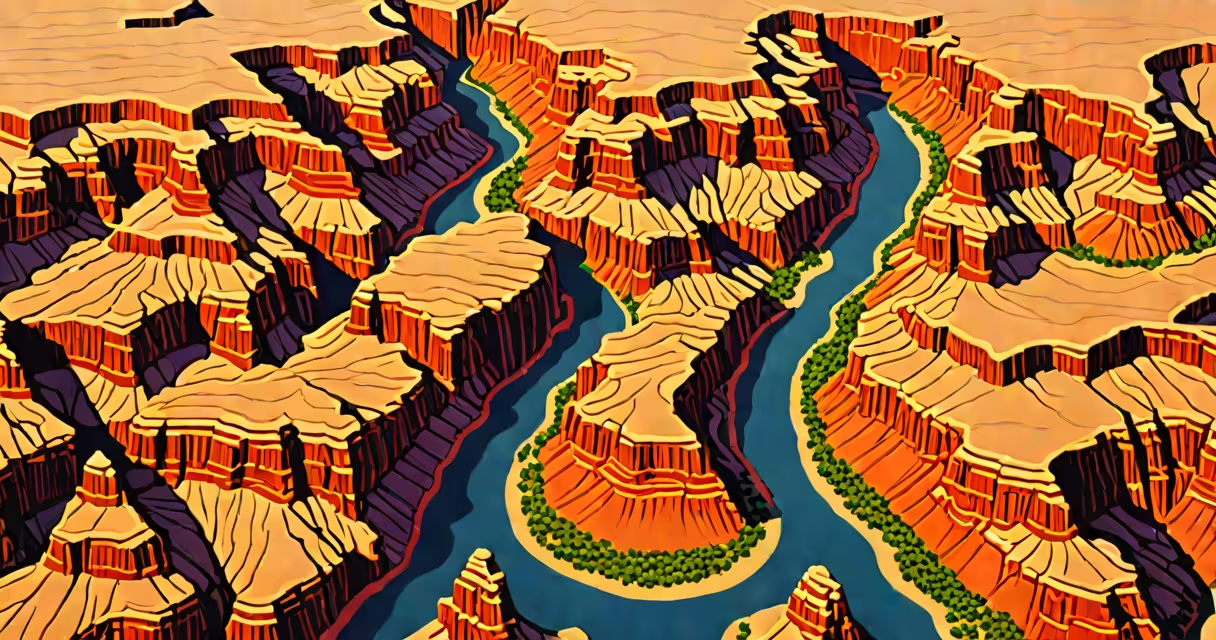
Arizona is home to the Grand Canyon, a 277-mile-long geological wonder carved by the Colorado River over millions of years. The canyon's layered rock walls reveal nearly 2 billion years of Earth's history. It attracts over 6 million visitors annually and is managed by the National Park Service.
The state leads the nation in copper production. In 2023, Arizona produced 1.3 million metric tons of copper, accounting for roughly 60% of U.S. domestic output. Mines in the southeastern region, particularly around Morenci and Bisbee, supply raw material for electronics, construction, and green energy infrastructure.
Arizona's climate supports year-round outdoor recreation. The Sonoran Desert, which covers much of southern Arizona, contains over 1,000 species of native plants, including the saguaro cactus. These iconic cacti grow slowly-some take 75 years to reach 10 feet tall-and are protected under federal law.
Many assume Arizona is uniformly hot and dry. While desert conditions dominate the lowlands, mountainous areas like Flagstaff experience snowfall and temperatures below freezing in winter. Flagstaff, located at 7,300 feet elevation, averages 118 inches of snow annually-more than cities in New York and Chicago.
Another misconception is that Arizona's entire population lives in Phoenix or Tucson. Over 60% of residents live in Maricopa County (home to Phoenix), but rural counties like Apache and Coconino have populations under 10,000 people per county. Tribal lands cover 22% of the state's area, including the Navajo Nation, Hopi Reservation, and Tohono O'odham Nation.
Arizona does not border the Atlantic Ocean. It lies entirely within the western U.S., with access to the Gulf of California via the Colorado River delta. The state shares a 513-mile border with Mexico, making it a key location for cross-border trade and immigration policy discussions.
Arizona's geography divides into four primary ecological zones:
| Zone | Altitude Range | Climate | Examples |
|---|---|---|---|
| Lower Sonoran Desert | 1,000-3,000 ft | Hot, arid | Phoenix, Yuma, Casa Grande |
| Upper Sonoran Desert | 3,000-5,000 ft | Warm days, cool nights | Sedona, Payson |
| Transition Zone | 5,000-7,000 ft | Mild summers, cold winters | Flagstaff, Williams |
| Alpine Zone | 7,000+ ft | Cold, snowy | San Francisco Peaks, Kaibab Plateau |
Each zone supports distinct ecosystems and human settlement patterns. For example, the alpine zone hosts pine forests and ski resorts, while the lower desert supports agriculture using irrigation from the Central Arizona Project.
In 2022, I spent two weeks hiking the North Kaibab Trail in Grand Canyon National Park. Starting at the North Rim entrance, I walked 12 miles down to Phantom Ranch, descending nearly 5,000 feet in elevation. The trail crosses multiple geological layers-Vishnu Schist, Tapeats Sandstone, and Coconino Sandstone-each revealing different periods of sedimentation and erosion. I encountered a mule train carrying supplies and saw raptors circling above the canyon walls. The temperature dropped from 68°F at the rim to 45°F at the river level, illustrating how rapidly climate changes with altitude.
Some confuse Arizona with other Southwestern states due to similar landscapes. Arizona differs from New Mexico in language and tribal governance: while both have Pueblo and Navajo communities, Arizona's tribal nations operate under separate federal treaties and land rights. Arizona also has more public land managed by the Bureau of Land Management than any other state except Nevada.
Arizona is not the only U.S. state with a desert climate. California, Nevada, and Utah also contain arid regions. But Arizona's combination of high desert, mountainous terrain, and extreme temperature variation makes it unique among the contiguous states.
When discussing "arizona united states," it's essential to recognize that the term refers to the state's place within the federal structure-not a political movement or regional alliance. The phrase does not imply a separate sovereignty claim, though Arizona has had notable debates over immigration enforcement and state autonomy in recent decades.
The U.S. Census Bureau reports that Arizona's population reached 7,466,000 in 2023, making it the 15th most populous state. The National Park Service confirms that Grand Canyon National Park receives approximately 6.1 million annual visitors, ranking it among the top ten most visited parks in the country.
According to the U.S. Geological Survey, Arizona's copper mines produced 1.3 million metric tons in 2023-60% of U.S. total output. The state's share of national copper production has remained stable since 2010, despite fluctuations in global demand.
Understanding arizona united states requires recognizing its geographic diversity, economic contributions, and cultural complexity. It is not a monolith but a collection of ecosystems, communities, and histories shaped by both natural forces and human decisions.