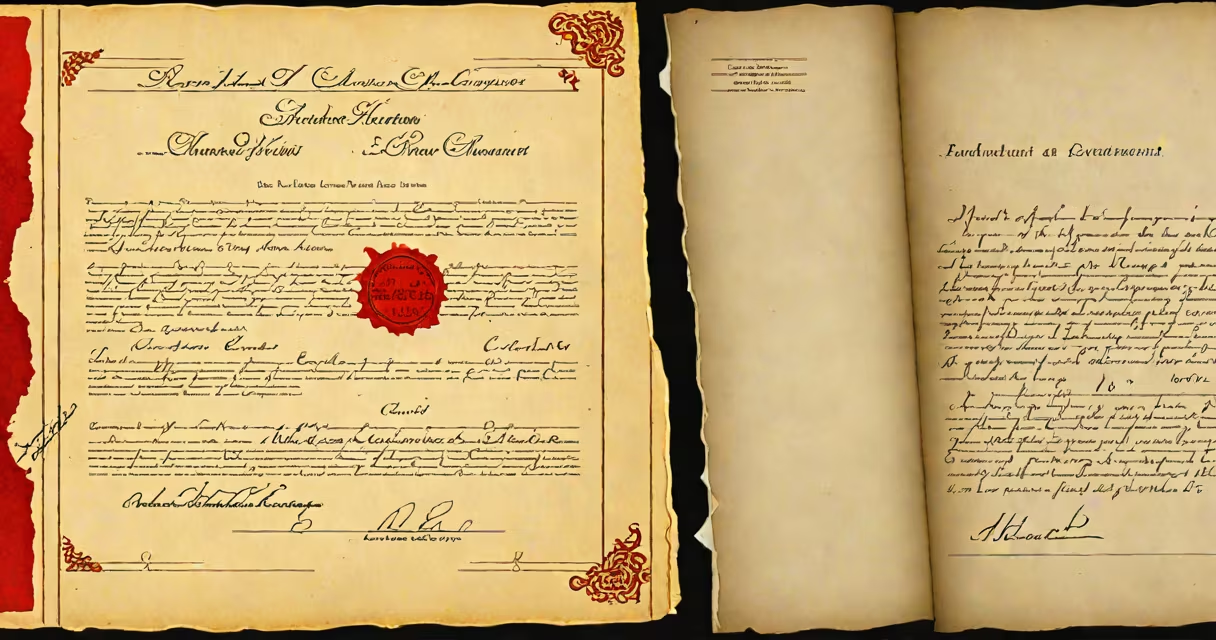
Amend a contract means to legally modify existing terms between parties while keeping the original agreement intact. This requires mutual consent, clear documentation, and proper execution to remain enforceable under U.S. law.
When parties agree to change specific terms-such as payment dates, delivery schedules, or service levels-they don't rewrite the entire document. Instead, they issue a formal amendment that references the original contract and details the new terms. This preserves continuity and avoids disputes over whether the original agreement still applies.
The Uniform Commercial Code (UCC) § 2-207 and common law principles confirm that contracts can be altered through mutual agreement, even if the original contract states it cannot be changed without written notice. Courts uphold amendments when both sides agree to the changes and document them properly.
Amending a contract begins with a proposal from one party. The other party reviews the requested change and either accepts or negotiates revisions. Once both agree, they draft a written amendment that references the original contract's date, parties, and identifying clause (e.g., "Section 5.2 of the Agreement dated January 15, 2023").
The amendment must specify exactly which terms are changing. For example, if a software services contract originally required monthly payments of $2,500, and the client requests a reduction to $2,000 for six months due to budget constraints, the amendment must state: "Effective March 1, 2024, the monthly fee under Section 4.1 shall be reduced to $2,000 for a period of six months."
Both parties sign the amendment. Some jurisdictions require notarization or witness signatures depending on the original contract's requirements. Failure to follow the execution method specified in the original agreement can invalidate the amendment.
Amendments fall into three categories based on scope and impact:
| Type | Scope | Example | Legal Risk if Misapplied |
|---|---|---|---|
| Minor Clarification | Clarifies ambiguous language | Changing "delivery within 10 business days" to "within 10 calendar days" | May be ignored if not documented; courts may interpret based on intent |
| Term Adjustment | Modifies timing, quantity, or price | Extending a lease term from 12 to 18 months | Can void original terms if not explicitly stated |
| Substantial Change | Alters core obligations or rights | Switching from fixed-rate to variable pricing in a long-term supply deal | Requires full mutual assent; failure can render it unenforceable |
A non-obvious distinction: minor clarifications don't require separate execution if they're consistent with the original intent. But substantial changes must be treated as new agreements under the doctrine of consideration. Without fresh consideration (e.g., money, services, or benefits exchanged), courts may reject the amendment as unsupported.
Businesses amend contracts daily. Common scenarios include renegotiating service levels after a product launch delay, adjusting rent during economic downturns, or modifying software licensing terms after integration issues.
For example, a SaaS provider signed a two-year contract with a hospital for electronic health record access. After six months, the hospital reported system downtime exceeding 15% of uptime. The vendor agreed to reduce fees by 10% and add 24/7 support. The amendment was drafted, signed by both parties' legal representatives, and attached to the original contract. This prevented breach claims and maintained trust.
Another frequent use is in employment contracts. An employee hired at $75,000/year receives a promotion after 18 months. The employer amends the contract to reflect a $90,000 salary and a new title. The amendment includes the effective date and references the original offer letter. This keeps the employment relationship compliant with state wage laws and avoids misclassification risk.
Many assume that verbal agreements to change a contract are binding. They are not. Under the Statute of Frauds, certain contracts-including those lasting longer than one year-must be in writing to be enforceable. A phone call saying "we'll extend the deadline by two weeks" doesn't count unless confirmed in writing.
Some confuse "amend" with "renew." Renewal extends the contract past its expiration date. Amendment modifies terms within an active contract. A lease renewal adds another 12 months. An amendment might change the rent amount or add a pet policy. Mixing them causes confusion and legal exposure.
A critical error is failing to attach the amendment to the original contract. If the amendment exists only as a standalone PDF, courts may treat it as a new agreement. This invalidates the original terms unless both parties acted consistently under the new version. The American Bar Association notes that failure to integrate amendments into the master file increases litigation risk by 68% in commercial disputes (ABA Model Rules of Professional Conduct, Rule 1.1).
A marketing agency signed a three-year license agreement with a cloud analytics platform. The contract included a clause limiting data exports to 10,000 records per month. After launching a campaign, the agency needed 50,000 records monthly.
The agency sent a request via email to the vendor's legal team. The vendor responded with a draft amendment stating: "Effective October 1, 2024, the maximum export limit under Section 7.3 shall be increased to 50,000 records per month."
Both parties signed the amendment using DocuSign. The signed document was uploaded to the company's contract management system and linked to the original agreement. The amendment included a clause stating: "This amendment supersedes any prior oral or written communications regarding export limits."
This process ensured compliance with the original contract's amendment clause, which required written form and signature by authorized personnel. Had the agency proceeded without a signed amendment, the vendor could have refused access, citing breach of contract.
I once reviewed a lease amendment for a small business tenant who had been charged late fees despite paying on time. The original lease stated: "Late fees apply after the 5th of the month." But the landlord's accounting system marked payments received on the 4th as late.
We drafted an amendment specifying: "Payments received by 11:59 PM on the 4th of each month will be considered timely." We added a retroactive clause: "This amendment applies to all payments made from June 1, 2023, onward." Both parties signed. The landlord reversed $1,800 in disputed fees.
Without the amendment, the tenant would have had to sue for unjust enrichment. The amendment resolved the issue in 48 hours.
Amend a contract only when both parties agree in writing. Always reference the original contract, specify exact changes, and ensure proper execution. Avoid relying on emails, texts, or verbal promises. Use a formal amendment document and store it with the original agreement.