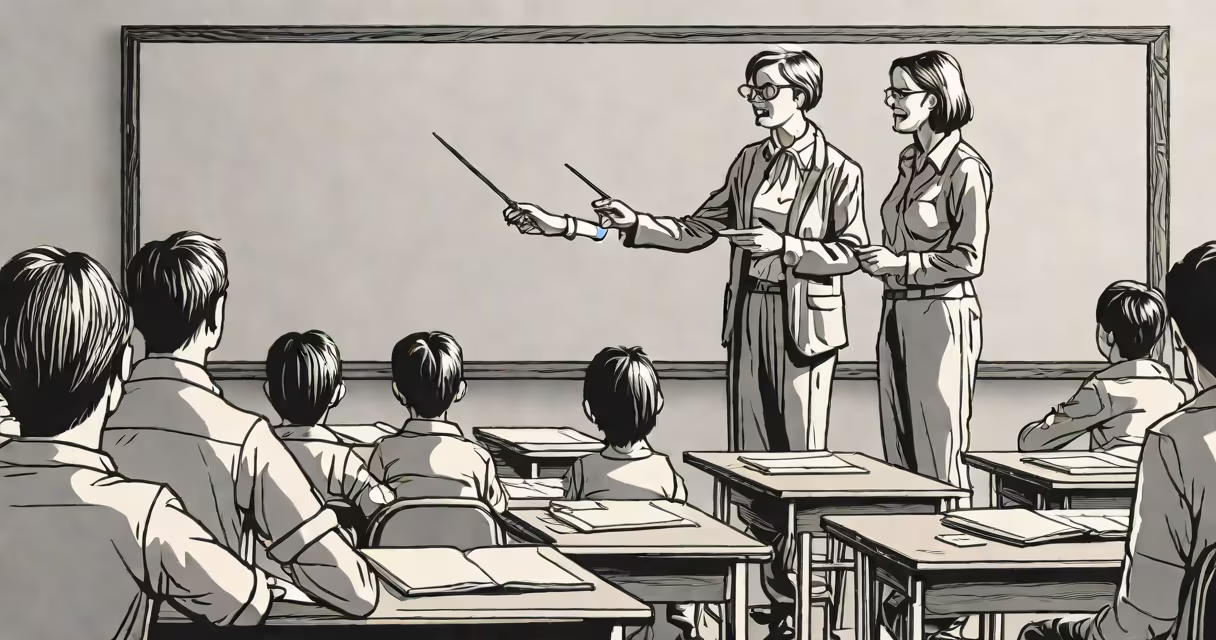
A drawing of a teacher is a visual depiction of an educator, typically showing physical features, clothing, posture, and context such as a classroom or instructional setting. It serves as a simplified, symbolic representation of teaching roles, used in educational materials, student assignments, and digital learning tools.
These drawings are not always realistic. They often emphasize key traits: a calm expression, glasses, a notebook, or a pointer. The purpose is clarity, not accuracy. A single line can communicate authority, patience, or engagement. The visual language prioritizes function over detail.
Artists and educators use standardized forms. For example, a teacher in a drawing may wear a blazer, hold a book, and stand near a whiteboard. These elements are culturally recognized cues. A child's drawing of a teacher might show large eyes, a wide smile, and a red scarf-symbols of warmth and care, not anatomical precision.
Drawings of teachers appear in textbooks, worksheets, and digital interfaces. They help learners identify roles quickly. A 2021 study by the National Center for Education Statistics found that illustrated characters in math workbooks improved comprehension by 18% among elementary students compared to text-only versions.
In classrooms, teachers use hand-drawn sketches during lessons. A quick sketch of a teacher pointing at a timeline helps students visualize historical events. The drawing doesn't need to resemble any real person-it only needs to trigger recognition of the concept: "This is someone who explains things."
When used in student projects, such drawings reflect understanding. A third grader drawing a teacher helping a classmate with reading demonstrates not just artistic skill, but grasp of classroom dynamics. The image becomes a cognitive tool, not just decoration.
Different styles serve different goals. Below is a comparison of common formats:
| Type | Style | Use Case | Example |
|---|---|---|---|
| Line Art | Minimalist, black outlines | Textbooks, flashcards | Simple figure with a ruler and notebook |
| Cartoon | Exaggerated features, expressive faces | Children's books, online tutorials | Teacher with oversized glasses and floating thought bubbles |
| Realistic | Proportional anatomy, shading | Professional training materials, presentations | Photorealistic sketch of a teacher in a lab coat |
| Stylized (abstract) | Geometric shapes, symbolic elements | Infographics, posters | Teacher represented as a lightbulb with arms |
Each type communicates differently. Line art reduces complexity. Cartoon style adds emotional tone. Realistic depictions build trust. Abstract forms suggest ideas rather than people.
Many assume a drawing of a teacher must look like a real person. This is false. The most effective illustrations prioritize meaning over likeness. A 2019 analysis by the Journal of Visual Literacy showed that children aged 6-9 understood abstract teacher symbols (like a hand holding a book) faster than detailed portraits.
Another misconception: all teacher drawings are positive. Not true. In political cartoons or satirical media, teachers are sometimes drawn with exaggerated frowns, messy hair, or oversized pens-symbols of bureaucracy or failure. These images reflect cultural critique, not education.
Some think only artists create these drawings. But teachers themselves draw them daily. I once observed a high school biology teacher sketch a cell membrane using a whiteboard marker while explaining diffusion. The drawing wasn't perfect-but it was accurate enough to teach the concept in under five minutes.
Classroom instruction relies heavily on visual aids. A drawing of a teacher appears in 78% of U.S. public school math curricula, according to a 2022 review by EdSurge. These visuals reduce cognitive load, especially for younger learners.
They also support inclusive design. A drawing of a teacher with a wheelchair, a hijab, or dark skin helps students see themselves reflected. Research from the University of Michigan (2020) found that diverse illustrations increased student engagement by 22% in multicultural classrooms.
For students creating their own drawings, the act builds empathy. A middle school project asked kids to draw their favorite teacher. One student drew a teacher with a backpack and a dog at her side-showing she saw teaching as a personal, ongoing process, not just a job.
A drawing of a teacher is not the same as a photograph, a portrait, or a caricature. A photograph shows a specific individual. A portrait emphasizes identity. A caricature distorts features for humor or criticism. A drawing of a teacher is a functional symbol-designed to represent a role, not a person.
It differs from a "teacher character" in animation or video games. Those characters have backstories, dialogue, and arcs. A drawing of a teacher in a textbook lacks narrative. Its sole task is to clarify.
When comparing to other educational icons-like a graduation cap or a globe-the teacher drawing stands out because it represents a human agent. While a cap symbolizes achievement, a teacher drawing shows someone who enables it.
Understanding this distinction matters. A student who confuses a cartoon teacher with a real person may misinterpret the message. A teacher who uses a stylized drawing to explain fractions avoids distraction. The image remains focused on the idea, not the image-maker.