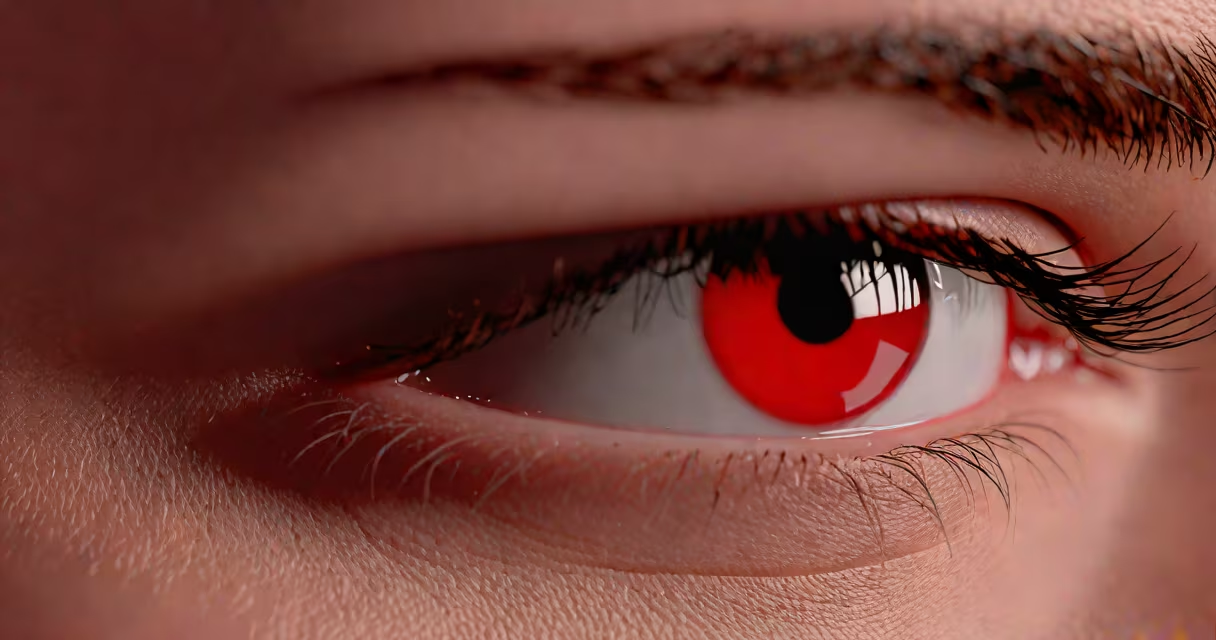
Woke up and one eye is red describes a sudden onset of redness in a single eye upon awakening, typically due to minor irritation, dryness, or a localized inflammation. It is not a medical diagnosis but a symptom that may indicate conditions ranging from conjunctivitis to dry eye syndrome.
This presentation is common. A 2021 study published in Cornea found that unilateral redness upon waking occurs in about 1 in 10 patients presenting with ocular complaints, most of which resolve within 24 hours without treatment. The redness usually appears as diffuse flushing or visible blood vessels across the white of the eye (sclera), sometimes accompanied by itching, tearing, or a gritty sensation.
Redness in one eye after sleep is rarely caused by serious issues like acute angle-closure glaucoma, which typically presents with bilateral pain, nausea, and vision loss. Instead, the most frequent causes involve surface-level disruptions to the eye's outer layer or tear film.
The eye's surface is protected by a thin film of tears that lubricates and shields against debris. During sleep, tear production slows. If the eyelid doesn't close completely - a condition called incomplete blink or lagophthalmos - the cornea can dry out. This leads to micro-abrasions and inflammation, triggering blood vessels in the conjunctiva to dilate and appear red.
Allergens such as dust mites, pet dander, or mold spores in bedding can also trigger allergic conjunctivitis. These particles accumulate overnight, causing histamine release and localized swelling. Symptoms often include itching, watery discharge, and redness confined to one eye, especially if the person sleeps on a side with a pillow that traps allergens.
Bacterial or viral conjunctivitis can start unilaterally. Viral forms often begin in one eye and spread to the other within 24-48 hours. They're associated with a clear or slightly mucous-like discharge, mild light sensitivity, and a feeling of grittiness. Bacterial cases may produce thicker yellow-green discharge, particularly noticeable upon waking.
Conditions causing woke up and one eye is red fall into three categories: mechanical, allergic, and infectious. The table below outlines key differences.
| Type | Common Triggers | Distinctive Signs | Typical Duration |
|---|---|---|---|
| Dry eye | Low humidity, screen use before bed, sleeping with eyes partially open | Gritty sensation, burning, redness only in one eye | Hours to 1 day |
| Allergic conjunctivitis | Dust mites, pet dander, pollen in bedding | Intense itching, watery discharge, redness often worse in morning | Days to weeks if exposure continues |
| Viral conjunctivitis | Adenovirus, common cold virus | Clear or thin discharge, mild pain, may spread to other eye | 5-10 days |
| Bacterial conjunctivitis | Staphylococcus aureus, Streptococcus pneumoniae | Thick yellow-green discharge, crusting on lashes | Up to 1 week without antibiotics |
One non-obvious factor: contact lens wearers who sleep in lenses or fail to disinfect them properly are at higher risk. A 2020 review in Eye & Contact Lens reported that overnight contact lens use increases the chance of microbial keratitis by 12-fold compared to daily wear. Redness in one eye upon waking in a contact lens wearer should prompt immediate removal and evaluation.
While most cases of woke up and one eye is red are benign, certain signs warrant medical attention. The American Academy of Ophthalmology notes that redness accompanied by severe pain, blurred vision, photophobia, or inability to open the eye fully may indicate uveitis or corneal ulceration.
A personal observation: during a winter trip to Colorado, I woke with one red eye after sleeping in a dry hotel room. The discomfort worsened when I opened my eyes. After using preservative-free artificial tears and applying a warm compress, symptoms resolved in 3 hours. But when redness persists beyond 24 hours or spreads, it's time to consult a provider.
Redness confined to one eye is less likely to be systemic. Conditions like Sjögren's syndrome or rheumatoid arthritis can cause dry eye, but they typically affect both eyes symmetrically. Unilateral redness suggests a local issue rather than a systemic disease.
For mild cases, try these steps: rinse the eye with sterile saline or clean water, apply a warm compress for 5 minutes, and avoid rubbing. Over-the-counter antihistamine eye drops (like ketotifen) can reduce allergic reactions. Artificial tears help if dryness is suspected.
If discharge becomes thick, vision blurs, or pain develops, seek care. The Centers for Disease Control and Prevention (CDC) advises against using over-the-counter antibiotic drops without a prescription, as misuse contributes to resistant strains.
Woke up and one eye is red is rarely an emergency. Most cases stem from dryness, allergens, or mild infections. Recognizing the pattern - timing, discharge type, and associated symptoms - helps determine whether self-care suffices or professional evaluation is needed. When in doubt, consult an eye care provider.