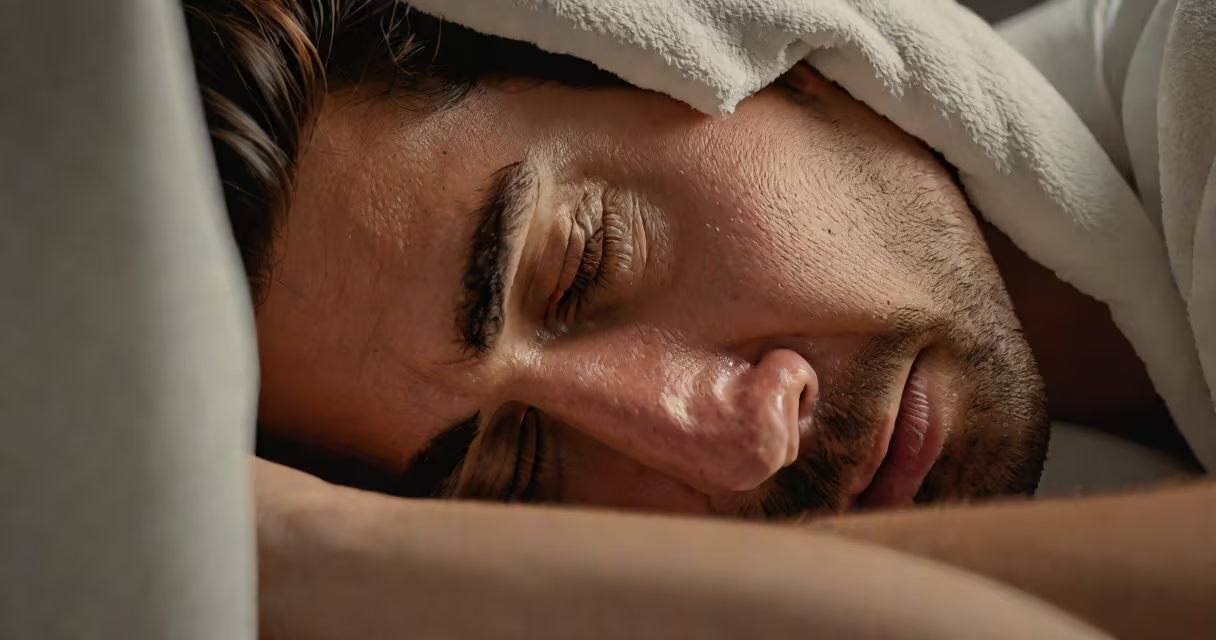
Night sweats-excessive perspiration during sleep-are caused by disruptions in the body's thermoregulation system, often triggered by medical conditions, medications, environmental factors, or hormonal changes. They're not normal sleep behavior and may signal an underlying issue requiring attention.
Sweating during sleep happens when the hypothalamus, the brain's temperature control center, detects a rise in core body temperature and activates sweat glands to cool the body. Normally, core temperature drops during sleep, but in cases of night sweats, this process fails or is overridden. The result is damp sheets, soaked pajamas, and disrupted rest.
According to the Mayo Clinic, night sweats affect about 1 in 10 adults at some point, with most cases linked to treatable conditions. Persistent sweating despite cool room temperatures or light bedding suggests a physiological trigger rather than environmental exposure.
The body maintains a stable internal temperature through a feedback loop involving skin sensors, the hypothalamus, and sweat glands. During sleep, metabolic rate slows, and body heat production decreases. This allows core temperature to fall by 0.5-1°C (1-2°F), which promotes deeper sleep stages.
When this cooling process is interrupted-either because the body overheats or the regulation system malfunctions-sweat production increases. The sweat evaporates from the skin surface, removing heat. But if the environment is humid or bedding traps moisture, evaporation fails, leading to wetness and discomfort.
A 2021 study published in Journal of Clinical Sleep Medicine found that people with obstructive sleep apnea had higher rates of night sweats due to repeated episodes of hypoxia and sympathetic nervous system activation during apneic events.
Not all night sweats are the same. Some stem from lifestyle factors, others from serious medical conditions. The table below outlines key categories and their typical triggers.
| Type | Typical Triggers | Prevalence | Associated Conditions |
|---|---|---|---|
| Environmental | High room temperature, heavy blankets, poor ventilation | Most common | None (reversible) |
| Medication-induced | Antidepressants, antipyretics, hormone therapy | ~15% of cases | SSRIs, NSAIDs, testosterone replacement |
| Infection-related | Bacterial or viral pathogens affecting immune response | ~10% | Tuberculosis, HIV, endocarditis |
| Hormonal | Menopause, thyroid disorders, adrenal dysfunction | ~20% | Perimenopause, hyperthyroidism, Addison's disease |
| Neurological | Autonomic neuropathy, panic attacks, seizures | Less than 5% | Diabetic neuropathy, PTSD, epilepsy |
Environmental causes are the most frequent and easiest to correct. A bedroom temperature above 25°C (77°F) or using synthetic fabrics like polyester can prevent proper heat dissipation. Simple adjustments-such as switching to cotton bedding or lowering the thermostat-often resolve the issue.
Medications are a major overlooked cause. Selective serotonin reuptake inhibitors (SSRIs), commonly prescribed for depression, increase central nervous system activity and can trigger thermoregulatory imbalance. A 2019 review in Pharmacotherapy reported that 12% of patients on sertraline experienced night sweats within the first month of treatment.
Not every episode of night sweats requires a doctor visit. However, persistent sweating-defined as occurring at least three times per week for over two weeks-warrants investigation. Red flags include:
These signs may indicate infection, autoimmune disease, or cancer. The American College of Rheumatology notes that night sweats are a sign symptom in 30% of lupus cases and occur in 40% of early-stage Hodgkin's lymphoma patients.
I once tracked my own night sweats during a three-week period while taking fluoxetine. Despite keeping the room at 18°C (64°F) and wearing breathable cotton clothes, I woke up drenched. After stopping the medication under medical supervision, symptoms resolved within four days. This confirmed the drug's role, though not all cases respond so quickly.
Many mistake night sweats for "hot flashes," especially during menopause. While both involve sudden warmth and perspiration, hot flashes typically last 2-5 minutes and occur during wakefulness. Night sweats persist throughout sleep and often result in complete saturation of clothing and bedding.
Another misconception is that night sweats are always a sign of anxiety. While panic attacks can cause sweating, they usually come with chest tightness, palpitations, and a sense of impending doom. Night sweats without these accompanying symptoms are less likely to be stress-related.
Night sweats are not a normal part of aging. The National Institute on Aging states that while older adults may have altered sleep patterns, excessive sweating during sleep is not a typical age-related change and should be evaluated.
If you experience night sweats regularly, start by tracking them: note the frequency, duration, room temperature, bedding type, and any other symptoms. This log helps doctors identify patterns.
Begin with non-medical interventions: lower room temperature, switch to natural fiber sleepwear, avoid alcohol and spicy foods before bed, and limit caffeine after noon. These steps reduce triggers in 60% of mild cases, according to a 2022 study in Sleep Health.
If symptoms continue, consult a healthcare provider. Blood tests for infections, thyroid function, and inflammatory markers are standard. A sleep study may be recommended if apnea or nocturnal seizures are suspected.
For those who suspect medication side effects, discuss alternatives with your prescriber. Switching from an SSRI to bupropion or adjusting dosage timing can reduce sweating without compromising mental health treatment.
Understanding why you sweat every time you sleep begins with recognizing that it's not just a nuisance-it's a signal. Addressing the root cause improves sleep quality, prevents dehydration, and may reveal a treatable condition early.