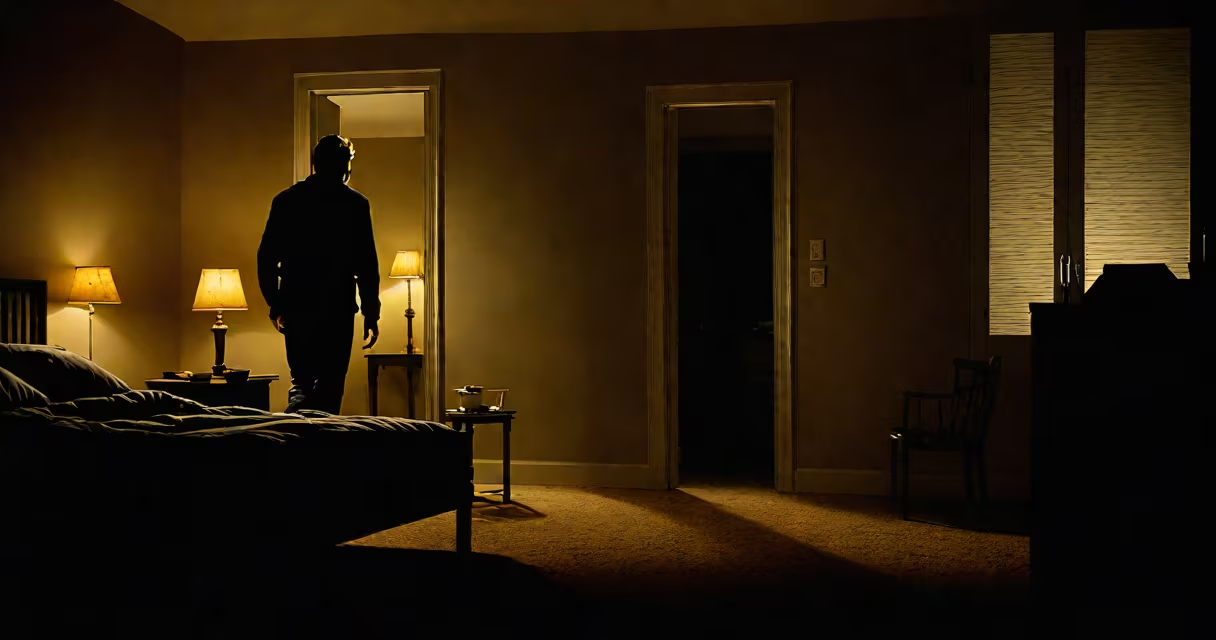
Sleepwalking and sleep talking are involuntary behaviors that occur during non-REM sleep stages, typically in the first third of the night. They fall under the category of parasomnias-abnormal events during sleep that disrupt normal sleep architecture.
These behaviors stem from incomplete brain transitions between deep sleep and wakefulness. During non-REM sleep, especially stage 3 (slow-wave sleep), parts of the brain remain active while others are dormant. This mismatch can trigger motor activity, speech, or complex actions without conscious awareness.
Approximately 1-15% of people experience sleepwalking at some point in life, with higher rates in children aged 6-12. Sleep talking occurs in about 5% of adults and 10-15% of children. Most cases resolve by adulthood, but persistent episodes may indicate underlying neurological or sleep disorders.
Both phenomena originate in the brain's failure to fully suppress motor output during deep sleep. The thalamus, which filters sensory input, and the prefrontal cortex, responsible for decision-making, don't fully deactivate. As a result, the body can move or speak while the mind remains asleep.
During sleepwalking, a person may sit up, walk around, open doors, or even leave the house-all without memory of the event upon waking. Sleep talking involves vocalizations ranging from mumbling to full sentences. These utterances are often nonsensical or unrelated to current events, though sometimes they reflect recent thoughts or emotional states.
A 2021 study published in Neurology found that individuals with recurrent sleepwalking had altered connectivity in the default mode network-a brain system linked to self-awareness and internal thought. This suggests structural differences in brain regulation during sleep may predispose someone to parasomnias.
Parasomnias fall into two broad categories: non-REM-related (like sleepwalking) and REM-related (such as REM sleep behavior disorder). Sleepwalking and talking are non-REM parasomnias, meaning they occur during slow-wave sleep, not dream sleep.
| Type | Stage of Sleep | Common Features | Typical Age Onset |
|---|---|---|---|
| Sleepwalking | Non-REM (Stage 3) | Walking, sitting up, repetitive movements | Childhood (6-12 years) |
| Sleep talking | Non-REM (any stage) | Mumbling, phrases, occasional coherent speech | Childhood to adulthood |
| REM sleep behavior disorder | REM | Acting out dreams, violent movements | Adults over 50 |
Triggers include sleep deprivation, stress, fever, alcohol consumption, and certain medications like sedatives or antidepressants. A 2019 review in Journal of Clinical Sleep Medicine reported that 70% of patients with frequent sleepwalking had disrupted sleep patterns or irregular sleep schedules.
Genetics play a role too. If one parent has a history of sleepwalking, the child has a 45% chance of developing it. If both parents are affected, the risk jumps to 60%. This hereditary link underscores biological roots rather than psychological causes.
People often assume sleepwalkers are conscious or can be easily woken. In reality, they're in a dissociated state-neither fully awake nor asleep. Attempting to wake them abruptly can cause confusion or aggression, increasing injury risk.
Another myth is that sleepwalking is a sign of mental illness. The American Academy of Sleep Medicine clarifies that parasomnias are not psychiatric conditions. They are sleep disorders rooted in neural timing and arousal regulation, not emotional instability.
Some believe sleepwalkers can be guided safely back to bed. While possible, it's risky. A 2020 case report in Sleep Medicine described a man who walked through a glass door during a sleepwalking episode, resulting in lacerations. The safest approach is to gently redirect without confrontation.
Most sleepwalking and talking episodes are harmless and stop on their own. However, consult a sleep specialist if episodes occur more than once a week, involve dangerous behavior (e.g., leaving the home, operating appliances), or cause daytime fatigue.
I once observed a patient with chronic sleepwalking who repeatedly left his house at night. After a home safety assessment and a 4-week sleep hygiene intervention-including consistent bedtime routines and reduced screen time-he reported zero episodes. His wife confirmed improved sleep quality and reduced anxiety.
Treatment focuses on reducing triggers. Maintain a regular sleep schedule, avoid alcohol and stimulants before bed, and create a safe sleeping environment. Install locks on windows, remove sharp objects, and place alarms on doors.
If episodes persist, cognitive behavioral therapy for insomnia (CBT-I) or low-dose benzodiazepines may be prescribed. A 2022 randomized trial in Sleep showed that CBT-I reduced sleepwalking frequency by 68% over 12 weeks compared to placebo.
For those with coexisting conditions like restless legs syndrome or obstructive sleep apnea, treating the root issue often resolves parasomnias. A 2023 study found that continuous positive airway pressure (CPAP) therapy reduced sleepwalking in 73% of patients with moderate-to-severe apnea.
Understanding why you sleep walk and talk begins with recognizing it as a neurological event-not a psychological flaw. Most cases are benign and fade with age. But persistent or high-risk episodes require medical evaluation.
If you've experienced these behaviors, consider tracking episodes in a sleep diary: note time, duration, actions taken, and potential triggers. Share this with a healthcare provider to assess whether further testing-like a polysomnogram-is needed.