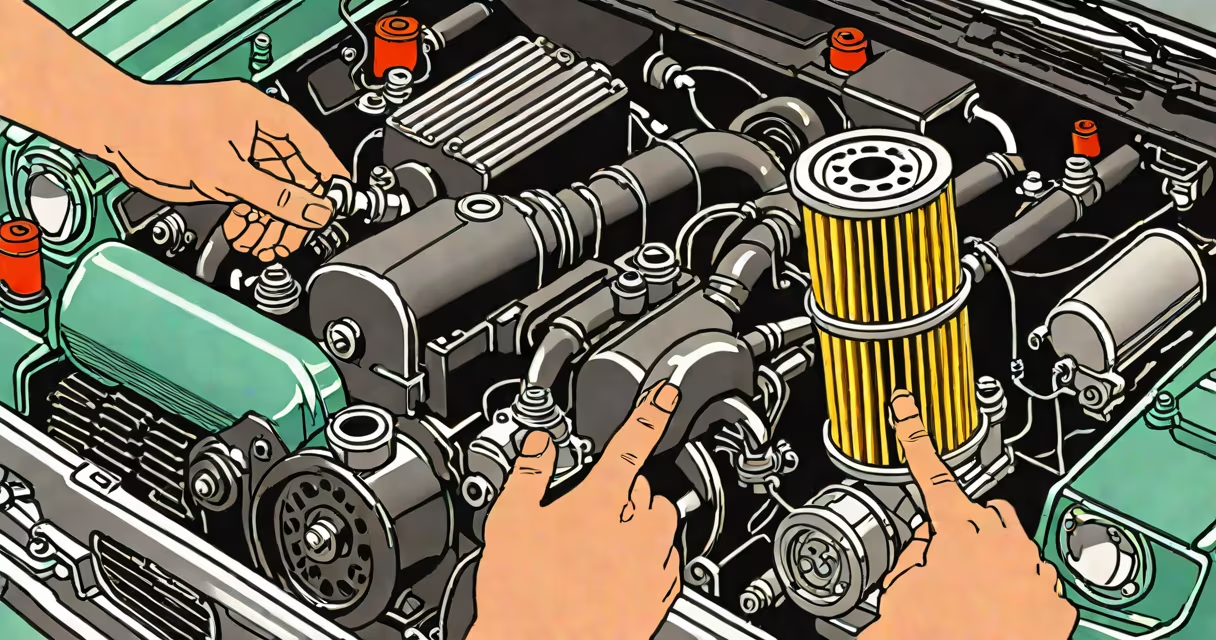
The correct oil filter for your vehicle is determined by your make, model, year, and engine type. Using the wrong filter can lead to inadequate oil flow, reduced engine protection, or even internal damage. Always match the filter's size, thread pitch, and bypass valve rating to your engine's requirements.
Oil filters trap contaminants like metal shavings, dirt, and sludge from engine oil. They maintain oil cleanliness and prevent abrasive wear. A properly sized filter ensures consistent pressure and flow under operating conditions. Filters are designed for specific engine architectures and oil capacities.
Using the wrong filter may result in premature engine failure. For example, a high-flow filter meant for performance engines can cause low oil pressure in a stock engine due to oversized bypass valves. Conversely, a restrictive filter can starve the engine during cold starts.
As engine oil circulates, it picks up debris from combustion and metal wear. The oil filter removes particles larger than 10 microns-about the width of a human hair. Most filters use a pleated cellulose or synthetic media that traps contaminants while allowing clean oil through.
Filters have a bypass valve that opens if the filter becomes clogged. This prevents oil starvation during startup when viscosity is high. The valve typically opens at 15-20 psi, depending on design. If the valve fails closed, oil pressure drops. If it fails open, unfiltered oil flows continuously.
Modern filters also include anti-drainback valves. These prevent oil from draining out of the filter when the engine is off. Without this feature, the first few seconds of startup can see dry running due to delayed oil delivery. This increases wear during cold starts.
Oil filters come in several types based on construction and function. The most common are spin-on filters, cartridge filters, and reusable filters. Spin-on filters dominate passenger vehicles due to ease of installation and disposal.
| Type | Best For | Common Use Cases | Key Features |
|---|---|---|---|
| Spin-on | Most cars and light trucks | Domestic and imported sedans, SUVs, pickup trucks | Integrated housing, replaceable element, standard thread sizes |
| Cartridge | High-performance engines, commercial vehicles | Heavy-duty trucks, race engines, marine applications | Reusability, higher flow capacity, custom gasket sealing |
| Reusable (metal mesh) | Enthusiasts, long-term cost savings | Classic cars, off-road rigs, diesel engines | Washable, longer lifespan, requires regular cleaning |
For most drivers, spin-on filters are the standard choice. They're available in hundreds of part numbers matched to OEM specifications. Cartridge filters are used in industrial and high-output engines where flow rate and durability matter more than convenience.
Reusable filters are less common in modern vehicles. They require maintenance between changes and are prone to clogging if not cleaned properly. However, they reduce waste and offer long-term savings. A well-maintained reusable filter can last 50,000 miles or more.
Start with your owner's manual. It lists the manufacturer-recommended filter part number and specifications. For example, a 2018 Honda Accord with a 2.0L turbo engine uses a Purolator PL20066 filter. The manual specifies a 3/4-inch thread size and 1.5-inch diameter.
If the manual is unavailable, check online databases like AutoZone's Part Finder or O'Reilly's Vehicle Search. Enter your VIN or model details. These tools cross-reference thousands of filters against vehicle databases. They display compatibility results with photos and dimensions.
Always verify the filter's micron rating and flow rate. High-performance engines often require filters rated at 10 microns or lower. Standard engines operate well with 15-20 micron filters. Flow rates above 200 gallons per minute are typical in heavy-duty applications.
A real-world example: A 2015 Ford F-150 with a 3.5L EcoBoost engine needs a Mann-Filter MAF 2113. Using a generic filter with a different thread pitch caused oil pressure fluctuations and triggered the check-engine light. Replacing it with the correct filter resolved the issue.
Many people assume "premium" filters are always better. That's not true. A high-end filter with a 5-micron rating may restrict flow in older engines, leading to low-pressure warnings. The ideal filter balances filtration efficiency with flow resistance.
Another mistake is assuming all filters fit the same bolt pattern. Thread pitch varies-some are 3/4-inch, others 1 inch. A mismatched thread can strip the engine block. Always measure the existing filter or consult a torque chart.
Some drivers believe thicker oil allows them to skip filter changes. This is false. Thicker oil degrades faster and produces more sludge. Filters remove contaminants regardless of oil viscosity. Skipping changes leads to accelerated wear.
I once replaced a filter on a 2007 Toyota Camry with a filter labeled "for 2006-2010 models." The seal failed after 300 miles. The oil leak came from a mismatched gasket profile. I learned to double-check the filter's physical dimensions-not just the model year.
Before installing, confirm the filter's mounting surface is clean. Any debris can compromise the seal. Wipe the area with lint-free cloth and solvent if needed. Apply a thin layer of fresh oil to the rubber gasket to ensure a proper seal.
Do not overtighten. Hand-tighten until the gasket contacts the surface, then turn 1/2 to 3/4 turn more. Over-tightening distorts the gasket and causes leaks. Under-tightening leads to seepage and eventual loss of oil.
After installation, start the engine and check for leaks within 30 seconds. Listen for unusual noises-grinding or whining may indicate a loose filter or damaged gasket. Monitor oil pressure gauge or warning light for 10 minutes.
When replacing the oil filter, always change the oil at the same time. Contaminants trapped in the old filter can mix with new oil. A complete system flush ensures optimal protection. Follow the recommended interval-typically every 5,000 to 10,000 miles, depending on driving conditions.
Knowing what oil filter do I use begins with accurate identification. Match the filter to your vehicle's specs, not assumptions. Use official sources, verified databases, and physical measurements. Avoid generic replacements unless confirmed compatible. Engine longevity depends on correct filtration.