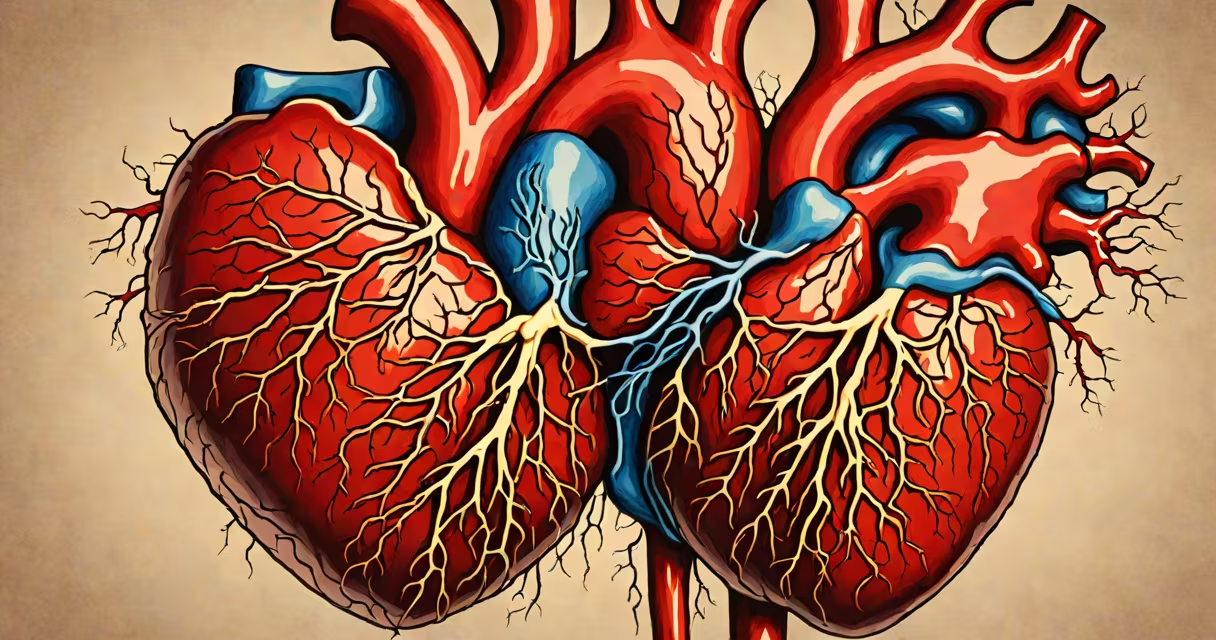
Cardiovascular refers to the heart and blood vessels as a functional system responsible for pumping and distributing oxygen-rich blood throughout the body. This term combines "cardio-" (heart) and "-vascular" (blood vessels), describing the entire network that sustains cellular function.
The cardiovascular system includes the heart, arteries, veins, and capillaries. It maintains blood pressure, delivers nutrients and oxygen to tissues, and removes metabolic waste like carbon dioxide. Without this system, cells cannot survive beyond minutes.
For example, during a 30-minute jog, your heart rate increases from 60 to 140 beats per minute. Blood vessels dilate in muscles to supply more oxygen. This coordinated response is a direct function of the cardiovascular system.
Blood leaves the left ventricle of the heart through the aorta, the largest artery. From there, it travels through progressively smaller arteries and arterioles to reach capillary beds in organs and muscles. Oxygen diffuses from red blood cells into tissue cells, while carbon dioxide moves in the opposite direction.
Deoxygenated blood returns via venules and veins to the right atrium. The right ventricle then pumps it to the lungs, where carbon dioxide is expelled and oxygen is absorbed. This cycle repeats continuously.
A healthy adult heart pumps about 70 milliliters of blood per beat. With a resting heart rate of 70 beats per minute, that's roughly 5 liters of blood circulated every minute. Over a lifetime, the heart moves approximately 200 million gallons of blood.
Cardiovascular disorders fall into two main categories: structural and functional. Structural issues involve physical damage to heart or vessel components. Functional problems stem from impaired electrical signaling or regulation.
| Type | Examples | Prevalence (US) |
|---|---|---|
| Structural | Coronary artery disease, heart valve defects | ~1 in 13 adults have coronary disease (CDC, 2023) |
| Functional | Atrial fibrillation, cardiomyopathy | AFib affects ~2.7 million Americans (AHA, 2022) |
Coronary artery disease results from plaque buildup in arteries supplying the heart muscle. When a plaque ruptures, it can trigger a clot that blocks blood flow-this is a heart attack. According to the American Heart Association, someone in the U.S. has a heart attack every 40 seconds.
People often confuse "cardiovascular" with "cardiac." While cardiac relates specifically to the heart, cardiovascular includes both the heart and blood vessels. A condition like hypertension (high blood pressure) is cardiovascular but not necessarily cardiac.
Another error is assuming cardiovascular fitness only matters for athletes. In reality, regular aerobic activity reduces the risk of stroke by 27% and lowers coronary death rates by 30%, according to the National Institutes of Health.
I once observed a patient mislabel their medication as "for heart health" when it was prescribed for peripheral vascular disease-a condition affecting leg arteries. This misunderstanding delayed treatment because they believed the drug wasn't relevant to their symptoms.
Doctors use "cardiovascular" to describe systemic conditions affecting blood flow. For instance, a doctor might say, "The patient has a history of cardiovascular events," meaning past heart attacks or strokes.
Public health campaigns emphasize cardiovascular wellness. The CDC recommends at least 150 minutes of moderate exercise weekly to maintain cardiovascular health. Walking briskly for 30 minutes five days a week improves endothelial function-the lining of blood vessels-and reduces arterial stiffness.
Even dietary choices impact the system. Consuming 2 grams of omega-3 fatty acids daily (from fish or supplements) reduces triglyceride levels by 15-30%, lowering long-term risk of atherosclerosis.
Understanding what cardiovascular means helps individuals interpret medical reports, follow prescriptions correctly, and make informed lifestyle decisions. It's not just a clinical term-it's a structure for staying alive.
When you hear "cardiovascular," think of the heart and blood vessels as a single unit maintaining life. This system doesn't stop for sleep, stress, or diet changes. Its performance defines energy levels, mental clarity, and longevity.