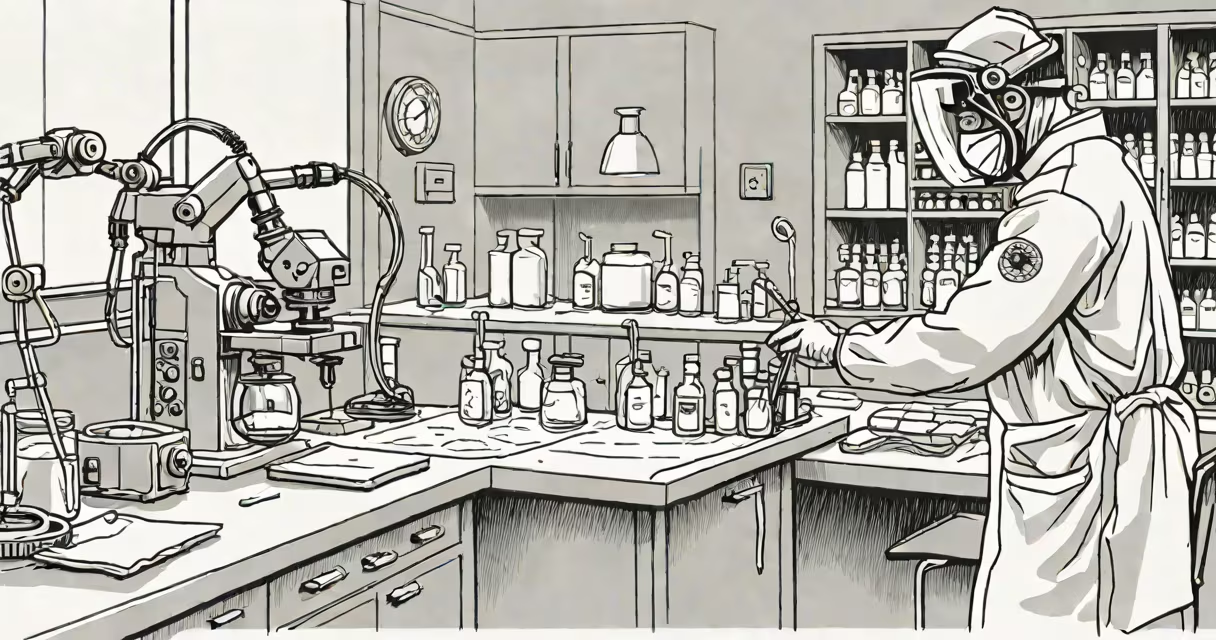
Nuclear pharmacists specialize in preparing, dispensing, and managing radiopharmaceuticals-radioactive drugs used in diagnostic imaging and targeted cancer therapy. They work under strict safety protocols due to the short half-lives and high energy emissions of the materials they handle.
These professionals operate in hospital pharmacies, nuclear medicine departments, and specialized radiopharmacies. Their role requires advanced training in radiation safety, pharmacokinetics of radioactive agents, and sterile compounding techniques. Unlike traditional pharmacists, nuclear pharmacists must account for decay rates, dosimetry, and regulatory oversight from the Nuclear Regulatory Commission (NRC).
A typical day involves calculating precise doses based on patient weight and scan protocol, verifying radioactivity levels with calibrated instruments, and documenting every step in compliance with federal regulations. They collaborate closely with nuclear medicine physicians, radiologists, and medical physicists to ensure accurate delivery of radioactive tracers such as F-18 FDG for PET scans or I-131 for thyroid ablation.
Nuclear pharmacists begin their process by receiving a prescription for a radiopharmaceutical, often generated through a cyclotron or reactor. The drug is synthesized in a hot cell-a shielded, remote-controlled environment designed to minimize radiation exposure. Once compounded, the product undergoes quality control testing for sterility, potency, and radionuclide purity.
For example, a dose of technetium-99m (Tc-99m), used in over 80% of nuclear medicine procedures, must be prepared within 6 hours of production because its half-life is only 6 hours. A nuclear pharmacist calculates the required activity, ensures proper labeling with time and date of preparation, and verifies the dose using a dose calibrator before release.
After distribution, the pharmacist tracks usage and reports any discrepancies to the NRC. They also manage inventory based on decay curves-each isotope loses half its activity every half-life. This demands constant forecasting to avoid waste or shortages.
There are two primary categories of radiopharmaceuticals: diagnostic and therapeutic. Diagnostic agents emit gamma rays detected by cameras, while therapeutic agents deliver targeted radiation to destroy cancer cells.
| Type | Common Isotopes | Use Case | Half-Life |
|---|---|---|---|
| Diagnostic | Tc-99m, F-18, Ga-68 | PET and SPECT scans for heart, brain, and oncology imaging | 6 hours (Tc-99m), 110 minutes (F-18) |
| Therapeutic | I-131, Lu-177, Y-90 | Radioiodine therapy for hyperthyroidism, peptide receptor radionuclide therapy (PRRT) | 8 days (I-131), 6.7 days (Lu-177) |
Each isotope requires different handling. For instance, I-131 emits beta particles and gamma rays, necessitating thick lead shielding during storage and transport. Its use in treating thyroid cancer requires patients to be isolated until radiation levels drop below safe thresholds-nuclear pharmacists coordinate this isolation period.
One non-obvious fact: many radiopharmaceuticals are not stable enough to be shipped long distances. Tc-99m is produced from molybdenum-99 generators, which have a 66-hour half-life. This limits availability to regions near a nuclear facility or cyclotron. As a result, nuclear pharmacists often work in decentralized networks where local production is essential.
Nuclear pharmacists are critical in hospitals with accredited nuclear medicine programs. Without them, diagnostic imaging would lack precision, and cancer treatments would carry higher risks of under- or overdosing.
Consider a 65-year-old patient scheduled for a cardiac stress test using Tc-99m sestamibi. The nuclear pharmacist must verify the generator's elution time, confirm the tracer's radiochemical purity via thin-layer chromatography, and calculate the correct injected dose-typically 20-30 mCi-based on the patient's body surface area. Any error could lead to poor image quality or excessive radiation exposure.
They also play a key role in emergency preparedness. During a radiological incident, such as a lost source or accidental exposure, nuclear pharmacists assist in triage by identifying affected individuals and coordinating decontamination efforts. Their expertise in radiation protection is important in minimizing public health risks.
Nuclear pharmacists are not involved in nuclear power generation. They do not work with uranium fuel rods or reactor operations. Their focus is exclusively on medical applications of radioisotopes.
Another frequent confusion: nuclear pharmacists are not the same as radiologists or nuclear medicine technologists. Technologists perform the scans; pharmacists prepare the drugs. Radiologists interpret results. All three roles are interdependent, but each has distinct responsibilities.
One common mistake is assuming all pharmacists can handle radiopharmaceuticals. Only those with formal certification-such as the Board of Pharmacy Specialties' Nuclear Pharmacy Certification (BCNP)-are legally authorized to compound and dispense these agents. The BCNP exam covers radiation safety, pharmacology, and regulatory compliance. Over 1,200 pharmacists hold this credential in the U.S., according to the American Society of Health-System Pharmacists (ASHP).
During a project at a regional cancer center, I oversaw the implementation of a new automated synthesis module for F-18 fluorodeoxyglucose (FDG). The system reduced human error in dose preparation by 40%. But even with automation, the pharmacist remained responsible for validating software parameters, monitoring decay corrections, and ensuring batch records met FDA and NRC standards.
The U.S. Nuclear Regulatory Commission (NRC) regulates the use of radioactive materials in medicine. Nuclear pharmacists must maintain licenses, complete annual radiation safety training, and report incidents involving spills or unauthorized access.
Every radiopharmaceutical must be labeled with the isotope name, activity at time of preparation, expiration time, and the name of the person who prepared it. These labels are scanned into electronic health records to track administration and prevent errors.
According to the NRC's 10 CFR Part 35, only licensed personnel may handle Category 3 or higher radioactive materials. Nuclear pharmacists fall under this category. Violations can result in fines up to $10,000 per incident, as seen in a 2021 case where a pharmacy failed to report a leak of I-131, leading to a $7,500 penalty.
Most nuclear pharmacists hold a Doctor of Pharmacy (Pharm.D.) degree and complete a residency in nuclear pharmacy. Some pursue fellowship training in radiopharmaceutical sciences. The ASHP accredits 12 residency programs in the U.S., including at the University of Wisconsin-Madison and the University of Michigan.
After completing training, candidates take the BCNP exam administered by the Board of Pharmaceutical Specialties. Passing rate averages 78% across attempts, indicating the rigor of the field.
For those interested in research or academic roles, additional training in radiochemistry or molecular imaging is beneficial. Institutions like the National Institutes of Health (NIH) support fellowships in radiopharmaceutical development, particularly for novel agents targeting neurodegenerative diseases.
While not all nuclear pharmacists practice in clinical settings, the demand remains steady. The U.S. Bureau of Labor Statistics projects a 4% growth in pharmacy jobs through 2032, with nuclear pharmacy roles growing faster due to increased use of PET scans and targeted therapies.
Understanding the role of nuclear pharmacists is essential for anyone involved in healthcare planning, medical education, or policy related to radiological safety. Their work helps patients receive accurate diagnoses and effective treatments-all while maintaining the highest standards of safety and accountability.