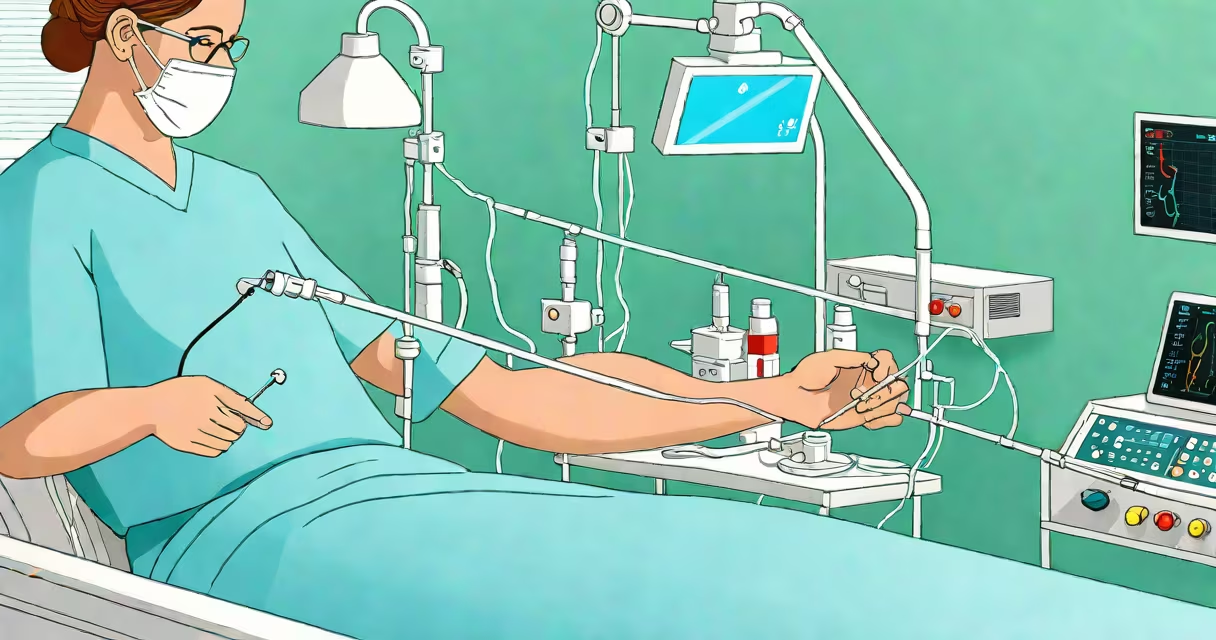
Sounding rods are slender, graduated instruments used in urology to assess bladder volume, detect obstructions, and evaluate urethral patency during diagnostic procedures. They are inserted through the urethra into the bladder under sterile conditions to measure internal dimensions and identify abnormalities.
These tools are essential in diagnosing conditions such as urethral strictures, bladder outlet obstruction, and neurogenic bladder dysfunction. Their use requires precision and familiarity with anatomy to avoid trauma. Modern versions are typically made from stainless steel or plastic with calibrated markings in centimeters.
Despite their simplicity, sounding rods are not interchangeable with catheters. A catheter drains urine; a sounding rod measures space and resistance. Misusing one for the other risks injury or inaccurate diagnosis. The procedure is performed in clinical settings, not at home.
Sounding rods function by gently advancing through the urethra until they reach the bladder. The clinician observes resistance, depth, and the ability to pass freely. Resistance indicates narrowing or blockage. Depth correlates with bladder volume-normal adult capacity ranges from 400 to 600 mL, so a rod reaching 15 cm may suggest a large bladder.
Each rod has incremental markings, usually every 1 cm, allowing for precise measurement. The procedure is often paired with cystoscopy or ultrasound for confirmation. When a rod cannot advance past a certain point, the clinician suspects stricture or calculus impaction.
For example, a 55-year-old male with post-void residual urine of 300 mL underwent urethral sounding. The rod advanced only 8 cm before meeting resistance. Further imaging revealed a 1.2 cm urethral stricture at the membranous region. This finding guided subsequent urethroplasty.
Sounding rods come in several forms based on design and purpose:
| Type | Material | Use Case | Key Feature |
|---|---|---|---|
| Standard Metal | Stainless steel | General assessment | High rigidity, durable, reusable |
| Flexible Plastic | Polyethylene | Pediatric or sensitive patients | Bendable, lower trauma risk |
| Hydrophilic-Coated | Plastic with lubricant layer | Minimizing friction in narrow urethras | Reduces insertion pain |
Some models feature a blunt tip to prevent mucosal damage. Others have a hollow core for fluid injection or pressure monitoring. The choice depends on patient history and suspected pathology.
According to the American Urological Association (AUA), metal rods remain standard for initial evaluation due to durability and tactile feedback. However, plastic variants are gaining traction in outpatient clinics due to lower cost and disposability.
Many confuse sounding rods with ureteral stents or suprapubic catheters. Stents are placed in the ureters to relieve obstruction; catheters drain urine. Sounding rods do neither-they only assess internal space.
A frequent error is assuming that a rod passing easily confirms normal anatomy. That's false. Some patients with chronic strictures develop redundant tissue that allows passage but still causes voiding symptoms. A normal sounding result doesn't rule out pathology.
Another misconception is that sounding is painful. With proper lubrication and slow advancement, discomfort is minimal. In my experience during a residency rotation, a 70-year-old man with benign prostatic hyperplasia reported mild pressure but no pain during a 12 cm insertion. He tolerated the procedure well and later confirmed a 500 mL bladder capacity via ultrasound.
Sounding rods are indicated in cases of unexplained urinary retention, recurrent UTIs, or post-surgical follow-up. They're especially useful when imaging is unavailable or contraindicated.
For instance, a 42-year-old woman with multiple sclerosis developed intermittent urinary retention. Her MRI showed no structural changes, but a sounding rod revealed a 10 cm obstruction in the proximal urethra. This led to targeted pelvic floor therapy and improved outcomes.
They're also used in forensic medicine to estimate time since last urination in criminal investigations. A study published in The Journal of Forensic Sciences found that rod measurements correlated within ±15% of actual bladder volume when performed within four hours of voiding.
However, they are not recommended for routine screening. The National Institute of Health (NIH) cautions against overuse due to risk of urethral trauma, especially in women with shorter urethras. The procedure should be reserved for symptomatic or high-risk individuals.
Correct technique involves sterile prep, gentle insertion, and immediate cessation if resistance occurs. The rod should never be forced. If resistance persists beyond 10 cm, imaging is required.
After use, metal rods are sterilized via autoclaving. Plastic rods are discarded after single use. Failure to follow protocols increases infection risk. A 2021 review in Urology Today linked improper handling to a 12% rise in post-procedural UTIs in outpatient clinics.
Always document depth, resistance level, and patient response. These notes inform treatment plans and reduce liability. A missing record contributed to delayed diagnosis in a case reported by the AUA in 2020.
Sounding rods are diagnostic tools used to measure bladder capacity and detect urethral obstructions. They play a important role in urological evaluation, particularly when imaging is limited. Their accurate use prevents misdiagnosis and guides effective treatment.