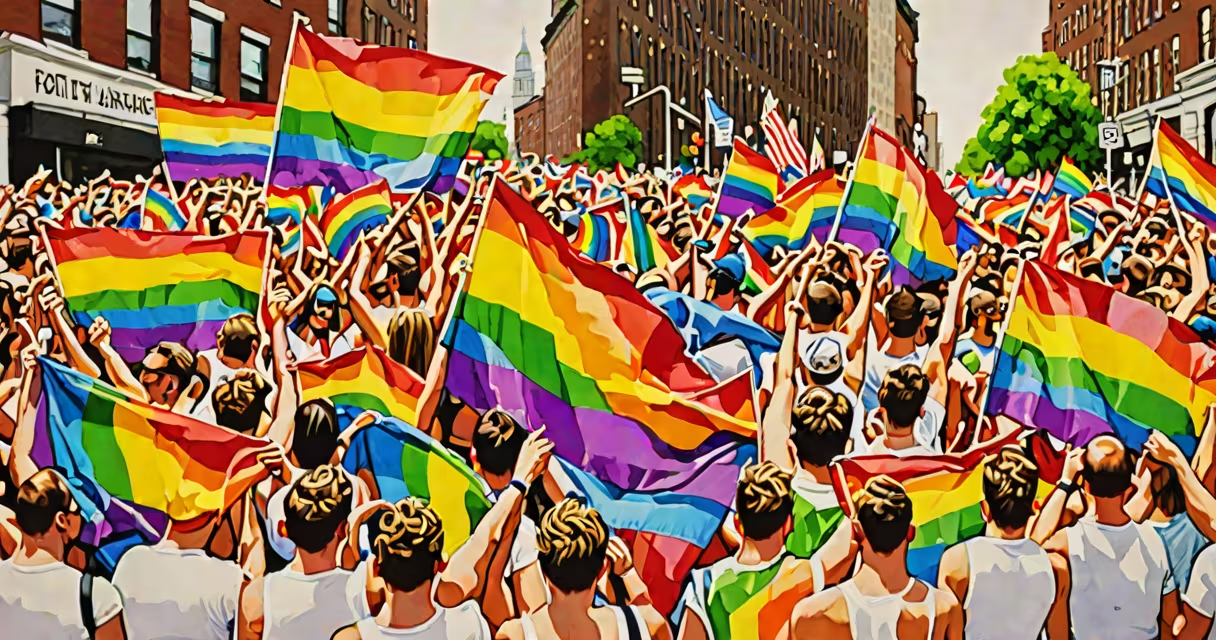
june 28 pride commemorates the start of the Stonewall Uprising in 1969, when patrons at the Stonewall Inn in New York City resisted a police raid. This event marked the beginning of the modern LGBTQ+ rights movement and is now celebrated annually as a day of visibility, resistance, and joy.
The uprising began after police raided the Stonewall Inn, a gay bar in Greenwich Village, during a routine crackdown on LGBTQ+ spaces. Patrons fought back, sparking days of protests. The violence and defiance shocked the city and galvanized activists. According to the National Park Service, "The Stonewall Uprising was not the first time LGBTQ+ people had stood up against oppression, but it was the first time the community organized collectively in response."
Organizers like Marsha P. Johnson and Sylvia Rivera, both Black transgender women, played central roles in the demonstrations. Their leadership helped shift focus from assimilation to radical self-determination. The first Pride march was held on June 28, 1970, in New York City, Chicago, and Los Angeles, marking the first anniversary of the uprising.
June 28 pride is observed through public events, including parades, rallies, art exhibitions, and memorial services. These gatherings serve as both celebration and political statement. Events often feature speeches from local leaders, drag performances, and displays of the rainbow flag.
Organizations like the Human Rights Campaign report that over 150 cities in the United States host formal Pride events around June 28. Participation ranges from 10,000 in smaller towns to over 2 million in major cities like New York and San Francisco. In 2023, New York's Pride March drew approximately 2.7 million attendees, according to official city estimates.
Many cities extend celebrations beyond June 28. Pride Month runs throughout June, with events leading up to and following the anniversary. Some communities hold year-round programming, such as youth groups, mental health support networks, and anti-discrimination workshops.
Events vary by location and audience. The following table outlines common formats:
| Type | Description | Examples |
|---|---|---|
| Parade | Public procession with floats, performers, and participants in costume. | New York City Pride Parade, Toronto Pride Parade |
| Rally | Political gathering focused on advocacy and policy change. | Washington D.C. Pride Rally, Austin Pride March |
| Community Festival | Family-friendly event with food, music, and vendor booths. | Seattle Pride Festival, Portland PrideFest |
| Memorial Service | Quiet gathering honoring those lost to HIV/AIDS or violence. | San Francisco's AIDS Memorial Quilt display, Los Angeles Queer Memory Project |
Some events prioritize inclusivity for specific identities. For example, Trans Pride events focus on transgender and nonbinary experiences. In 2022, Berlin hosted a Trans Pride march with over 10,000 attendees, highlighting the ongoing fight for gender recognition laws.
Many assume June 28 pride is solely about celebration. That's incomplete. The day honors resistance and loss. The original Stonewall protesters were not seeking mainstream acceptance-they were fighting for survival.
Another myth is that Pride began as a peaceful demonstration. In reality, the Stonewall Uprising involved physical confrontation. Police used batons and handcuffs. Patrons threw bottles and bricks. The chaos forced national attention on systemic abuse.
A lesser-known fact: the first Pride march in 1970 was planned in secrecy. Organizers feared arrests. They coordinated via handwritten flyers and word of mouth. The route was changed last minute due to police threats. Despite this, 5,000 people showed up in New York City.
June 28 pride remains a tool for accountability. In 2023, over 500 anti-LGBTQ+ bills were introduced in U.S. state legislatures. Many targeted transgender youth, banning medical care and school participation. Pride events have become platforms for opposition to these laws.
I attended the 2022 Pride march in Philadelphia. The crowd stretched over two miles. A banner read: "Trans Lives Matter - No More Laws Against Us." I saw teenagers holding signs with personal stories. One read: "I survived suicide because my family came to Pride with me."
Global observance varies. In countries like Uganda and Russia, Pride events are banned or met with violence. In contrast, cities like Reykjavik and Tokyo host large-scale celebrations. The International Gay and Lesbian Association reports that 120 nations now recognize Pride events officially, though enforcement of LGBTQ+ rights remains uneven.
For many, june 28 pride is not just a date-it's a commitment. It reflects the ongoing struggle for dignity, safety, and belonging. The rainbow flag flies not as decoration, but as a symbol of enduring resistance.
Understanding june 28 pride requires seeing it as both historical milestone and living movement. It's not a single event, but a tradition of action. Whether marching, volunteering, or simply showing solidarity, participation keeps the legacy alive.