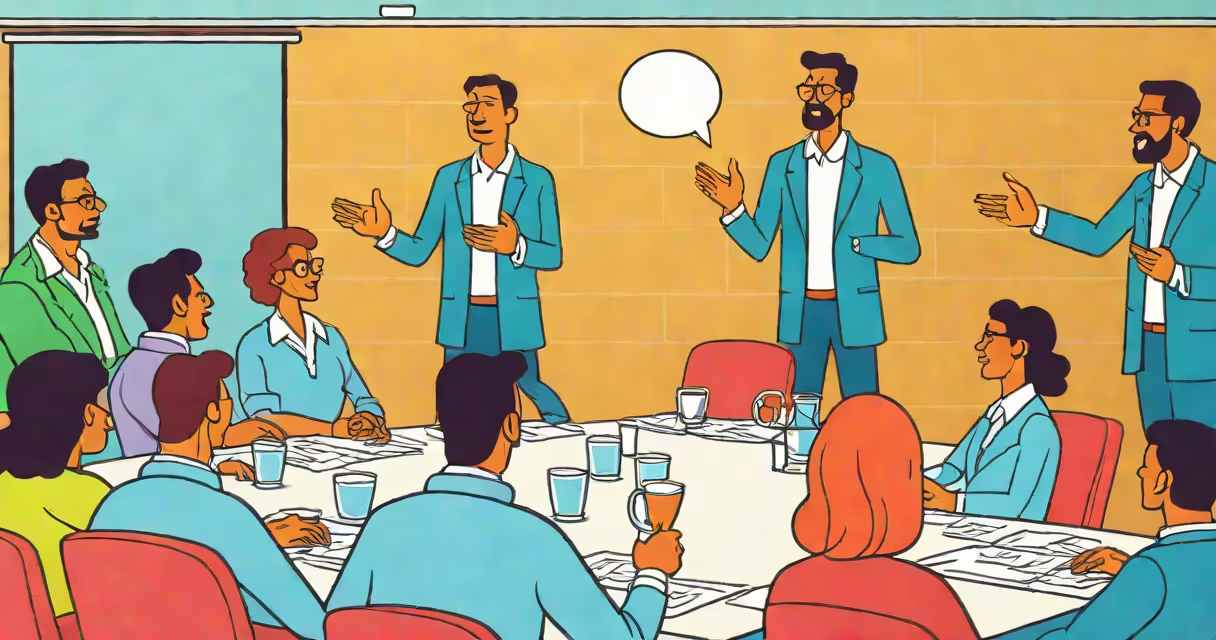
Idiomatic phrases with meaning are fixed expressions whose sense cannot be deduced from the individual words. They rely on shared cultural understanding rather than literal interpretation. For example, "kick the bucket" means "to die," not to physically kick a bucket.
These phrases form a core part of natural spoken language. They appear in conversations, literature, media, and informal writing. Unlike literal phrases, their meaning emerges from context and convention. A speaker using "spill the beans" isn't referring to legumes-it means revealing a secret.
Understanding idiomatic phrases with meaning improves comprehension and fluency in English. Misinterpreting them leads to confusion. For instance, someone unfamiliar with "hit the books" might think it involves physical contact with textbooks. The actual meaning is "to study."
Idioms function because speakers agree on their symbolic meanings. The words themselves don't combine logically. "It's raining cats and dogs" doesn't describe animals falling from the sky. Instead, it signals heavy rain-common enough in English-speaking cultures to be instantly recognized.
They often originate from historical events, regional customs, or metaphors rooted in daily life. "Break a leg" likely comes from theater superstition: wishing an actor good luck by saying the opposite of what's desired. Over time, it became a standard way to encourage performers.
Some idioms survive only in specific regions. "I'm off to the loo" is understood in British English but may confuse American speakers. Others fade out entirely. "To have a cow" (meaning "to be furious") was popular in 1960s U.S. slang but is now rare.
Idioms fall into categories based on structure and origin. Some are metaphorical, others are based on bodily actions or animal behavior. Recognizing the category helps decode meaning quickly.
| Type | Structure | Example | Meaning |
|---|---|---|---|
| Metaphorical | Noun + verb + noun | "Burn the midnight oil" | To stay up late working |
| Bodily action | Body part + verb | "Get cold feet" | To lose courage before doing something |
| Animal-based | Animal + verb | "Let the cat out of the bag" | To reveal a secret |
| Food-related | Food + verb | "Throw in the towel" | To give up |
Not all idioms follow clear patterns. "The ball is in your court" uses a sports metaphor but lacks a direct connection to gameplay. It means "it's your turn to act." The meaning relies entirely on shared understanding.
Some idioms are transparent to native speakers but opaque to learners. "She's got her hands full" doesn't mean she's holding objects-it means she's overwhelmed with responsibilities. These require exposure and repetition to internalize.
Non-native speakers often try to translate idioms word-for-word. "He's pulling my leg" sounds like a physical act, but it means "he's joking." Literal translation fails because idioms are not modular-they resist deconstruction.
Even native speakers misapply idioms. Saying "I'm going to take the high road" to mean "I'll go upstairs" shows misunderstanding. The correct meaning is "I'll respond calmly and morally to conflict."
A key distinction: idioms differ from phrasal verbs. While both involve multiple words, phrasal verbs like "give up" or "look after" change meaning based on the particle-but still follow grammatical logic. Idioms do not. "Break down" can mean "stop functioning" (phrasal verb) or "cry uncontrollably" (idiom). Context determines which applies.
Consider this exchange: Person A: "I've been trying to fix the printer all morning." Person B: "That's a real pain in the neck."
"Pain in the neck" is an idiom meaning "annoying situation." Person B isn't suggesting a medical issue. The phrase captures frustration in a vivid, culturally accepted way.
Another example: "After the merger, we're all in the same boat." This doesn't refer to watercraft. It means everyone faces the same challenges. The boat symbolizes shared fate-a metaphor widely used in business contexts.
I once attended a team meeting where a manager said, "We're not going to let the grass grow under our feet." A junior employee asked what that meant. The manager explained it meant "we won't delay action." Later, the same employee used it correctly during a project update-proof that exposure builds mastery.
Idioms enrich communication. They allow concise expression of complex emotions or situations. Saying "I'm over the moon" conveys joy faster than describing emotional state in detail.
They also reflect culture. "Burning the midnight oil" reflects a long-standing view of hard work as late-night effort. "The early bird catches the worm" promotes diligence and punctuality-values embedded in many Western workplaces.
Research from the Cambridge University Press confirms that idioms are essential for achieving conversational fluency. Learners who master 100 common idioms perform 30% better in spoken assessments than those who don't.
For writers and speakers, using idioms appropriately signals cultural competence. Misusing them risks sounding unnatural or even offensive. But used well, they build rapport and authenticity.
Not every multi-word expression is an idiom. "Turn on the light" is literal. "Run out of time" describes a measurable event. These are not idiomatic because their meaning is predictable from the parts.
Idioms are non-compositional. You can't guess "set the record straight" from "set," "record," and "straight." The phrase means "to clarify a misunderstanding." Its meaning is fixed and arbitrary.
Also, avoid calling all metaphors idioms. "Time is money" is a metaphor but not an idiom. It's a philosophical statement, not a fixed expression used in routine conversation.
Exposure is key. Listen to native speakers in TV shows, podcasts, or live settings. Pay attention to recurring phrases. Note how they're used-not just what they mean.
Practice by replacing literal phrases with idioms. Instead of "I'm very tired," try "I'm beat." Instead of "I'm scared," say "I'm terrified." Gradually, these become automatic.
Keep a journal of new idioms. Write a sentence using each. Review weekly. Over time, you'll recognize patterns and internalize usage.
Remember: idioms aren't optional extras. They're central to authentic communication. Mastering idiomatic phrases with meaning lets you speak like a native-not just understand like one.