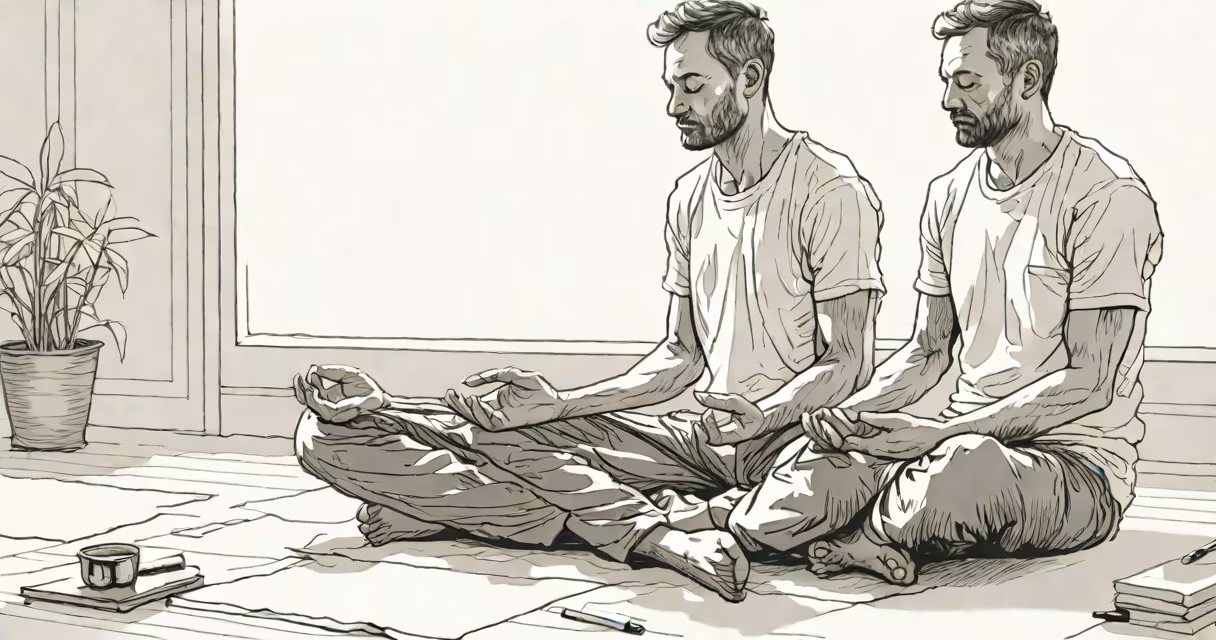
Meditating daily means setting aside consistent time each day to focus your attention inward, often through breath awareness or mental stillness, to reduce stress and improve clarity. This practice builds mental resilience over time and requires no special equipment-just a few minutes and willingness to sit quietly.
Daily meditation isn't about achieving a blank mind. It's about noticing thoughts without reacting to them. Research from the National Institutes of Health shows that even 10 minutes of daily mindfulness meditation reduces activity in the amygdala-the brain region tied to fear and stress-after eight weeks of consistent practice.
The core of how to meditate daily lies in repetition and presence. You don't need to master complex breathing patterns or sit in lotus position. The goal is not perfection but habit formation. People who meditate daily report better sleep, improved focus, and reduced anxiety within four to six weeks.
When you meditate, your brain shifts from default mode network (DMN) activity-responsible for mind-wandering and rumination-to increased activity in the prefrontal cortex, which governs decision-making and emotional regulation. This shift happens even during short sessions.
Neuroimaging studies show that after just eight weeks of daily 10-minute meditation, participants had measurable increases in gray matter density in areas linked to learning, memory, and emotional control. These changes correlate with self-reported improvements in mood and concentration.
Consistency matters more than duration. A 2018 study published in *JAMA Internal Medicine* found that people who meditated for five minutes per day saw similar reductions in anxiety and depression symptoms as those who practiced for 30 minutes-provided they did it every day.
Most daily meditation practices rely on one of three elements: breath focus, body scanning, or mantra repetition. Each uses sensory input to anchor attention and interrupt automatic thinking.
Breath-focused meditation involves paying attention to the sensation of air entering and leaving the nostrils or the rise and fall of the abdomen. When the mind wanders-which it will-gently return attention to the breath. This trains sustained attention and reduces mental clutter.
Body scan meditation moves awareness through different parts of the body, typically from toes to scalp. It improves interoception-the ability to sense internal bodily states-and helps release tension stored unconsciously. A 2020 study in *Mindfulness* showed that body scans reduced chronic pain perception by 30% in participants after four weeks.
| Technique | Best For | Time Needed | Science-Backed Benefit |
|---|---|---|---|
| Breath focus | Beginners, stress reduction | 5-10 min | Reduces cortisol levels by 16% after 4 weeks (NIH study) |
| Body scan | Anxiety, physical tension | 10-20 min | Decreases pain sensitivity by 30% (Mindfulness journal, 2020) |
| Mantra repetition | Focus, emotional stability | 10-15 min | Improves working memory performance by 12% (Journal of Cognitive Enhancement, 2021) |
Many apps offer guided versions of these techniques. Headspace and Insight Timer provide free daily sessions led by trained instructors. These aren't required-but they lower the barrier to entry for beginners.
People meditate daily in homes, offices, parks, and even while commuting. The environment doesn't need to be silent or sacred. A quiet corner of a bedroom, a park bench, or a parked car during a lunch break can work.
Consistent daily practice supports long-term cognitive health. A longitudinal study from Harvard Medical School tracked over 1,000 adults for ten years. Those who meditated daily were 27% less likely to develop mild cognitive impairment than non-meditators.
One common mistake is assuming you must meditate in silence or with perfect posture. I once tried meditating on a train during rush hour. My legs were cramped, the noise was constant, and my mind raced. But after five minutes, I noticed a subtle shift-my breathing slowed, and I felt calmer. That session taught me that external conditions don't define success. Focus does.
Some believe meditation requires emptying the mind. This is false. The mind generates thoughts continuously. The practice isn't stopping thoughts-it's observing them without judgment. You don't have to stop thinking to meditate.
Another myth is that meditation is religious. While rooted in ancient traditions like Buddhism and Hinduism, modern secular meditation is evidence-based and non-dogmatic. Programs like Mindfulness-Based Stress Reduction (MBSR), developed at the University of Massachusetts Medical School, teach meditation without spiritual content.
People also assume longer sessions are better. But research shows diminishing returns beyond 20 minutes. A 2022 meta-analysis in *Frontiers in Psychology* found that 10 minutes daily produced greater adherence and comparable results to 30-minute sessions.
Here's how to begin with "how to meditate daily" using breath focus:
Do this every day at the same time-morning, noon, or night. Consistency builds neural pathways faster than intensity.
After seven days, track your mood and energy levels. Many users report noticing calm earlier in the day, even on busy mornings.
There's no single way to meditate daily. The most effective routines are simple, repeatable, and adaptable. Start with five minutes. Show up every day. Let the rest follow.