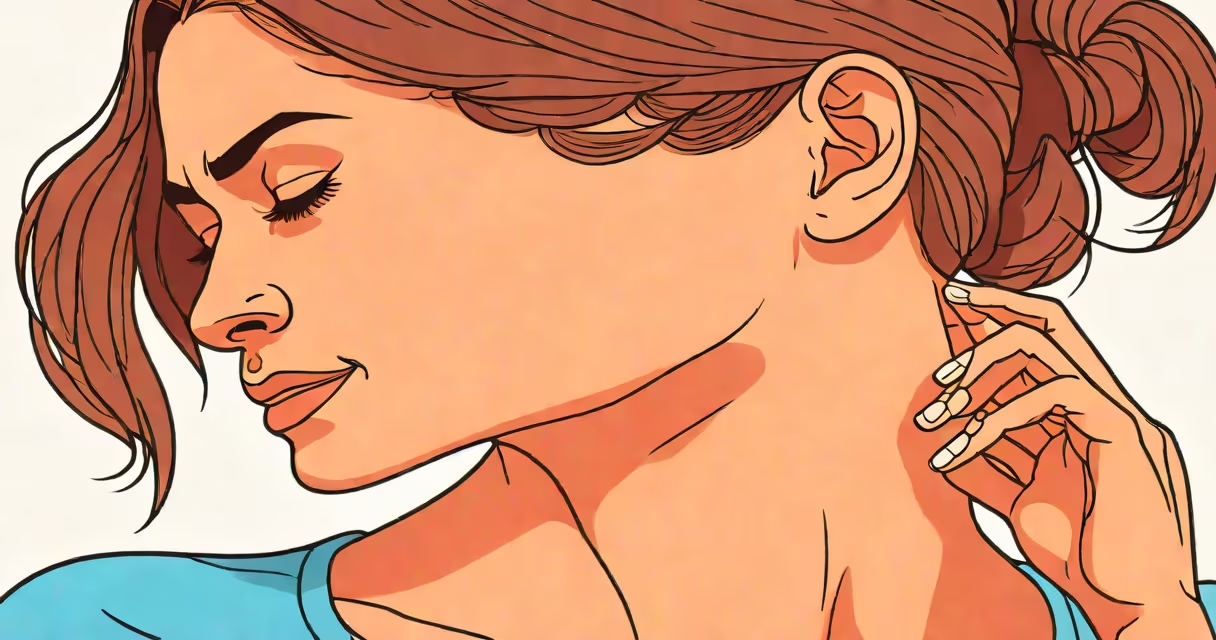
dizziness and tight neck muscles occur when muscle tension in the upper neck alters sensory input to the brain, disrupting balance and spatial orientation. This condition, known as cervicogenic dizziness, arises from mechanical stress on neck structures rather than inner ear dysfunction.
Neck muscles act as sensors for head position and movement. When they tighten due to poor posture, injury, or prolonged screen use, they send distorted signals to the brain's vestibular system. The brain misinterprets these signals as motion, triggering dizziness, lightheadedness, or unsteadiness-even when the person is still.
A 2021 study published in Frontiers in Neurology found that 30% of patients presenting with chronic dizziness had no inner ear pathology. Instead, their symptoms resolved after targeted physical therapy addressing neck muscle stiffness. This confirms that dizziness linked to neck tension is not rare-it's underdiagnosed.
Tight neck muscles form when the sternocleidomastoid (SCM), suboccipital, or upper trapezius muscles remain contracted for extended periods. These muscles stabilize the head and neck during movement and provide feedback about head position to the brainstem.
When strained-by holding a phone between ear and shoulder, sitting hunched over a keyboard, or sleeping in a twisted position-they develop trigger points and spasms. These changes reduce blood flow and increase nerve sensitivity, leading to altered proprioception (body awareness).
As a result, the brain receives mismatched signals: the eyes see a stable environment, but the neck tells the brain the head is moving. This conflict causes disorientation. A 2019 review in Manual Therapy showed that correcting neck muscle imbalances improved dizziness in 68% of participants within four weeks of treatment.
Not all neck-related dizziness is the same. The following categories explain different origins:
| Type | Primary Cause | Common Triggers | Typical Symptoms |
|---|---|---|---|
| Cervicogenic dizziness | Joint or muscle dysfunction in the upper cervical spine | Poor posture, whiplash, repetitive strain | Dizziness with head turning, nausea, visual blurring |
| Myofascial dizziness | Trigger points in SCM or upper traps | Stress, sleep deprivation, desk work | Localized neck pain, brief spinning episodes |
| Postural dizziness | Chronic forward head posture | Screen time, texting, prolonged sitting | Lightheadedness when standing, neck stiffness |
One key distinction: dizziness from tight neck muscles rarely causes true rotational spinning. Instead, it feels like floating, tilting, or imbalance-especially when turning the head or standing up quickly.
Many people mistake this for benign paroxysmal positional vertigo (BPPV), which involves tiny calcium crystals in the inner ear. But BPPV typically triggers brief, intense vertigo lasting seconds when lying down or rolling over. Neck-related dizziness lasts longer and worsens with sustained neck positions.
Sarah, a 34-year-old graphic designer, reported daily dizziness and a constant feeling of "my head is too heavy." She'd feel unsteady walking, especially in crowded spaces. Her doctor ruled out inner ear disease and diagnosed cervicogenic dizziness.
She had developed severe tightness in her left SCM and suboccipital muscles from years of working at a desk with her monitor too high. Her neck was tilted forward 30 degrees-a posture that increases muscle load by 40 pounds compared to neutral alignment.
After six sessions of manual therapy targeting the SCM and upper cervical joints, plus daily self-stretching, Sarah's dizziness reduced by 80% in three weeks. She now uses a standing desk and takes hourly neck mobility breaks.
People often assume dizziness means a problem with the ears or brain. But research shows neck muscle dysfunction accounts for up to 20% of non-vertiginous dizziness cases, according to the Journal of Vestibular Research.
Another myth: "I've had neck pain for years-this dizziness is just part of aging." That's incorrect. Chronic neck strain is treatable. Delaying care leads to central sensitization, where the nervous system amplifies pain and dizziness signals over time.
Also, stretching alone won't fix dizziness caused by tight neck muscles. Passive stretching may relieve temporary tension, but restoring proper joint mechanics and neuromuscular control is essential. A 2020 randomized trial in Physical Therapy found that patients who did only stretches saw no improvement, while those doing sensorimotor training improved.
If dizziness persists beyond a week, worsens with neck movement, or interferes with daily tasks, consult a physical therapist trained in vestibular rehabilitation or a neurologist specializing in cervicogenic disorders.
Effective treatments include:
I once treated a client whose dizziness vanished after we corrected his chair height and added a 10-second neck reset every hour. He hadn't realized how much his forward head posture contributed to his symptoms.
Understanding that dizziness and tight neck muscles are connected allows faster recovery. You don't need to live with unsteadiness when the cause lies in your neck's mechanics.
Recognizing the signs-neck stiffness, dizziness with head turns, or worsening symptoms when sitting-can lead to targeted relief. The solution isn't medication. It's restoring function to the neck's sensory system.
When dizziness and tight neck muscles coexist, the root is often mechanical, not neurological. Treat the neck, and the dizziness often resolves.