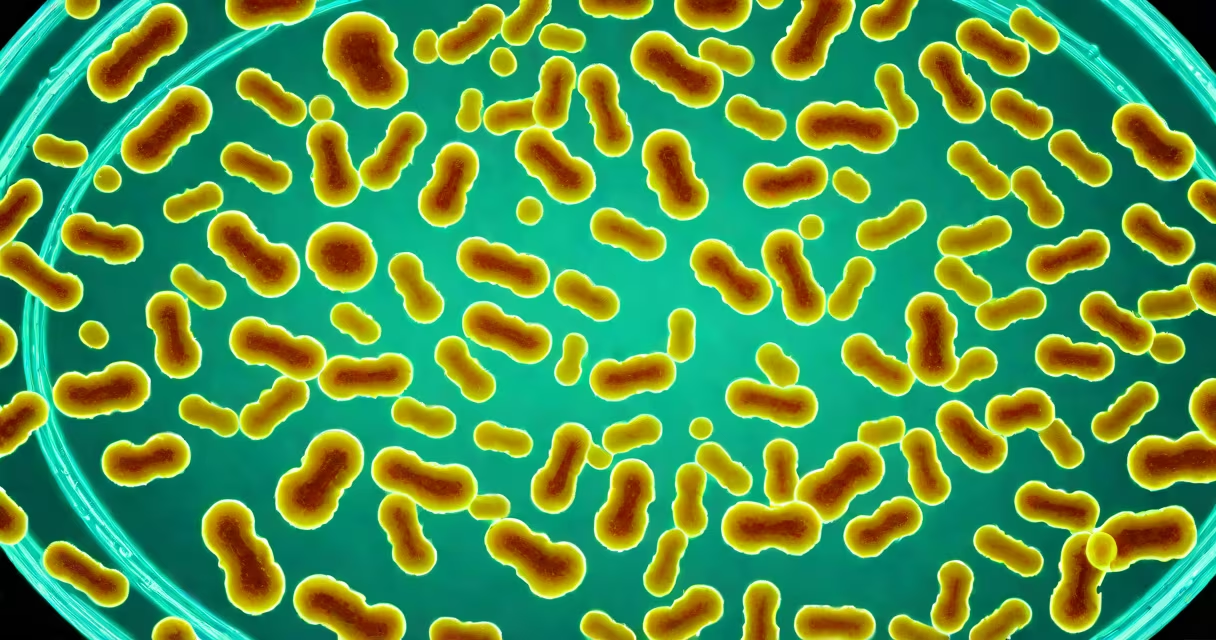
Bacteria are single-celled microorganisms lacking a nucleus and membrane-bound organelles, classified as prokaryotes. They exist in vast diversity across all ecosystems, playing essential roles in nutrient cycling, digestion, and disease.
These microscopic life forms reproduce rapidly through binary fission, splitting one cell into two identical daughter cells. Their genetic material floats freely in the cytoplasm, uncontained by a nuclear envelope-a defining trait of prokaryotic life. Bacteria measure between 0.5 and 5 micrometers in length, making them invisible to the naked eye without magnification.
According to the National Center for Biotechnology Information (NCBI), bacteria are among the most ancient and widespread organisms on Earth, with fossil evidence dating back over 3.5 billion years. The Human Microbiome Project confirms that humans host approximately 39 trillion bacterial cells-roughly equal in number to our own human cells-primarily in the gut, skin, and oral cavity.
Bacteria survive and replicate using metabolic pathways adapted to their environment. Some generate energy through photosynthesis, others through chemosynthesis-converting inorganic compounds into usable energy. Many rely on organic molecules from their surroundings, consuming nutrients via diffusion or active transport across their cell membranes.
Cell walls composed of peptidoglycan provide structural integrity and are key targets for antibiotics like penicillin. Gram staining differentiates bacteria based on wall thickness: Gram-positive bacteria have thick walls and appear purple under the microscope; Gram-negative bacteria have thin walls and outer membranes, appearing pink.
A 2021 study published in Nature Microbiology found that certain gut-dwelling bacteria produce short-chain fatty acids such as butyrate, which regulate immune function and reduce inflammation in the colon. This demonstrates how bacterial activity directly influences human health beyond mere infection risk.
Bacteria are categorized by shape, metabolism, and genetic makeup. Common morphologies include cocci (spherical), bacilli (rod-shaped), and spirilla (spiral).
| Type | Shape | Example | Function/Note |
|---|---|---|---|
| Streptococcus | Coccus | S. pyogenes | Causes strep throat; forms chains |
| Escherichia coli | Bacillus | E. coli | Common gut resident; some strains cause foodborne illness |
| Helicobacter pylori | Spirillum | H. pylori | Survives stomach acid; linked to ulcers and gastric cancer |
| Thermus aquaticus | Bacillus | Source of Taq polymerase | Used in PCR; thrives in hot springs at 70°C |
Metabolically, bacteria fall into autotrophs (self-feeders) and heterotrophs (consume external sources). Autotrophs include cyanobacteria, which perform oxygenic photosynthesis and contributed to Earth's early oxygenation. Heterotrophs include pathogens like Mycobacterium tuberculosis, responsible for tuberculosis, which relies entirely on host tissues for survival.
Bacteria are foundational in biotechnology. Escherichia coli is engineered in labs to produce insulin, human growth hormone, and enzymes used in DNA sequencing. Recombinant DNA techniques allow scientists to insert human genes into bacterial plasmids, exploiting bacteria's rapid reproduction to mass-produce proteins.
In agriculture, Bacillus thuringiensis (Bt) is used as a biopesticide. Its spores release toxins lethal to insect larvae but harmless to mammals. Field trials show Bt corn reduces pesticide use by up to 60% compared to conventional crops, according to the USDA.
Industrial applications include bioremediation. In 1989, after the Exxon Valdez oil spill, researchers introduced Pseudomonas putida strains capable of breaking down hydrocarbons. These bacteria reduced oil residue levels by 70% in treated zones within six months, as documented by the Environmental Protection Agency (EPA).
Many assume all bacteria are harmful. In reality, only about 1% of known bacterial species cause disease in humans. The majority are neutral or beneficial. For example, Lactobacillus species ferment lactose into lactic acid, preserving dairy products and supporting gut health.
Another error is equating bacteria with viruses. Viruses lack cellular structure and cannot replicate independently-they require host cells. Bacteria are independent organisms with complete metabolic systems. A virus infects a bacterium in a process called transduction, but this does not make bacteria viral.
A lesser-known fact: some bacteria form biofilms-structured communities encased in a protective matrix. These structures resist antibiotics and immune responses. In hospitals, biofilms on catheters increase infection risk by 10-fold, per research from the University of California, San Diego.
I once observed a lab experiment where a culture of Salmonella enterica was grown on selective agar. After 24 hours, distinct red colonies appeared-indicating successful growth. When tested with a motility assay, the bacteria swam toward nutrient gradients, demonstrating chemotaxis. This visual confirmation of movement and reproduction reinforced how changing and autonomous bacteria are.
Consider a 500 mL sample of untreated river water. A single drop contains approximately 10 million bacterial cells. Among them, 10% may be Shigella or Salmonella-pathogens that cause dysentery and typhoid fever. Without proper sanitation, such contamination leads to outbreaks. In 2018, a waterborne Salmonella outbreak in Michigan sickened 14 people and required public health intervention.
The definition of bacteria contrasts sharply with archaea-another domain of prokaryotes. Though both lack nuclei, archaea differ genetically and biochemically. They inhabit extreme environments like deep-sea vents and salt flats. Despite similar size and structure, archaea do not have peptidoglycan in their cell walls and are more closely related to eukaryotes than to bacteria.
For comparison, fungi are eukaryotic organisms with complex internal structures. While both bacteria and fungi can be pathogens, fungal infections like candidiasis respond to antifungals-not antibiotics. Confusing bacterial and fungal infections leads to ineffective treatment and antibiotic resistance.
Understanding the definition of bacteria helps clarify broader biological concepts. For instance, horizontal gene transfer-where bacteria share DNA through conjugation, transformation, or transduction-is a major driver of evolution. This mechanism allows antibiotic resistance genes to spread rapidly across species, contributing to global health threats.
When evaluating microbial risks, distinguishing between commensal, mutualistic, and pathogenic bacteria is critical. Commensals like Staphylococcus epidermidis live harmlessly on skin. Mutualists such as Bifidobacterium longum aid digestion and strengthen immunity. Pathogens like Neisseria meningitidis cause meningitis and require immediate medical attention.
The definition of bacteria encompasses more than just disease-causing agents. They are fundamental to planetary function, human biology, and technological innovation. Recognizing their diversity and ecological roles prevents oversimplification and supports informed decisions in medicine, environmental science, and industry.