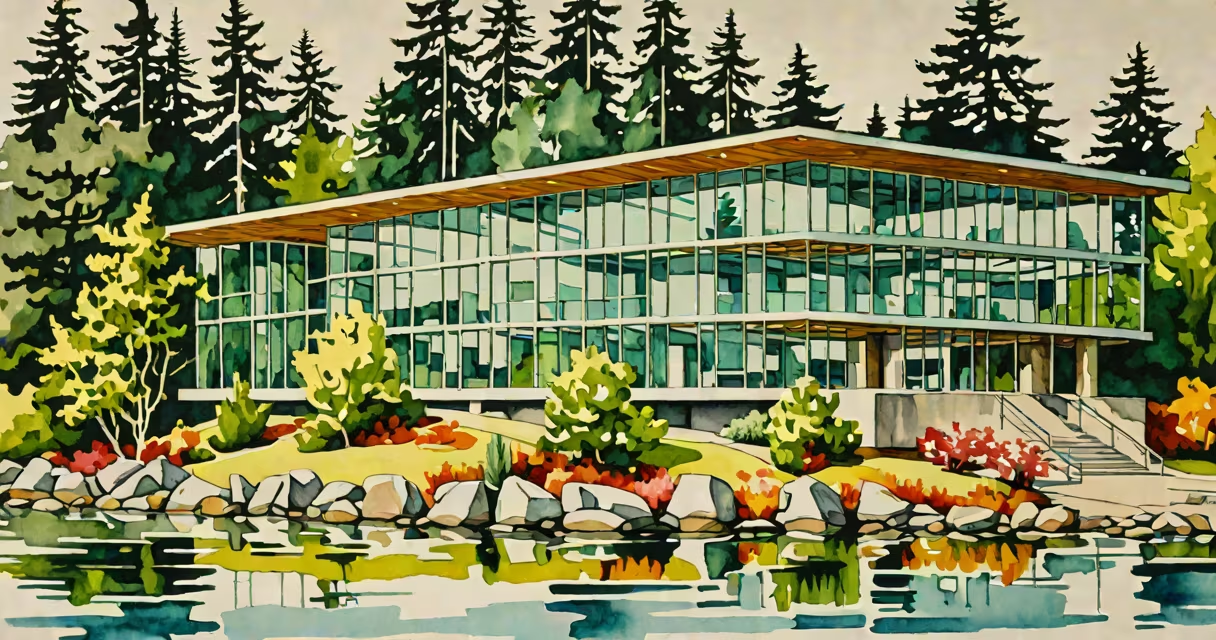
The Bainbridge Island Museum of Art is a nonprofit cultural institution located on Bainbridge Island, Washington, dedicated to exhibiting contemporary visual art and fostering community engagement through rotating exhibitions, artist talks, and educational programming.
Founded in 2006, the museum occupies a purpose-built facility designed by architect John G. B. Smith. Its 12,000-square-foot space includes two primary galleries, a performance area, and a dedicated education wing. The museum operates on a model of public-private partnership, receiving support from local foundations, individual donors, and city funding. It is accredited by the American Alliance of Museums.
Exhibitions focus on emerging and mid-career artists, with a particular emphasis on work from the Pacific Northwest. The museum's collection includes over 300 pieces, primarily contemporary paintings, sculpture, and mixed-media installations. Artists represented have included Seattle-based painter Jennifer Bartlett, Tacoma sculptor Robert M. Miller, and Bainbridge Island native Lisa K. Wong.
Each year, the museum presents four to six curated exhibitions, typically lasting 6-8 weeks. The selection process involves a committee of curators, community members, and advisory board representatives. Submissions are reviewed based on artistic merit, relevance to current themes, and alignment with the museum's mission to show underrepresented voices.
Admission is free on Tuesdays and Thursdays from 10 a.m. to 6 p.m., and $10 for general admission on other days. Memberships start at $50 annually and include unlimited access, invitations to private viewings, and discounts at the museum shop. The museum offers free guided tours for school groups and senior citizen programs.
During the summer months, the museum hosts "Art After Dark," a monthly evening event featuring live music, artist demonstrations, and food trucks. Attendance averages 250-300 visitors per event, with 60% coming from outside the island.
The museum's permanent collection includes works acquired through donations, purchases, and artist commissions. Notable pieces include "Still Life with Rain" (2018) by Seattle-based multimedia artist Dara L. Jones, which uses reclaimed wood and embedded audio to evoke seasonal shifts in the Pacific Northwest.
Gallery spaces are climate-controlled and equipped with motion-sensor lighting to reduce energy use. The main exhibition hall features adjustable track lighting and modular wall systems that allow for rapid reconfiguration between shows. A dedicated conservation lab supports restoration efforts and maintains environmental standards for sensitive works.
Outside, the museum grounds include a 120-foot-long sculpture garden with rotating installations. In 2022, the garden hosted "Echoes of the Coast" by marine biologist-turned-artist Elena M. Reyes, a series of 14 weathered steel panels depicting tidal patterns from nearby coves.
The museum organizes exhibitions into three categories: thematic, solo artist, and collaborative. Thematic shows explore topics such as "Migration and Memory" or "Urban Nature," often drawing from regional archives and community stories. Solo exhibitions spotlight one artist's body of work, while collaborative shows involve multiple contributors working across media.
| Type | Duration | Frequency | Example |
|---|---|---|---|
| Thematic | 6-8 weeks | 2 per year | "Waterlines: Stories from Puget Sound" (2023) |
| Solo Artist | 4-6 weeks | 3 per year | "Threads of Time" by textile artist Marisol F. Vega (2024) |
| Collaborative | 8 weeks | 1 per year | "Crossroads: Artists and Scientists in Dialogue" (2023) |
Programs are designed to serve diverse audiences. The "Art & Mind" series partners with local mental health organizations to host workshops on using creative expression for emotional regulation. One session in 2023 drew 120 participants, including 40 individuals with diagnosed anxiety disorders.
The museum serves as a cultural anchor for Bainbridge Island's population of approximately 25,000 residents. It hosts 35,000 annual visits, with 70% of attendees living within 50 miles. Tourism accounts for 40% of traffic, with many visitors combining a visit with a ferry ride from Seattle.
Local schools integrate museum visits into their art curricula. In 2023, 1,200 students from grades 4-12 participated in field trips, with 85% reporting increased interest in pursuing art-related careers.
A non-obvious fact: the museum's roof is covered in photovoltaic panels that generate 15% of its annual electricity needs. This system was installed in 2019 and reduced the museum's carbon footprint by 12 metric tons per year, according to a 2022 audit by the Northwest Energy Efficiency Alliance.
Many assume the Bainbridge Island Museum of Art is part of a larger chain or affiliated with major institutions like the Seattle Art Museum. It is not. It operates independently, though it occasionally co-curates with regional partners.
Another misconception is that the museum only displays local artists. While 60% of featured artists are from the Pacific Northwest, the remaining 40% come from across the U.S. and internationally. The 2023 show "Thresholds" included work from Nairobi, Berlin, and New Mexico.
Some confuse it with the Bainbridge Island Historical Museum, which focuses on maritime history and early settlement. The two institutions share a campus but operate separately.
I visited the museum in October 2023 during the "Silent Frequencies" exhibit, which explored sound and silence in contemporary installation art. One piece, "Hush" by Portland-based composer and visual artist Tanya S. Lee, used suspended silk threads dyed with natural pigments. When viewers walked through the space, subtle vibrations caused faint color shifts, visible only under low light.
The exhibit attracted 1,800 visitors over five weeks. A follow-up survey showed 89% rated the experience as "visually impactful" and 76% said they had never encountered such a multisensory approach before. The museum later published a short documentary on the piece, available online.
The Bainbridge Island Museum of Art remains a important hub for contemporary art in the Pacific Northwest. With its commitment to accessibility, innovation, and community integration, it continues to grow as a destination for both casual visitors and serious art practitioners. For those exploring the region, visiting the museum offers a clear window into the evolving field of modern visual culture.